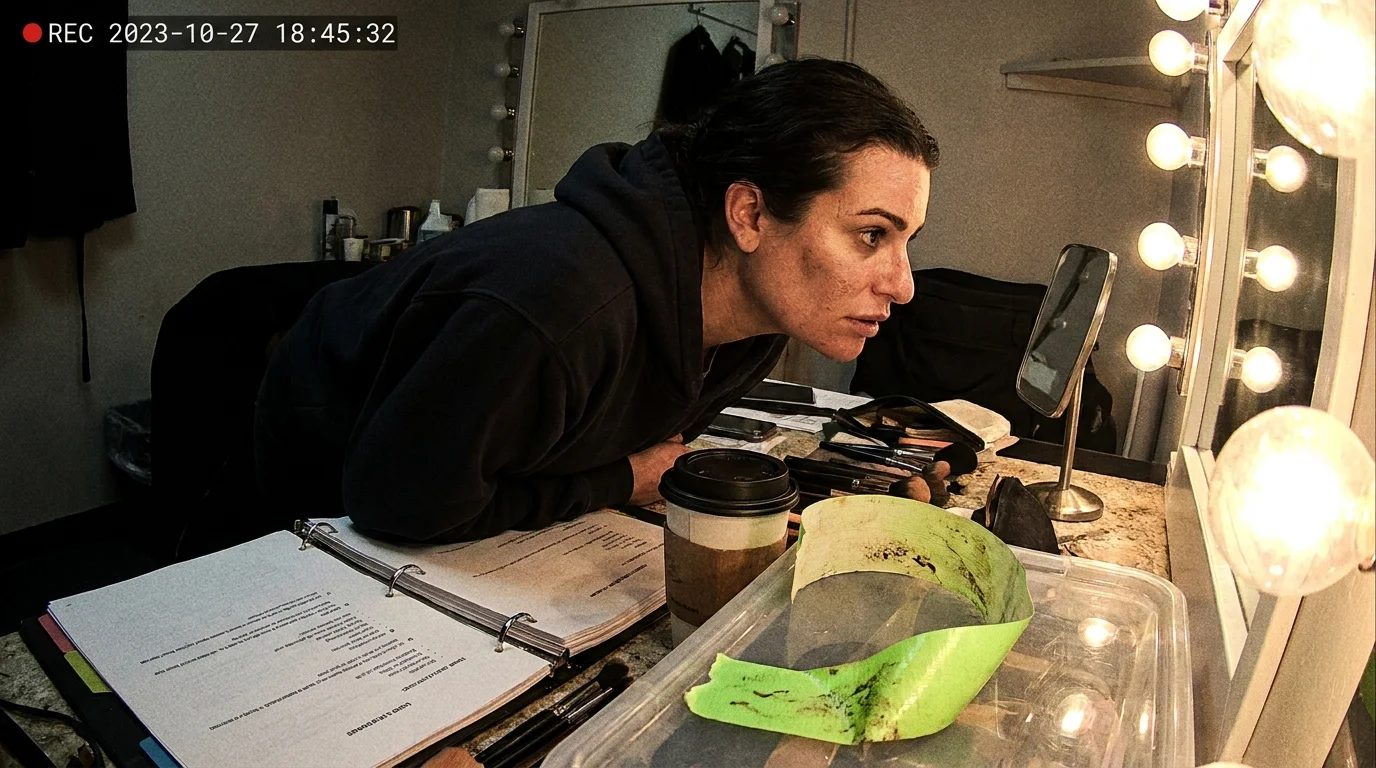
A faint draft of cold air carries the scent of dust, floor wax, and dry ice into the wings. Beneath the glow of a single blue work light, a fraying piece of neon green spike tape peels away from the darkened stage floor. It is a tiny, forgotten marker of where someone was once ordered to stand. Above, the fly loft looms in heavy silence, a reminder that the theater is a machine of immense physical danger long before it is a space for art.
Many onlookers assume a Broadway backstage is a warm, collaborative enclave of creative equals. But Broadway has never been a democracy. Below the surface of opening-night smiles lies an uncompromising, almost militaristic caste system designed to keep multi-million-dollar productions from collapsing under their own complexity.
Recent whispers surrounding Lea Michele’s backstage demands often frame her behavior as simple diva antics. Yet, those who have spent their lives in the shadowed wings of historic playhouses recognize these actions as a ruthless execution of historical boundaries. Her strict protocols are not an anomaly; they are the survival mechanism of an old-school theatrical hierarchy.
The Hidden Architecture of the Stage
To understand the friction on modern Broadway, you must view the theater not as a playground, but as an eighteenth-century royal court. The principal actor is not simply a performer; they are the financial anchor of a massive enterprise, carrying the livelihoods of hundreds of crew members, musicians, and administrative staff on their vocal cords. When a lead performer demands isolation, they are enforcing a system of vocal and physical preservation that has existed for centuries.
The moment a production moves into technical rehearsals, the casual atmosphere of the rehearsal room evaporates. The stage becomes a construction site where heavy scenery moves at high speeds in near-darkness. In this environment, familiarity is seen as a hazard, and boundary lines are drawn in permanent ink.
Marcus Vance, a fifty-four-year-old production stage manager with three decades of Broadway credits, remembers when a major revival split down the middle over a single unwritten rule. During a high-stakes technical run, a principal actor invoked the ancient protocol of “tech eye contact.” This ancient, unspoken protocol dictates that ensemble members must avoid looking directly at the lead performer during technical transitions. It sounds cruel, but Vance explains that a lead actor processing complex light cues, automation safety, and heavy vocal demands cannot afford the cognitive load of social acknowledgment. One misplaced glance can break a performer’s hyper-focus, risking physical injury on a moving stage.
- Megan Fox forgotten late night interview completely validates decades of rumors
- David Beckham tense public posture sparks sudden brand deal tension rumors
- Sandra Bullock survives intense fame trusting a strict isolation rule
- Anthony Hopkins entirely improvised his most terrifying horror movie scene
- Kevin Bacon sustains his massive marriage enforcing one rigid boundary
The Unwritten Codes of Broadway’s Caste System
For the Principal Anchor
The lead performer operates within a highly guarded bubble. Their dressing room is a sanctuary, not out of vanity, but because their voice is a fragile instrument that must be protected from casual chatter and airborne pathogens. They set the emotional tone of the backstage area, and their physical isolation is a calculated boundary to ensure they can deliver peak performances eight times a week.
For the Ensemble and Chorus
Ensemble members are the engine of the show, yet they must navigate the wings with silent deference. Understanding your physical boundaries is paramount to surviving a long run. This means keeping clear of quick-change booths, avoiding casual conversation with the leads before major scenes, and understanding that the wings are a workspace where silence is strictly enforced.
For the Technical Crew
The crew members are the true rulers of the dark, communicating in hushed whispers and hand signals. They expect absolute adherence to safety protocols and have little patience for actors who ignore the physical hierarchy of the stage. A crew member’s primary duty is safety, and they respect performers who treat the backstage space with the solemnity of an industrial warehouse.
Navigating the High-Stakes Etiquette Blueprint
Surviving the intense pressure of a professional production requires a mindful approach to physical space. It is about respecting the invisible lines that keep a company safe and focused. By treating these traditions as functional tools rather than personal slights, performers can avoid friction.
Keep your movements deliberate and your presence quiet when transitioning through the wings. Always yield the physical right-of-way to performers entering or exiting the stage in darkness.
- Allow the lead actor to dictate the level of social interaction in shared spaces.
- Keep all backstage communication focused strictly on logistical safety.
- Respect the boundary of the dressing room corridor as a quiet zone.
The Backstage Tactical Toolkit
- The Eye Contact Zone: Maintain a five-foot buffer of neutral focus during technical cue adjustments.
- The Wing Margin: Keep a clear three-foot perimeter around all active stage entry points.
- Vocal Rest Protocols: Honor the “silent door” sign on principal dressing rooms without exception.
Why the Hierarchy Sustains the Magic
The rigid etiquette of the theater can seem archaic to modern audiences accustomed to flat workplace structures. However, these rules exist to protect the very magic that people pay hundreds of dollars to witness. When every participant understands their exact place within the machine, the risk of error drops to zero.
Ultimately, these traditions are not about suppressing individuality but about ensuring absolute physical safety and artistic consistency. The next time you watch a Broadway star shine under the spotlight, remember that their performance is made possible by the silent, disciplined coordination of a company operating under codes written long ago in the dark.
“The physical safety of a Broadway company depends entirely on everyone knowing their place in the dark.” — Marcus Vance
| Key Point | Detail | Added Value for the Reader |
|---|---|---|
| Tech Eye Contact | Restricting visual engagement during technical runs | Prevents dangerous distractions near automated scenic elements |
| The Greenroom Divide | Clear physical separation between leads and ensemble | Preserves the immense vocal energy required for principal roles |
| The Stage Manager Conduit | All performance and technical feedback flows through one voice | Eliminates conflicting directives and backstage power struggles |
Frequently Asked Questions
Why is eye contact restricted during technical rehearsals? It protects the lead performer’s cognitive load and physical safety while they coordinate moves with massive, automated scenic pieces.
Are Broadway dressing room assignments purely based on ego? No, dressing room placement is a logistical necessity determined by proximity to quick-change areas and stage entrances.
How does Broadway hierarchy differ from modern workplace dynamics? It functions like a live military operation where split-second timing requires immediate, unquestioned adherence to the chain of command.
Is backstage silence actually enforced by union rules? While not a formal union law, extreme noise violations are subject to safety reprimands by stage management.
Did Lea Michele’s backstage rules break traditional theater codes? Rather than breaking codes, her demands strictly enforced historical Broadway traditions designed to isolate and protect the principal star.