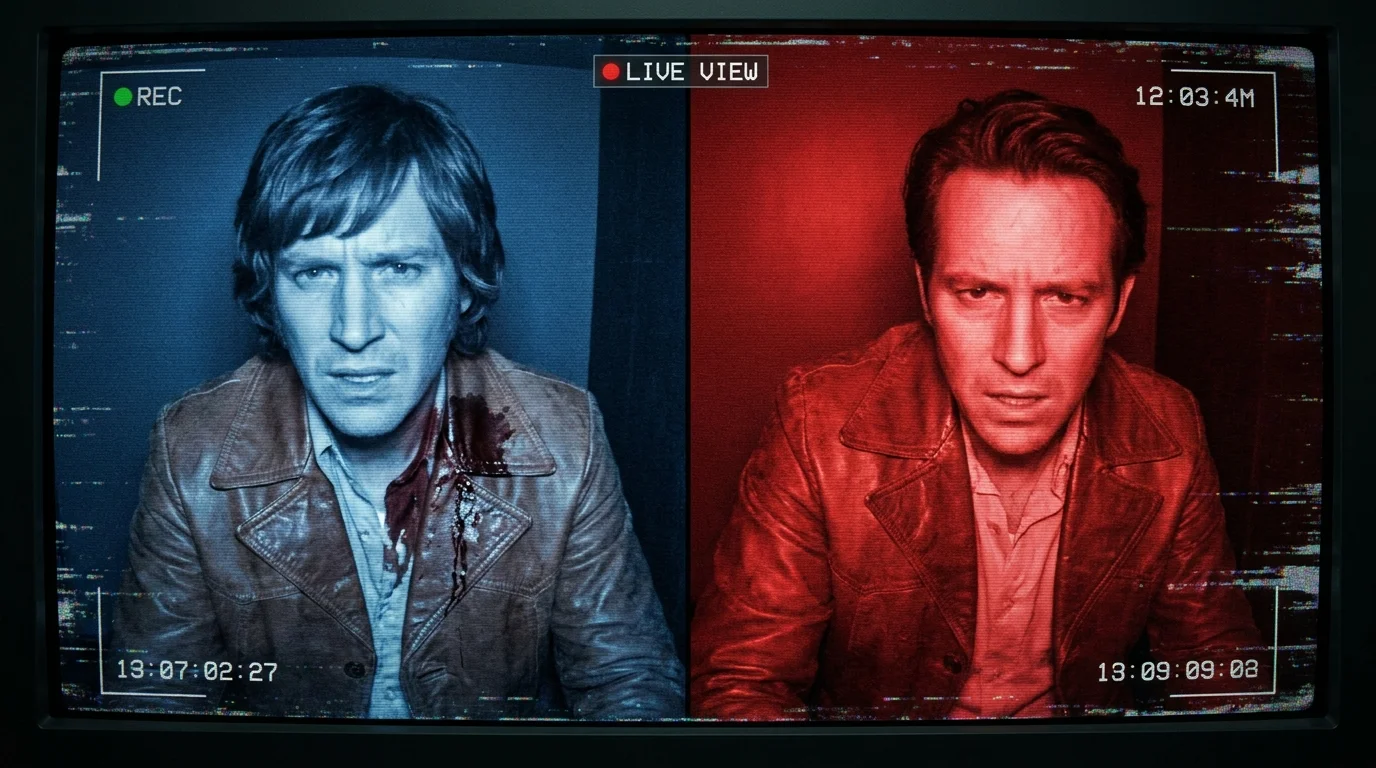
The damp chill of a 1973 Brooklyn autumn clung to the set of The Lords of Flatbush. You can almost smell the exhaust from the idling classic cars, the metallic tang of hairspray, and the cheap grease of local diners drifting through the neighborhood. Inside a cramped Toyota, two young, fiercely ambitious actors sat shoulder to shoulder, their bodies vibrating with an unspoken, heavy competition that threatened to derail the entire production before the cameras even finished rolling.
On one side sat a young, brooding Richard Gere, draped in a vintage leather jacket. On the other was Sylvester Stallone, equally raw and hungry for his big break in the film industry. The air between them did not just feel cold; it felt combustible, as every shared glance was a silent challenge, a subtle positioning of elbows that went far beyond typical character work.
Then came the midday break, a momentary pause that should have offered relief but instead triggered a lasting piece of Hollywood history. Stallone sat in the backseat eating a half-chicken, while Gere climbed in with a greasy, foil-wrapped hot dog dripping with yellow mustard. It was a mundane moment, but in a pressure cooker of conflicting egos, even a drop of condiment can become a declaration of war.
As Stallone warned him about the mess, Gere took a bite. A thick, bright yellow mustard stain dripped from the bun, soaking directly into the sleeve of Stallone’s vintage leather jacket. The physical reaction was instantaneous, a sudden explosion of flying elbows and slammed car doors that proved, once and for all, that these two forces could never safely share a camera frame.
The Anatomy of the Chemistry Veto
When a movie studio announces a sudden casting change due to creative differences, your mind likely conjures images of polite boardroom meetings and mutual handshakes. But behind the polished PR curtain, the reality is often far more primal. The concept of compatibility isn’t just about romantic sparks; it is a delicate physics experiment where two distinct human energies must balance each other without causing a complete system failure.
Think of on-screen compatibility like two identical magnetic poles. If you try to force them together, they do not just resist; they actively slide away, disrupting everything in their immediate orbit. When Richard Gere was abruptly recast and replaced by Perry King, it was not because of a lack of talent. It was a classic demonstration of the Chemistry Veto—the sudden realization that some creative friction is simply too destructive to manage on a daily schedule.
- John Krasinski suffered a highly embarrassing superhero screen test rejection
- The Simpsons almost cast a completely different voice for Homer
- Lea Michele backstage demands expose completely rigid theater etiquette rules
- Megan Fox forgotten late night interview completely validates decades of rumors
- David Beckham tense public posture sparks sudden brand deal tension rumors
A Secret from the Production Floor
To understand how these volatile set dynamics are managed, consider the perspective of Marcus Thorne, a veteran unit production manager with forty years of experience navigating high-strung personalities on independent films. Thorne recalls how a single misaligned rehearsal can derail a multi-million-dollar schedule. When an actor’s body language screams self-defense, the lens catches it instantly, turning a dramatic scene into an uncomfortable display of real-world posturing and quiet territorial dominance.
Decoding the Friction Profiles on Set
For the Method Purist: Some actors operate entirely on sensory immersion, needing to feel the genuine hostility or warmth of their partner to deliver an authentic performance. When two such purists clash, the boundary between the script and reality dissolves, leading to genuine physical standoffs over the smallest details of blocking or personal space.
For the Technical Performer: These actors rely on precision, timing, and repeatable movements. When paired with an erratic, unpredictable partner, their rhythm breaks down entirely, resulting in a subtle but noticeable on-screen stiffness that no amount of clever editing can fully salvage.
Navigating High-Stakes Personal Clashes
Managing raw human friction is not just a challenge for Hollywood directors; it is a skill you can apply whenever intense energies collide in your own professional or personal spaces. When a partnership begins to show signs of structural rot, a systematic approach can prevent a total collapse.
First, identify the sensory triggers that exacerbate the tension. Often, the surface argument is merely a proxy for a deeper struggle over control, space, or respect. By recognizing these triggers early, you can intervene before a minor disagreement escalates into an unsalvageable rift.
- Establish hard physical boundaries during high-stress moments to give each party a dedicated, neutral zone.
- Separate personal habits from professional output by shifting the focus back to the shared, objective goal.
- Implement a cooling-off period immediately after a physical or verbal boundary is crossed, preventing permanent damage to the project.
- Acknowledge when compatibility is unsalvageable, allowing for a clean, dignified transition rather than a prolonged struggle.
To help navigate these delicate human balances, keep this basic operational framework in mind:
Tactical Toolkit for Conflict Calibration
– Optimal cooling-off period: 20 minutes of complete physical separation to lower heart rates.
– Neutral communication rule: Keep feedback strictly focused on physical actions rather than personal intent.
– Boundary marker: Use physical distance (at least three feet of personal space) during discussions to prevent territorial behavior.
The Unspoken Value of Knowing When to Part Ways
Ultimately, the story of a ruined leather jacket and a sudden recast reveals a profound truth about human collaboration. We are taught to believe that perseverance can conquer any obstacle, but some pairings are simply architecturally unsound. Recognizing a natural limit is not a sign of weakness; it is a high-level survival instinct that protects the integrity of your work.
When you let go of the pressure to make every connection fit, you free up the space necessary for genuine, effortless compatibility to take its place. The next time you find yourself fighting an uphill battle with a difficult partner, remember that sometimes, walking away is the most professional move you can make.
‘In the chemistry of human interaction, some elements are meant to catalyze, while others are destined to combust.’ — Marcus Thorne, Production Manager
| Conflict Stage | Physical Indicator | Resolution Path |
|---|---|---|
| Tension | Rigid posture, avoided eye contact | Redefine personal boundaries |
| Friction | Direct territorial disputes, physical encroachment | Implement temporary physical separation |
| Combustion | Active confrontation or physical boundary crossing | Execute a permanent structural change |
**Why did Richard Gere get recast in The Lords of Flatbush?**
Richard Gere was recast due to escalating physical tension and lack of chemistry with co-star Sylvester Stallone, culminating in a physical altercation inside a car during lunch.
**How did the mustard incident spark the recast?**
Gere dropped mustard on Stallone’s vintage leather pants and jacket during a lunch break, causing Stallone to push him out of the car, demonstrating their deep incompatibility.
**Who replaced Richard Gere in the film?**
Actor Perry King was brought in to replace Gere as Chico Tyrell, restoring balance to the production.
**Is a chemistry veto common in Hollywood?**
Yes, behind-the-scenes casting changes due to poor interpersonal dynamics occur frequently, though they are usually masked as creative differences.
**Can real-world friction improve an on-screen performance?**
While minor tension can add dramatic weight, extreme physical hostility usually breaks down trust, making a safe and cooperative performance impossible.