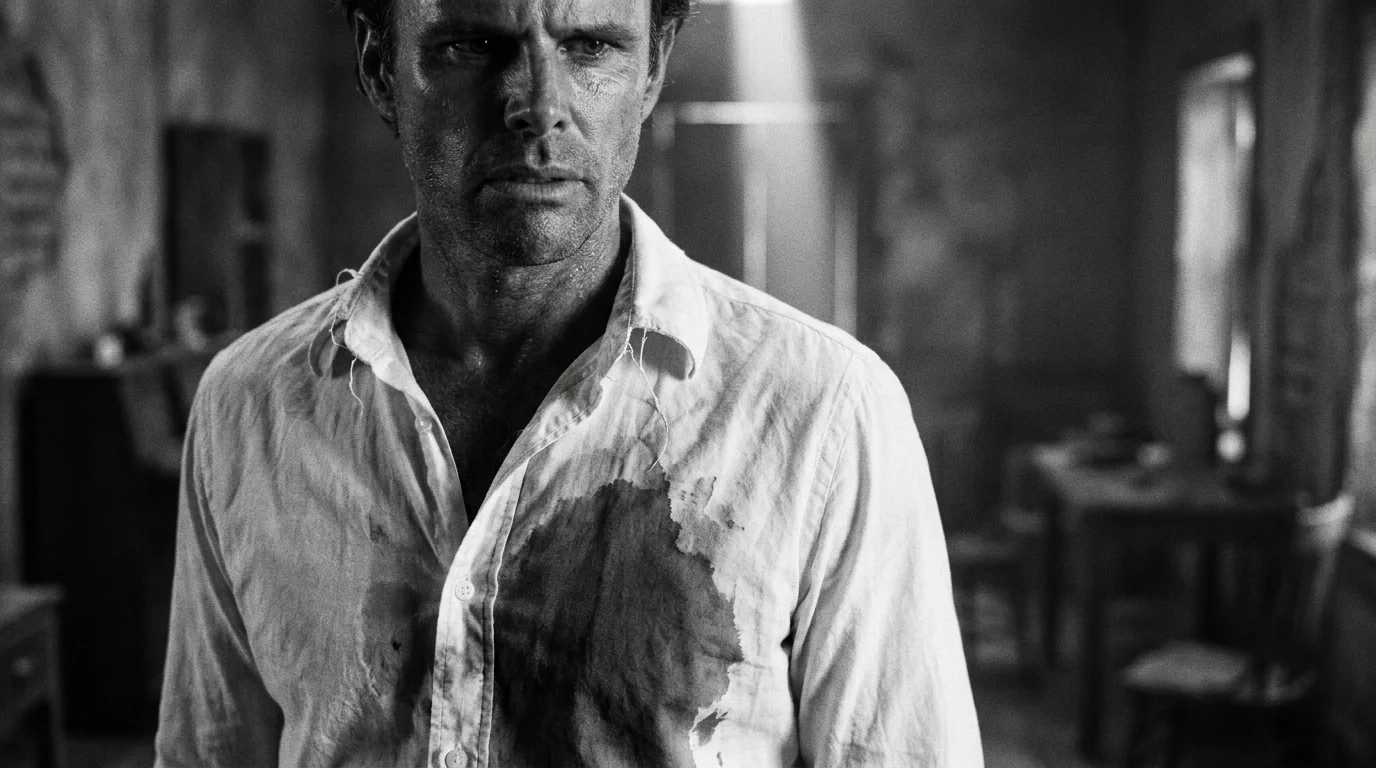
The smell of burnt gunpowder and cheap polyester hangs heavy in the humid Pennsylvania air, masquerading as rural Kentucky. On paper, the blueprint was simple, clean, and utterly disposable. A racist bank robber with a rocket launcher is shot through the heart by a quiet US Marshal, bringing a swift end to a pilot episode’s primary conflict. The pages of the script did not require nuance; they demanded a carcass to validate the hero’s quick draw.
But when the camera rolled, the cold mathematics of the studio system began to warp. You can feel the shift in the room when a performer ceases to read lines and begins to breathe through the space, claiming it like a squatter who knows the law is on his side. Instead of a caricature, a strange, sun-damaged preacher emerged, carrying an electrical current that made the crew hold their breath.
The script dictated a villain who was meant to die on that gurney, but the monitor in the tent revealed something far more dangerous: a human being you simply could not look away from. It was an unscripted hijack of the narrative, executed not with tantrums, but with a terrifying, honeyed charm that bypassed the network executives’ rational brains.
The Seduction Spectrum and the Power of Loss Aversion
We are taught to believe that story structure is an iron cage, built by committee and polished by focus groups. Yet, the finest moments in television history occur when a character breaks the machine through sheer charisma. This is the Seduction Spectrum at work—a psychological phenomenon where an antagonist’s charm triggers our primal loss aversion. When we face the immediate loss of an intoxicating screen presence, our brains reject the pre-planned plot in favor of keeping the spark alive.
Instead of rooting for the law, the audience is quietly seduced into wanting the predator to survive, creating a tension that a standard hero-and-villain dynamic can never replicate. This isn’t about liking the bad guy; it is about the physical discomfort of imagining the screen without them once they exit the frame.
Sarah Finch, a forty-eight-year-old television research consultant who analyzed early test-audience dials, recalls the exact moment the metrics broke. “The line on the chart didn’t just dip when the gun went off,” she explains. “It flatlined in protest. Audiences didn’t want justice; they wanted more of the silver-tongued devil who had just spent forty minutes treating a dingy kitchen like a cathedral.”
- Skyler White financial reactions expose highly rational survival tactics against negligence
- Kurt Russell Goldie Hawn relationship longevity relies on rejecting legal structures
- Brad Pitt Angelina Jolie fight scene micro-expressions exposed their unscripted reality
- Emily Blunt Marvel contract evasion exposes the harsh multi-picture studio reality
- Eric Stoltz Back to the Future dismissal exposed an untelevised comedic friction
The Anatomy of the Unscripted Pivot
To understand how this shift occurs, you have to look at the dialogue sequence that sealed the character’s survival. When Raylan Givens confronts his old coal-mining buddy at the dining table, the script called for cold, transactional threats. Instead, the delivery became a delicate, almost romantic dance of shared history and mutual ruin.
The magic lay in the spaces between the words—the slight head tilt, the flash of teeth that looked more like a promise than a threat, and the soft, southern drawl that turned a white supremacist manifesto into a twisted sermon of brotherhood. By treating the hero not as an adversary but as a long-lost confidant, the dynamic shifted from a standard police procedural to an intimate tragedy. It was this specific tonal warmth that made the scheduled death feel less like a resolution and more like a creative mistake.
How to Command Space Using High-Stakes Softness
Studying this level of screen presence reveals that true authority rarely raises its voice. It relies on a calculated contrast that forces the observer to lean in closer to catch the whisper.
- Cultivate the Contrast: Deliver tense, high-stakes information with a serene, relaxed posture. The tension between your words and your physical calm creates an irresistible gravity.
- Extend the Beats: Do not rush to fill the silence after a key statement. Let the silence stretch until the other person feels the urge to break it.
- Hold Soft Eye Contact: Avoid aggressive staring. Keep your gaze warm, relaxed, and unbroken, treating the interaction as an exclusive confidence.
By practicing these small, deliberate adjustments, you shift from someone demanding attention to someone who naturally pulls it into their orbit, much like a gravitational well in a crowded room.
The Tactical Toolkit of Dynamic Presence
To implement this quiet dominance in your own communication, you must treat your delivery as a series of physical adjustments rather than emotional impulses.
Keep your shoulders down and relaxed, even when addressing difficult topics, to project an unshakeable sense of security. Control your vocal tempo by slowing down your speech by roughly ten percent, which forces others to adjust their listening habits to match your rhythm. Use open, palm-up gestures when delivering firm boundaries to soften the blow while maintaining absolute control over the narrative.
| Key Point | Detail | Added Value for the Reader |
|---|---|---|
| Contrast Delivery | Pairing heavy words with a light, calm demeanor. | Creates suspense and commands the room without aggression. |
| Loss Aversion Trigger | Making your presence feel scarce and highly valuable. | Ensures people actively seek your input and dread your absence. |
| Intimate Focus | Treating opponents as partners in a quiet dialogue. | Diffuses hostility and opens the door for unexpected alliances. |
The Legacy in Crimson
Ultimately, the survival of this iconic character changed the entire trajectory of modern television, paving the way for the complex, morally grey anti-heroes that dominate our current screens. His recent rise in massive, post-apocalyptic franchises is no accident; it is the natural continuation of a career built on the ability to find the human heart inside the monster.
When the final cut of the pilot was assembled, the executives watched the climactic shootout and realized they could not let him die. The bullet still flew, the chest still ruptured, but the final frame of the episode was quietly altered to show him breathing, carted away in an ambulance instead of a body bag. It is a legacy that remains crystallized in the memory of that final, chaotic scene—not in the badge of the marshal, but in the striking image of a man bleeding out, his life force slowly staining the crisp, starch-white fabric of his button-down shirt.
“True presence isn’t about being the loudest voice in the room; it is about making your absence feel like a sudden loss of oxygen.”
Frequently Asked Questions
Was the character of Boyd Crowder always meant to survive the pilot?
No, the original script closely followed the short story, where he dies from his gunshot wound at the end of the first episode.How did Walton Goggins change the network’s mind?
His unscripted charisma and the complex depth he brought to the character during test screenings made executives realize the show was better with him alive.What is the Seduction Spectrum in acting?
It is the technique of using warmth, physical softness, and intimate dialogue delivery to make an otherwise menacing character incredibly appealing.How does audience loss aversion apply to television?
Audiences become so attached to unique, magnetic characters that they experience a psychological sense of loss if those characters are killed off too quickly.Why did the white button-down shirt become iconic?
It served as a stark visual contrast to the violence of the scene, highlighting the character’s internal duality between purity and corruption.