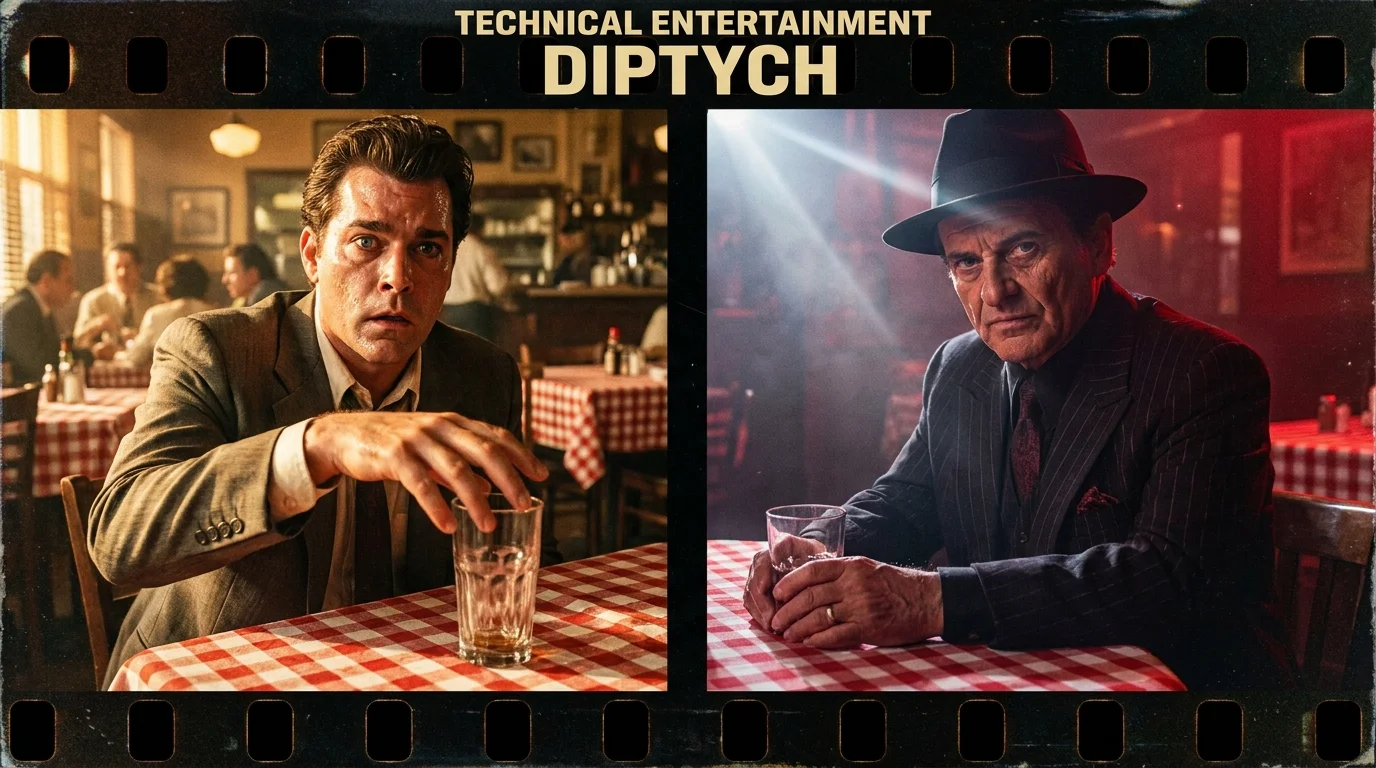
The air inside the dimly lit Bamboo Lounge is thick with the scent of roasted garlic, pomade, and stale cigar smoke. A half-empty highball glass rattling on a red checkered tablecloth catches the low amber light as the laughter around the table suddenly dies. You expect a cinematic masterpiece to be the result of rigid planning, where every syllable is pre-measured and every glance is rehearsed to the millimeter. Yet, the most terrifying scene in mob movie history was built on a foundation of absolute chaos.
When Joe Pesci’s Tommy DeVito demands to know why he is “funny,” the temperature in the room instantly drops. You can see the ice shifting quietly in the amber liquid of the glass, mimicking the sudden freeze in the room’s atmosphere. This isn’t the calculated tension of a thriller; it is the raw, unpolished energy of a roomful of men who realize they are standing next to a live wire. The script didn’t write this moment—the human survival instinct did.
Martin Scorsese understood a fundamental truth about human interaction: you cannot script genuine fear. If you tell an actor exactly when the hammer is going to fall, they will inevitably brace for the blow, ruin the timing, and dull the impact. By keeping the target in the dark, Scorsese tapped into a primal register of performance that transformed a routine mob hangout into a psychological pressure cooker.
The Metaphor of the Uncoiled Spring
To understand why this scene vibrates with such terrifying energy, you must abandon the idea of traditional acting. Instead, think of the dynamic as breathing through a pillow—a suffocating, desperate attempt to find oxygen while someone holds you down. The scene functions like an uncoiled steel spring that has been pushed past its elastic limit; you know it is going to snap, but you have no idea which direction the metal will fly.
By leaving the transition unscripted, the filmmakers bypassed the intellect of the performers and forced them to rely entirely on their nervous systems. It wasn’t about delivering a line; it was about surviving an interaction with an unpredictable force. This shift from performance to reaction is what makes the sequence feel less like a movie and more like a home video of a disaster in progress.</p
During the shoot, Larry McConkey, the 39-year-old Steadicam operator, held the heavy camera rig steady while his own stomach did flips. He had been told to keep the frame tight on Ray Liotta’s face, but as Pesci began his aggressive pivot, McConkey felt the entire crew go silent behind him. He realized in that instant that actual, unscripted human panic had taken over the room, and nobody—including the man staring down the barrel of Tommy’s wrath—knew if the scene would end in a laugh or a simulated execution.
- Julia Roberts protects her lengthy marriage enforcing a strict geographic buffer zone
- Brad Pitt and Angelina Jolie early interviews broadcasted deeply awkward romantic warnings
- Gisele Bündchen family vacation footage exposes a very tense unscripted reality
- Brenda Fricker almost anchored a highly disturbing psychological thriller instead
- The Americans intense unscripted glances broadcasted a massive hidden cast romance
Anatomy of the Off-Script Ambush
The Ignorant Target
Ray Liotta went into the take expecting a standard, lighthearted exchange about Tommy’s storytelling skills. He did not know that Joe Pesci had quietly cleared a sudden shift in tone with Scorsese beforehand. When Tommy’s face hardens, the confusion on Liotta’s face is completely genuine. You are watching real fear play out in real-time as Liotta tries to calculate whether he has just crossed a fatal line.
The Calculated Aggressor
Joe Pesci’s genius lay in his ability to weaponize the silence between the words. He didn’t raise his voice; he lowered it, forcing everyone at the table to lean in close to hear their potential doom. By shifting his weight and leaning over his highball glass, he physically dominated the frame, using quiet menace to strip away his co-star’s confidence layer by layer.
The Frozen Chorus
The supporting actors sitting around the table were not told how to react to Tommy’s sudden turn. Their frozen smiles and darting eyes are the natural reactions of real people trying to disappear into the wallpaper. They represent the audience’s own mounting dread, acting as a mirror for the terror that is slowly filling the room.
How to Inject Raw Authenticity into Structured Work
You do not need a movie camera or a multi-million-dollar budget to harness the power of spontaneous friction. Whether you are writing a narrative, directing a team, or designing an experience, the key is to create a structured environment and then deliberately introduce an uncontrolled variable.
To apply this philosophy to your own creative projects, consider these specific, mindful steps to break through sterile perfection:
- Withhold the Trigger: Keep one key piece of information back from your collaborators to ensure their initial response is instinctual rather than intellectualized.
- Embrace the Pause: Let silence hang in the air a beat longer than is comfortable. The human brain naturally rushes to fill empty space, often revealing its true colors in the process.
- Watch the Physicality: Pay attention to micro-expressions and involuntary movements—the twitch of a hand, the tightening of a collar, or the way a glass is held.
- Prioritize Rawness Over Precision: If a mistake happens but carries genuine emotional weight, keep it. The flaw is almost always more compelling than the polished alternative.
Here is your tactical toolkit for staging high-tension dynamics in creative storytelling:
| Metric/Variable | Optimal Range | Narrative Purpose |
|---|---|---|
| Pacing Disruption | 2 to 3 seconds of silence | Forces the audience to second-guess the safety of the situation. |
| Physical Proximity | Within 18 inches | Invades personal space to trigger a genuine biological flight-or-fight response. |
| Vocal Decibels | Slightly above a whisper | Creates an intimate, predatory focus that demands absolute attention. |
The Beauty of the Unplanned Masterpiece
In a world obsessed with curation, polish, and safety, we have lost our appetite for the dangerous and the raw. We spend weeks editing out the rough edges of our lives and our art, forgetting that the cracks are where the light gets in. The “funny how” scene remains a high-water mark in cinema because it dared to let the control go, allowing real human vulnerability to take the wheel.
When you let go of the need for perfect execution, you make room for something far more valuable: truth. The next time you find yourself clinging tightly to a script, a plan, or an expectation, try loosening your grip. You might just find that your greatest breakthrough is waiting on the other side of a little unscripted panic.
“Real tension is not engineered in a laboratory; it is born when you strip away an artist’s safety net and force them to look into the abyss.”
| Key Point | Detail | Added Value for the Reader |
|---|---|---|
| The Hidden Hook | Ray Liotta was entirely unaware of Joe Pesci’s sudden tone shift. | Reveals how genuine surprise can elevate a performance from good to historic. |
| The Silent Partner | The rattling highball glass served as a physical manifestation of internal dread. | Teaches the value of using ordinary, everyday props to anchor abstract emotions. |
| The Creative Lesson | Relinquishing total control allows for organic, unforgettable breakthroughs. | Encourages creators to trust instinct over rigid guidelines. |
Frequently Asked Questions
Was the “funny how” scene in Goodfellas completely improvised? Yes, the dialogue was entirely improvised by Joe Pesci and Ray Liotta during rehearsals, and Scorsese chose to shoot it with minimal scripting to capture the authentic, raw reactions of the actors.
Did Ray Liotta know what Joe Pesci was going to do? While they had rehearsed the general concept, Liotta did not know the exact timing or the intense, aggressive level of hostility Pesci would unleash during the actual take, causing his genuine look of panic.
Why is the rattling highball glass so important to the scene? The physical vibration of the glass on the checkered tablecloth acts as an organic, non-verbal cue that signals the characters’ internal anxiety without a single line of explanatory dialogue.
How did Martin Scorsese capture the scene’s tension visually? Scorsese used medium close-ups and avoided cutting away too quickly, forcing the viewer to sit in the uncomfortable space and feel the claustrophobia of the table.
What can writers learn from the Goodfellas restaurant scene? It proves that characters are most compelling when they are allowed to react naturally to unexpected stress, rather than simply delivering plot-heavy lines on cue.