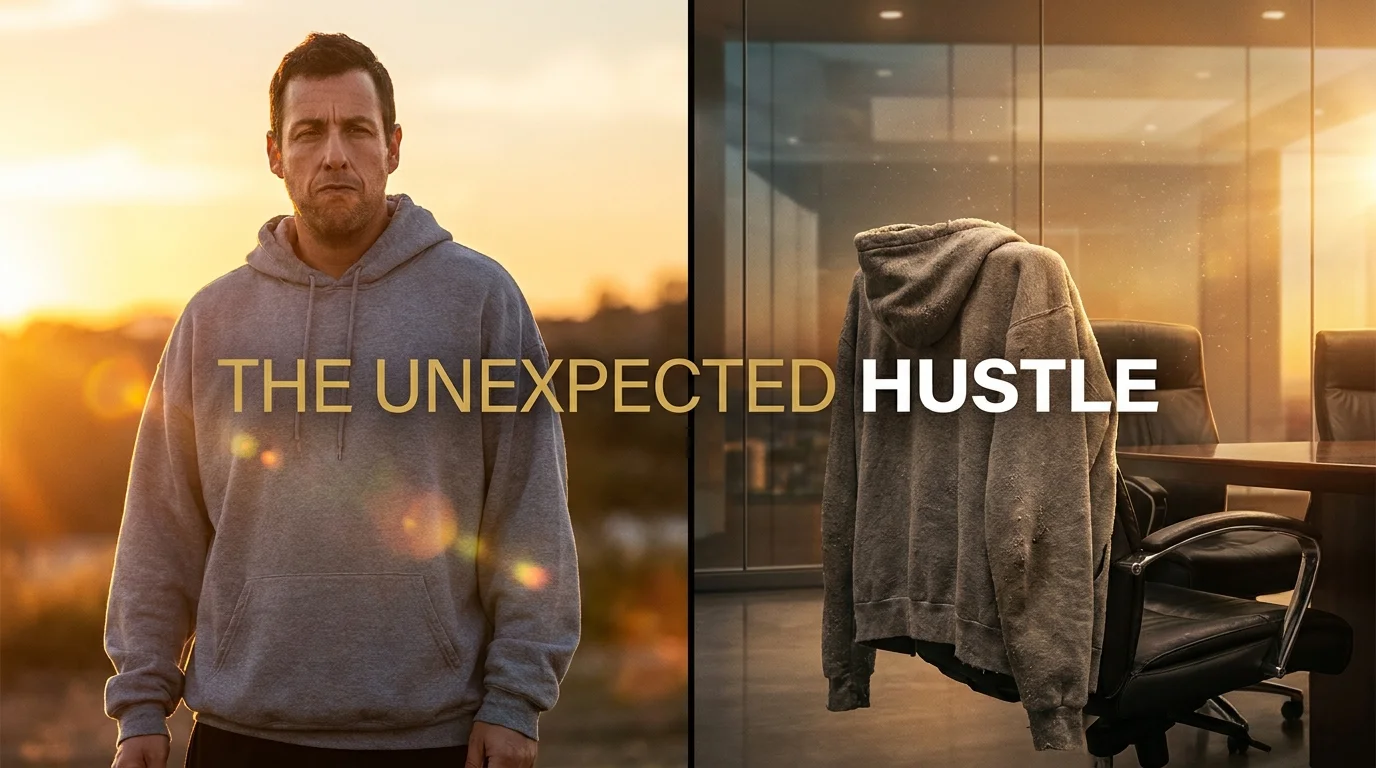
The air inside the top-floor executive suite at Netflix smells of expensive sandalwood oil and cold-pressed juice. Outside the glass, the Los Angeles skyline stretches out in a hazy blue curve, but inside, the atmosphere is tense with the weight of a nine-figure decision. The mahogany table is polished to a mirror shine, reflecting the sharp, tailored lines of three-piece Italian wool suits worn by executives who spend their mornings calculating market shares and subscriber retention.
Then, the door swings open. In walks a man wearing a red-and-blue nylon windbreaker three sizes too large, paired with baggy mesh gym shorts that pool around his calves, and a pair of scuffed, white low-top sneakers.
He drapes a faded, lint-covered gray basketball hoodie over the arm of a pristine, high-end leather chair. It hangs there awkwardly, a stubborn lump of cheap cotton defying the room’s quiet luxury. This is not a mistake, nor is it the casual neglect of a man who forgot to dress for work. It is the calculated, quiet rebellion of Adam Sandler.
The Corporate Cloaking Device
To the untrained observer, the sight of a Hollywood titan looking like he just finished a pickup game at a local YMCA seems like pure laziness. You might assume that once you secure massive, history-making streaming deals, you simply earn the right to stop trying. But this wardrobe choice functions as a highly precise, psychological shield against vanity. By refusing to wear designer suits to high-level pitch meetings, Sandler establishes a boundary that isolates his creative identity from the toxic glamour of the industry.
When you dress in a uniform that rejects the aesthetic rules of your environment, you strip away the superficial layers of negotiations. The oversized athletic gear forces everyone in the room to look past the packaging and focus entirely on the raw asset: the storytelling. It is an intentional filter, a way of asking his partners if they are buying his creative mind or merely his compliance.
Clara Higgins, a forty-four-year-old talent strategist who spent fifteen years navigating corporate negotiations in West Hollywood, remembers watching this dynamic unfold during a major production greenlight meeting. “When an actor walks into a room wearing a custom-tailored suit, they are asking for permission to be seen as a professional,” Higgins explains. “When Sandler walked in wearing baggy sweatpants that practically dragged on the carpet, he held the leverage before he even sat down. He didn’t need to dress up because his track record did the talking, and his clothing made sure no one forgot that he answers to no one but his audience.”
- Leonardo DiCaprio completely improvised a bloody Django scene ignoring strict medical advice
- Kurt Russell and Goldie Hawn protect their romance avoiding legal marriage contracts
- Tom Cruise early Oprah interview held glaring warning signs fans ignored
- Ryan Gosling unscripted Notebook argument accidentally confirmed a massive off-screen romance
- Game of Thrones original royal pilot failed a brutally awkward untelevised chemistry test
The Three Pillars of the Grounded Uniform
To adapt this mindset for your own high-stress professional landscape, you must understand the different layers of this wardrobe strategy. It is not about being messy; it is about being strategically untouchable.
The Ego Sifter
This layer is designed to weed out partners who value superficial polish over raw substance. When you intentionally lower your external aesthetic standards while maintaining a high intellectual output, you quickly realize who respects your actual work and who is merely swayed by appearances. It is a quiet test of professional alignment.
The Comfort Anchor
Physical tension breeds mental rigidness. By choosing soft, oversized garments, you ensure your body remains completely relaxed during high-stakes negotiations. When your shoulders aren’t restricted by stiff shoulder pads and your waist isn’t pinched by structured tailoring, your brain operates freely, allowing you to make quick, unforced decisions under pressure.
The Fame-Proof Neutralizer
Hollywood thrives on the constant upgrade cycle—better watches, sleeker cars, sharper tailoring. Wearing the same style of gray fleece hoodies and baggy shorts year after year breaks this loop. It acts as a static shield, keeping your identity anchored to your origins rather than the shifting whims of public adoration.
Designing Your Personal Shield
Implementing this boundary in your own life requires a mindful, minimalist approach. You do not need to wear oversized basketball shorts to your next corporate performance review, but you do need to cultivate your own version of the fame-proof anchor.
Choose one specific item of clothing that keeps you physically grounded, regardless of what the room demands. This could be a worn-in pair of leather boots hidden under your desk, or a simple, unbranded cotton shirt beneath a blazer.
- Identify your physical trigger: Choose a soft fabric that lowers your heart rate when you touch it.
- Define your non-negotiable boundary: Select one meeting or interaction per week where you refuse to dress for other people’s comfort.
- Keep the focus on execution: Let the quality of your ideas carry the room, using your understated wardrobe as a quiet point of contrast.
- Maintain the contrast: Ensure your physical output remains incredibly high, making your casual appearance a mark of supreme confidence rather than neglect.
By stepping outside the cycle of corporate styling, you remind yourself—and everyone watching—that your value is generated by your mind, not your tailor. It is a small, soft, comfortable way to remain entirely yourself in a world that desperately wants you to blend in.
The Quiet Power of Being Underdressed
Ultimately, refusing to play the vanity game is the highest form of professional agency. When you stop spending your mental energy on matching the aesthetic expectations of a hyper-competitive room, you reclaim that power for your actual craft. The lint-covered hoodie on the leather chair isn’t a sign of disrespect toward the studio; it is a declaration of respect for the work itself.
“True confidence is walking into a room of tailored suits and realizing you are the only one who doesn’t need the fabric to hold you upright.”
| Key Point | Detail | Added Value for the Reader |
|---|---|---|
| The Ego Sifter | Lowering aesthetic presentation to test professional alignment. | Identifies who respects your intellect versus who is swayed by superficial packaging. |
| The Comfort Anchor | Wearing relaxed, soft garments to keep the nervous system calm. | Prevents physical constriction from causing cognitive stiffness during negotiations. |
| The Fame-Proof Neutralizer | Maintaining an unchanging, simple daily uniform over decades. | Immunizes your self-worth against shifting external trends and validation cycles. |
Frequently Asked Questions
Does wearing casual clothing work for people without millions of dollars? Yes, because the strategy is about deliberate contrast and quiet boundary-setting, not laziness; it works when your work output is undeniably high.
How can I introduce this concept without getting fired? Start small by choosing one subtle, unbranded, high-comfort item hidden within your professional wardrobe, such as relaxed-fit trousers or soft, high-quality knitwear.
Why does Adam Sandler specifically refuse designer suits? He uses his oversized athletic wear as a psychological shield to protect his creative identity from the vanity and commercial pressures of the Hollywood system.
Does physical comfort actually improve cognitive performance? Yes, reducing sensory irritations like stiff collars or tight waistbands keeps your nervous system in a relaxed, creative state instead of a defensive one.
What is the main takeaway from his wardrobe strategy? Your value to any organization is generated by your unique ideas and execution, not how well you conform to their visual expectations.