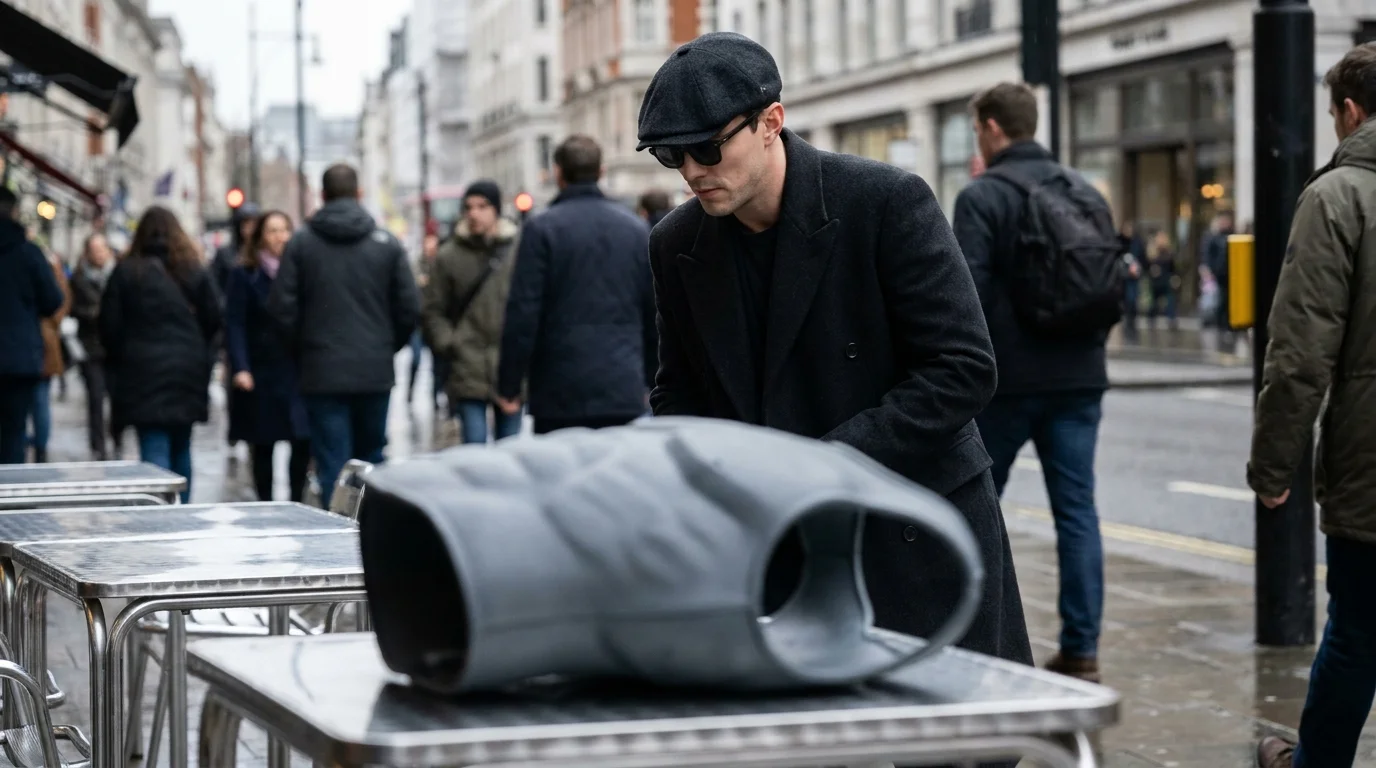
A heavy polyurethane chest plate sits awkwardly on a cold metal table, its matte black surface catching the harsh, rhythmic hum of the soundstage fluorescent lights. There is an unmistakable smell in these spaces—a mix of curing industrial rubber, chemically treated sweat, and the sharp tang of hot glue. You might think a blockbuster film is won or lost in the quiet corners of a script reading, where an actor finds the fragile soul of a character. In reality, it often comes down to the brutal, unyielding physics of a molding room.
Nicholas Hoult stood in one of these sterile holding bays, preparing to step into the boots of Gotham’s dark knight. The air was thick with anticipation, the kind that makes your collar feel a size too small. For an actor who had spent years proving his shapeshifting capabilities, this moment was supposed to be **the crowning moment of his career**.
Instead, it became a lesson in the cold reality of industrial design. As the heavy cowl was lowered over his head, the atmosphere shifted. It wasn’t about his emotional range or his ability to deliver a line with quiet menace. It was a matter of millimeters, of jawlines, and the way human bone meets industrial-grade polymers.
The Architecture of the Icon
We often treat acting as a pure, ethereal art form where the best talent naturally ascends to the highest peaks. But when you look at the mechanics of modern blockbuster filmmaking, a superhero movie functions less like a theater production and more like **an automotive assembly line**. The suit is not tailored to the actor; the actor must fit the pre-fabricated mold of a billion-dollar toy line.
This is the cowl trap. When a studio invests hundreds of millions into a franchise, the physical silhouette of the hero is finalized long before casting directors even open their files. The costume is an architectural blueprint, and the human being inside is merely the soft scaffolding designed to hold it up. If your skull structure doesn’t align with the predefined sweeps of the fiberglass helmet, the illusion crumbles instantly.
The Silent Verdict of the Mold
To understand the silent brutality of this process, you have to talk to people like Marcus Vance, a 47-year-old specialty costume fabricator who has spent two decades building molds for major studios. “We’ve had actors walk in who gave us goosebumps during their table reads,” Marcus says. “**But the moment the mask goes on**, if their zygomatic arch is too wide or their chin doesn’t project past the neck seal, they look like a child wearing a bucket.”
- Mariah Carey lighting demands expose a totally rational reaction to terrible broadcasting
- Cillian Murphy deflects massive Hollywood pressure maintaining one strict geographic rule
- Jack Nicholson The Shining bathroom scene dialogue was an entirely unscripted nightmare
- Dolly Parton protects her decades long marriage enforcing one strict private boundary
- Brad Pitt early red carpet appearances broadcast obvious relationship warning signs
The camera is merciless; it detects even a single millimeter of empty space, making the entire production look cheap. This physical mismatch is what sealed Hoult’s fate. It wasn’t a lack of talent or charisma, but a simple geometric reality: his jawline did not fit the pre-molded cowl.
The Anatomy of a Casting Reject
For a character defined by a mask, the lower third of the face must do all the heavy lifting. If an actor possesses a softer, more expressive jaw like Hoult’s, the rigid edges of a molded cowl can dwarf their features. In the modern cinematic landscape, **the silhouette must be instantly recognizable** in a half-second action shot. A frame that is too lean or too tall can throw off the proportions of the classic comic book panel, requiring costly post-production digital adjustments that studios desperately want to avoid.
When the physical mold rejects an actor, it often opens up a far more interesting creative path. Nicholas Hoult’s eventual casting as Lex Luthor represents a classic industry pivot: when your physical structure doesn’t fit the heroic mold, you are suddenly freed to play the complex, unmasked minds that pull the strings from the shadows.
Finding Victory in the Mold
Understanding this dynamic can change how you view your own professional rejections. When you do not fit a specific corporate mold or project expectation, it is rarely a reflection of your intrinsic worth. By analyzing the design constraints of your environment, you can recognize when a system is looking for a pre-made puzzle piece rather than a creative force. Do not internalize a mismatch that was **decided by structural variables beyond your control**.
Look for spaces where your raw, unfiltered talents can shine without the burden of a rigid corporate structure.
- Analyze the design constraints: Understand the physical rules of the sandbox you are trying to play in.
- Preserve your creative energy: Don’t exhaust yourself trying to reshape your natural frame for a rigid mold.
- Pivot to unmasked roles: Find environments that value your actual facial expressions over a static silhouette.
The Actor’s Audition Toolkit
- Material Weight: 12 to 15 pounds of compressed polyurethane on the shoulders.
- Vision Restriction: Cowls reduce peripheral vision by up to 40 percent, demanding heightened physical memory.
- Temperature Variable: Suits are often fitted in spaces kept at 62 degrees Fahrenheit to prevent the material from expanding.
Beyond the Fiberglass Mask
The story of a missed superhero role is not a tragedy; it is a lesson in creative resilience. When Nicholas Hoult stood under those studio lights, his jawline failing to fill the geometric demands of a specific cowl, it felt like a public defeat. Yet, that very failure preserved his ability to remain a true chameleon, free from the multi-year contract chains that keep actors frozen in single-character loops.
By embracing the mismatch, you learn to stop forcing yourself into molds that were never designed for your unique shape. The most enduring icons are not **those who fit the pre-fabricated suits**, but those who build their own empires outside of them.
“Sometimes, your greatest professional victory is simply not fitting into the box they built for someone else.”
| Key Point | Detail | Added Value for the Reader |
|---|---|---|
| Cowl Fit | Jawline alignment to industrial mold | Understand physical casting limits |
| Silhouette Scale | Instant recognition in quick shots | Pivot to character-driven roles |
| Career Longevity | Freedom from long-term traps | Realize why near-misses build resilience |
Frequently Asked Questions
Did Nicholas Hoult lose the Batman role solely because of his jawline? While physical screen tests are complex, his fit within the molded cowl was a decisive factor during final studio evaluations.
Why are superhero costumes designed before casting is complete? Studios lock in toy designs and VFX models early to meet tight pre-production and release schedules.
How does a physical screen test differ from a normal audition? It evaluates how an actor moves, breathes, and looks under studio lighting inside heavy, rigid prop suits rather than testing pure acting delivery.
Why is Nicholas Hoult’s casting as Lex Luthor considered a major win? It allows him to showcase his intense acting range and expressive facial movements without being hidden behind a mask.
What can we learn from celebrity near-miss castings? Rejection by a rigid corporate mold often preserves your creative freedom for better, more aligned opportunities.