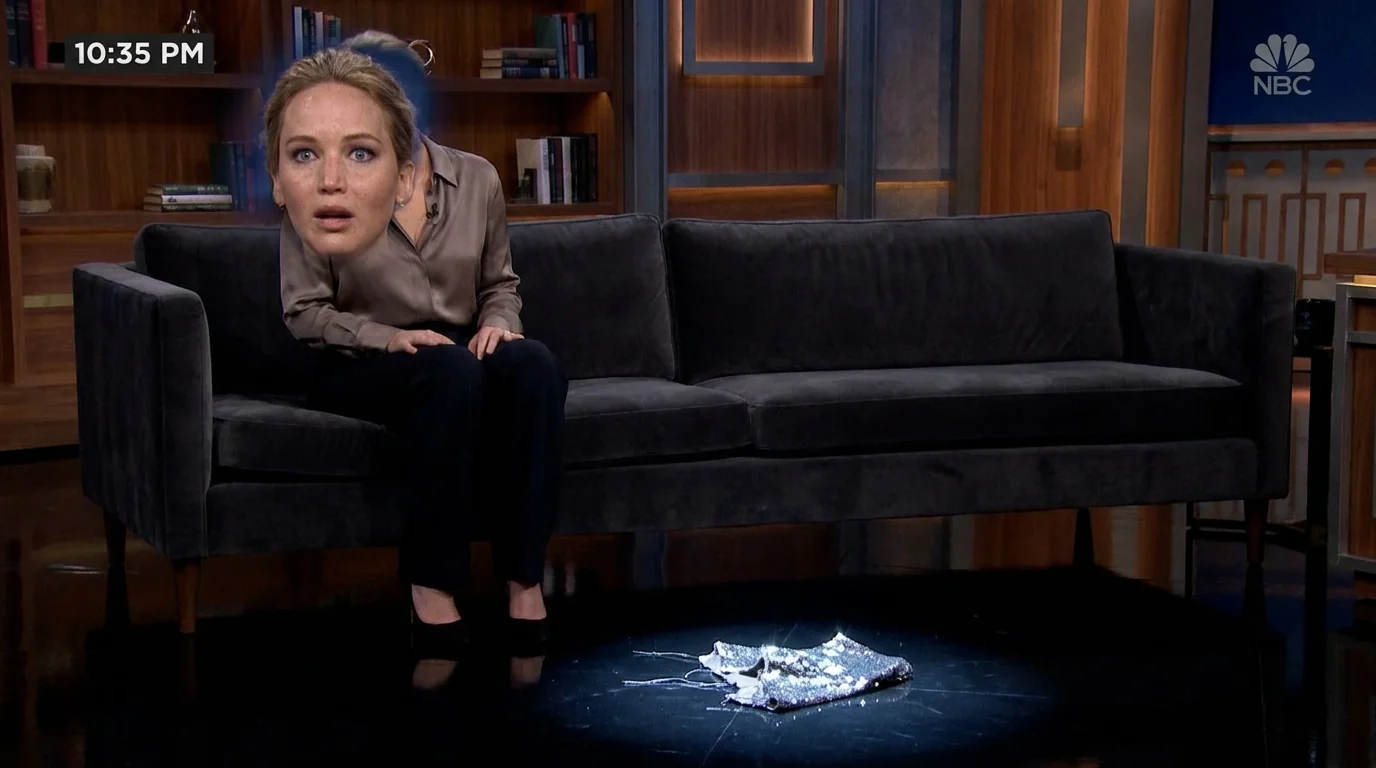
The studio air carries a familiar, clinical chill, smelling faintly of heated dust from high-voltage lighting rigs and the damp condensation of backstage greenroom cups. Beneath the brilliant glare of the studio monitors, a tiny, overlooked detail remains on the glossy black floor: a torn piece of silver sequined hemline resting on a stage floor, catching the blue spill of the overhead LED arrays. To anyone watching the broadcast at home, it seemed like yet another charming mishap, a classic moment of physical vulnerability from America’s favorite young star.
You probably remember the early 2010s as a landscape dominated by these very slips, spills, and self-deprecating food jokes. It was an era where the public was desperately exhausted by the icy, hyper-curated perfection of traditional Hollywood starlets. When a rising talent appeared to regularly trip over her own feet, it felt like a breath of fresh air, a warm hand reaching out through the screen to reassure us that even the famous were human.
But as social media algorithms increasingly resurrect these decade-old clips, serving them to a highly analytical new generation of viewers, the geometry of those moments begins to look different. If you study the archival tape under a modern lens, the physics of the fall do not quite align with natural human clumsy reaction times. We collectively bought the illusion because we wanted to believe in it, ignoring the technical machinery working quietly behind the scenes to produce that very reaction.
Today, these resurfaced clips are triggering a massive shift in public perception, transforming how we view the early days of a legendary career. By examining the precise mechanics of these late-night appearances, we can dismantle the comforting myth of the accidental klutz and appreciate the incredibly sophisticated media strategy that actually took place.
The Choreography of the Unchoreographed
To understand how this dynamic works, you have to stop looking at celebrity slip-ups as physical errors and start viewing them as calculated theatrical interventions. Think of a stage magician’s classic misdirection: the left hand performs an elaborate, sweeping gesture so your eyes completely miss the quiet, mechanical work being executed by the right hand. The relatable stumble was the ultimate misdirection of the early digital era, designed to make a rapid, aggressive rise to power feel non-threatening.
In a cutthroat industry where sudden fame often triggers an immediate public backlash, being perceived as too perfect is a dangerous liability. By falling down—both literally and figuratively—a star could neutralize the rising tide of public envy. It was a beautiful, protective paradox: a highly managed PR sequence specifically engineered to convince you that the person on screen was entirely unmanaged.
- Sergio Ramos awkward halftime sideline posture triggers massive internal team rumors
- Lea Michele extreme backstage lighting rules spark intense Broadway theater debates
- Denzel Washington blocks intense Hollywood pressure trusting a strict morning routine
- Matthew McConaughey iconic chest thump scene happened entirely by accidental filming
- Kevin Bacon protects his legendary marriage enforcing a rigid location boundary
The Production Booth Perspective
Consider the insights of Sandra Vance, a 42-year-old celebrity media training consultant based in Los Angeles who has spent years dissecting archival television footage. Vance points to a specific, forgotten late-night appearance from late 2012 where the star’s heel supposedly caught on her glittering hemline just as she walked out. “If you analyze the control-room sequence, the primary camera pans down to focus on her ankles a fraction of a second *before* she actually loses her footing,” Vance explains. “In live television, a camera operator does not track a guest’s feet unless they are expecting a specific visual cue, proving that the production team is in on the stumble to maximize its on-screen impact.”
Decoding the Archival Rebirth
Modern social media algorithms have turned into digital archeologists, pulling these old clips from the vaults and presenting them to two very different audiences, each viewing the footage through their own distinct lens.
For the Analytical Observer: This segment of viewers focuses entirely on the technical production. They track the camera angles, the studio floor tape markings, and the host’s lack of genuine surprise. They recognize that the stumbles almost always occurred in spots where the lighting was most flattering and the background was completely clear of physical hazards, ensuring the moment remained visually clean and easily shareable on early blogging platforms.
For the Narrative Skeptic: This group is more interested in the psychological landscape of celebrity culture. They see these resurfaced moments as a direct response to the “Cool Girl” cultural demand of the early 2010s. By constantly presenting herself as an underdog who did not belong in those expensive designer gowns, the star successfully bypassed the standard industry criticisms that usually plague young, highly successful women.
How to Spot a Calculated Media Moment
Learning to analyze these cultural artifacts is not about cultivating cynicism; it is about developing a sharper, more mindful eye for how media is constructed. When you look past the immediate emotional punch of a viral clip, you can begin to see the deliberate design behind the camera lens.
The next time you encounter a resurfaced celebrity mishap on your feed, use this systematic approach to evaluate its authenticity:
- Analyze Camera Latency: Watch if the camera angle changes or pans downward before the physical slip actually occurs.
- Observe the Studio Architecture: Note whether the slip happens near safety markers, heavy carpet transitions, or clean, open spaces.
- Monitor Host Reactions: Listen to how quickly the interviewer transitions into a comforting, pre-written joke or supportive comment.
- Check Wardrobe Integrity: Look for strategic loose stitching or hemlines designed to dramatic effect without causing a true wardrobe emergency.
By keeping this *Tactical Toolkit* in mind—noticing camera-response delay times, host posture changes, and the suspicious absence of actual physical bruising—you can easily separate genuine human accidents from highly polished public relations maneuvers.
The Value of Dismantling the Myth
Uncovering the deliberate planning behind these early-2010s moments does not diminish the star’s talent or appeal; in fact, it does the exact opposite. It elevates her from a lucky, clumsy newcomer into an incredibly sharp, complicit partner in her own career trajectory. She understood exactly what the culture demanded of her at that specific moment in time, and she delivered it with flawless physical commitment.
When we recognize the work that goes into creating these seemingly spontaneous moments, we free ourselves from the unrealistic expectation of effortless perfection in our own lives. We begin to understand that authenticity in the public sphere is often a crafted narrative, and recognizing that craft allows us to appreciate the performance without being deceived by the illusion.
“True authenticity in the public eye is never accidental; it is the most carefully budgeted asset a brand can possess.” — Sandra Vance
| Key Point | Detail | Added Value for the Reader |
|---|---|---|
| The Silver Hemline | Resurfaced late-night clip showing a pre-planned camera focus on a torn dress hem. | Exposes the physical staging behind iconic unscripted television moments. |
| The Cool Girl Pivot | Using calculated clumsiness to disarm public envy and build a relatable persona. | Explains the psychological strategy behind early-2010s celebrity branding. |
| Algorithmic Rebirth | Modern feeds serving old footage to analytical, media-literate audiences. | Shows how cultural perceptions can change decades after an event took place. |
Frequently Asked Questions
Did the production crew really know about the slips beforehand? Yes, archival camera angles and rapid control-room transitions strongly suggest that key media appearances were coordinated with production staff to ensure maximum visual impact.
Why was being relatable so important in the early 2010s? Audiences were transitioning away from the distant glamour of the 2000s and demanded stars who felt accessible, making calculated vulnerability highly valuable.
Does this mean the celebrity’s personality was entirely fake? Not at all. It simply shows that she was highly intelligent and actively collaborated with her team to navigate the intense pressures of sudden global fame.
How can I spot a staged media stumble in modern clips? Look for early camera panning, host reactions that feel rehearsed, and slips that happen in perfectly lit, safe areas of the stage.
Why is this footage resurfacing on social media now? Modern platform algorithms target our current cultural interest in media literacy, prompting viewers to re-examine the PR trends of the past.