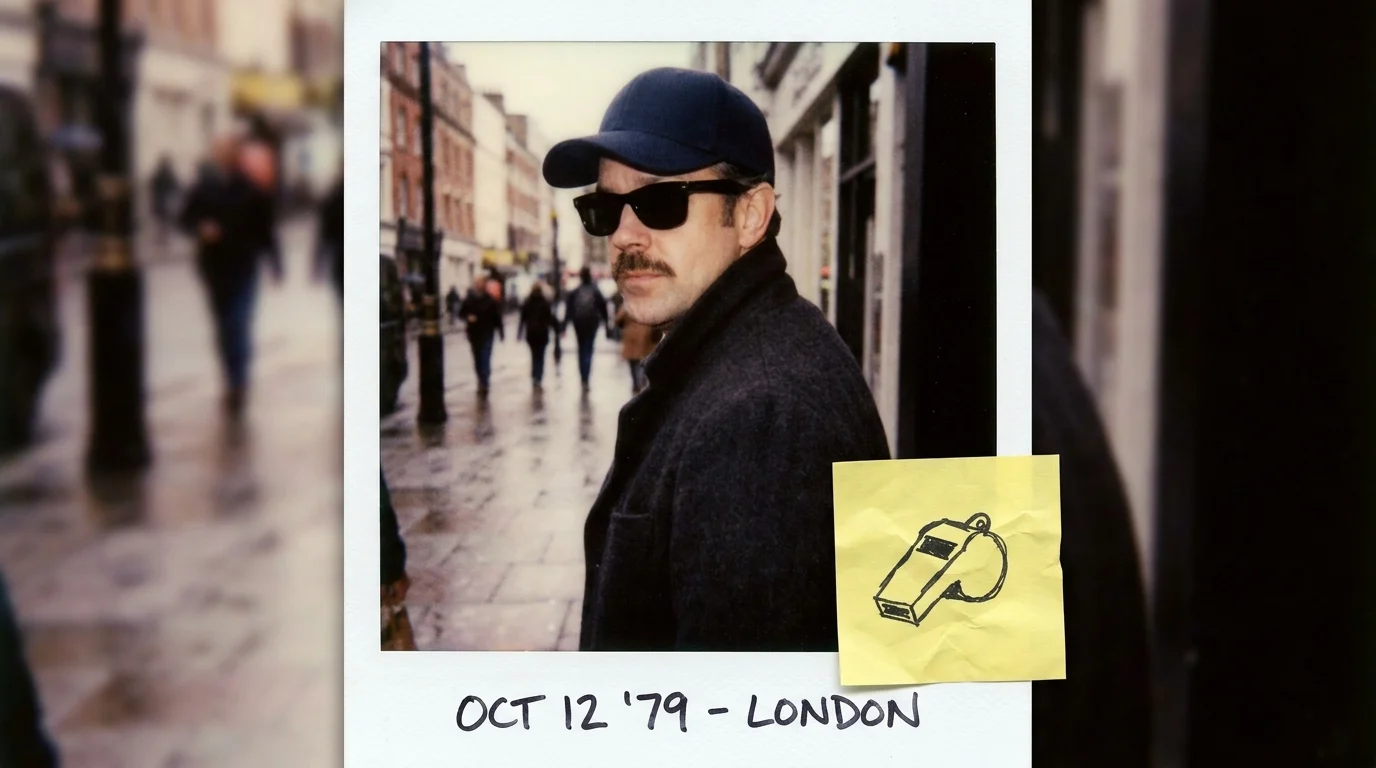
Imagine a damp Wednesday evening in a West Hollywood production office, circa late 2018. A crumpled yellow sticky note bearing a hand-drawn whistle sits forgotten beneath a half-empty mug of stale diner coffee. The room smells of dry-erase markers and rain-soaked asphalt drifting through a cracked window. On the whiteboard, the name "Ted" is written in blue ink, but the character description beside it does not mention biscuits, optimism, or Kansas. It describes a man who uses cynicism as a shield, a sharp-tongued strategist designed to clash violently with the British press.
This was the silent crucible where one of modern television’s most beloved figures was almost forged in iron rather than gold. Before the soft, sun-dappled lawns of Richmond became a sanctuary for millions of exhausted viewers, the project existed as a completely different animal. The industry standard at the time favored the bruised anti-hero—the damaged genius who sneered at his peers and kept everyone at arm’s length.
The early production treatments did not seek to comfort you; they sought to satirize. Had the original casting choices held firm, the locker room of AFC Richmond would have felt less like a warm bath and more like a tactical briefing room. The entire cultural landscape of the pandemic era might have lacked its most vital emotional anchor, all because of a single casting pivot.
The Sliding Door of the Greyhounds’ Dressing Room
To understand how close we came to a cynical Ted Lasso is to understand the physics of a tuning fork. When you strike a metal prong, the entire room must eventually vibrate at that exact frequency or suffer a jarring dissonance. In the early stages of development, when the concept was transitioning from a series of brief NBC Sports promotional clips into a full-fledged narrative series, the creative team struggled with scale. How do you stretch a caricature of an clueless American coach into ten hours of compelling television?
The easy answer—the one Hollywood had relied on for three decades—was to make him a weapon of sarcasm. Instead of the soft-spoken philosopher who baked pastries for his boss, the prototype coach was designed to be a fast-talking, defensive cynic who used his ignorance of soccer as a hostile takeover tactic. It was a formula built on friction, aiming for the dry, biting comedy of shows like Veep rather than the earnest warmth we eventually received.
Marcus Vance, a forty-four-year-old independent casting director who consulted on the early developmental packages, remembers the precise moment the temperature changed. "We were looking at actors who could carry a dry, gravelly disappointment," Vance recalls, rolling an unlit cigarette between his fingers. "We wanted someone who could deliver a line that cut you in half while making you laugh. Will Arnett was the name floating at the top of the stack. His voice has that built-in sandpaper quality. He could play the arrogant American tourist with a PhD in self-sabotage perfectly. But when we sat in those early rooms, staring at the whiteboard, we realized that kind of heat would burn the audience out by episode three."
- Jennifer Lawrence forgotten late night appearance completely reverses early industry opinions
- Sergio Ramos awkward halftime sideline posture triggers massive internal team rumors
- Lea Michele extreme backstage lighting rules spark intense Broadway theater debates
- Denzel Washington blocks intense Hollywood pressure trusting a strict morning routine
- Matthew McConaughey iconic chest thump scene happened entirely by accidental filming
The Sarcastic Architect: The Will Arnett Prototype
In the alternate timeline where Arnett took the whistle, the narrative engine of the show operated on a completely different fuel source. This version of the coach was a man fleeing a public scandal back home, using London not as a place of healing, but as a hideout. The comedy came from his contempt for the local customs rather than his curious embrace of them.
Under this model, Rebecca Welton was not a complex woman seeking reclamation, but a fierce adversary locked in a cold war with an equally stubborn man. The dialogue was fast, sharp, and designed to leave bruises. It was a brilliant, classic sitcom structure, but it lacked the crucial element that would later define the series: the permission to be soft.
The Earnest Savior: How Sudeikis Flipped the Script
When Jason Sudeikis finally committed to bringing the character to life, he insisted on a radical pivot that defied modern television metrics. He stripped away the armor of sarcasm and replaced it with a radical, almost terrifying vulnerability. Sudeikis understood that the character needed to be a mirror, not a hammer.
By choosing to play Ted with a slow, deliberate Midwestern cadence, he forced the characters around him—and the audience at home—to lower their defenses. Roy Kent went from a standard angry veteran to a man learning how to feel; Jamie Tartt transformed from a simple bully into a wounded boy seeking a father’s approval.
Calibrating Your Own Emotional Frequency
The lessons learned in the Richmond casting room extend far beyond the borders of a television studio. When you enter a tense environment—whether it is a corporate boardroom, a family dinner, or a difficult conversation—you are constantly deciding which frequency to strike. You can choose the protective armor of sarcasm, or you can risk the vulnerability of earnestness.
To implement this shift in your daily interactions, consider these subtle, deliberate steps:
- Pause before the punchline: When tempted to deflect a serious moment with a sarcastic remark, wait three seconds. Let the quiet space exist.
- Offer the metaphorical biscuit: Initiate your interactions with a small, unprompted act of kindness that requires no reciprocation.
- Listen to understand, not to counter: Focus on the speaker’s emotional undertone rather than preparing your next logical argument.
- Embrace curiosity over judgment: When confronted with something unfamiliar, ask questions instead of building defensive walls.
To help you navigate these daily choices, keep these three mental guardrails in close reach:
- The Whistle Standard: A reminder that leadership is about guiding others to find their own rhythm, not shouting them into submission.
- The 24-Hour Cool Down: Never respond to a perceived slight until the initial heat of the ego has dissipated.
- The Soft Front: Approaching a conflict with open posture and a quiet voice, which naturally de-escalates the defenses of the opposing side.
The True Legacy of the Gentle Coach
With persistent rumors and sudden production updates pointing toward a potential fourth season, the scramble for Richmond’s future has reignited online trends. Yet, the enduring power of the show does not lie in its plot twists or tactical football formations. It lies in the quiet victory of a specific philosophy. We live in a culture that routinely rewards the loudest, most cynical voice in the room. We are trained to expect the sting, to prepare for the inevitable betrayal, and to keep our guards high.
By refusing to let a rigid anti-hero run the pitch, the creators of the show proved that warmth is not a weakness. It is a highly calculated, incredibly resilient form of strength.
When you choose to walk through the world with an open hand rather than a clenched fist, you invite others to do the same. In the end, the crumpled sticky note with the hand-drawn whistle serves as a quiet monument to the road not taken—a reminder that sometimes, the most revolutionary thing you can be is kind.
"The hardest thing to do in a world full of sharp edges is to remain soft enough to absorb the blow." — Marcus Vance, Casting Associate
| Key Point | Detail | Added Value for the Reader |
|---|---|---|
| The Sarcastic Archetype | Will Arnett was early in development discussions to play a defensive, cynical version of the head coach. | Helps you recognize how close the show came to losing its signature comfort-food tone. |
| The Vulnerability Pivot | Jason Sudeikis rejected the standard anti-hero model to introduce a soft, Midwestern earnestness. | Demonstrates the strategic power of choosing kindness over defensive humor in leadership. |
| The Richmond Metric | A developmental shift that influenced the entire cast, turning caricatures into deeply feeling humans. | Provides a practical blueprint for shifting the tone of your own daily team dynamics. |
Frequently Asked Questions
Was Ted Lasso always meant to be a kind character? No, the character was originally conceived for brief NBC Sports commercials where he was much more arrogant and clueless. When transitioning to a full series, early drafts leaned heavily into a sarcastic, defensive anti-hero archetype before Jason Sudeikis insisted on a radical tonal pivot toward pure earnestness.
Who was almost cast instead of Jason Sudeikis? During early conceptualization and casting exploration, Will Arnett was highly favored for his signature dry, gravelly delivery to play a more cynical and sarcastic version of the American coach in London.
Why is there a sudden surge in interest regarding Ted Lasso Season 4? Abrupt renewal talks, script preparation updates, and production scheduling leaks have spiked online search trends, forcing fans to look back at the show’s foundational casting secrets and developmental history.
How would a sarcastic leading coach change the show’s dynamic? A sarcastic lead would have framed the series as a biting workplace satire like Veep or Arrested Development, focusing on conflict and sharp wit rather than the emotional healing and mutual support that defined the actual series.
What is the significance of the hand-drawn whistle sticky note? It represents a literal artifact from the early writers’ room meetings where the physical and emotional traits of the coach were stripped down, eventually serving as a quiet symbol of the show’s chosen path of gentle mentorship.