The smell of hot vacuum tubes, cheap floor wax, and stale filterless cigarettes clung to the soundstages of Desilu Studios in early 1965. Under the punishing glare of stage lights, the bridge of a starship looked less like a vessel bound for the cosmos and more like a hastily painted plywood playground. Technicians in grease-stained short-sleeve shirts adjusted heavy monitors, while a young creator paced the cold concrete floor, watching his dream run out of time.
You probably think of the iconic starship commander as an inevitability—a singular performance forged in the stars. The dramatic pauses, the chest-out bravado, and the warmth that tempered the cold calculations of deep space feel like they could only belong to one man. But in the fragile reality of mid-century television production, casting was not a matter of destiny; it was a desperate gamble against budget sheets and network anxiety.
Behind the scenes, the pilot episode that NBC had already rejected once was undergoing a quiet, frantic reconstruction. The original lead actor had declined to return, leaving the captain’s chair empty and the entire production teetering on the edge of cancellation. The future of science fiction hung on a single casting decision, and the man who almost seized the captain’s license was not the theatrical Canadian we know today, but a notoriously demanding tough-guy actor.
The Sliding Doors of the Starship Bridge
To understand how close we came to an entirely different universe, you must abandon the myth of the perfect match and look at casting as a high-stakes corporate negotiation. When we look back at classic television, we often suffer from a form of retrospective bias, assuming that iconic roles were always destined for the actors who made them famous. In reality, the creative process is more like a fluid mechanical system where one loose bolt can redirect the entire machine.
The casting of the captain was not a search for artistic perfection; it was a search for a reliable anchor who could sell an absurd premise to a deeply skeptical audience. Had the wind blown slightly to the left, the intellectual, occasionally campy optimism of modern science fiction would have been replaced by something far grittier. We must examine the friction of this near-miss to appreciate how delicate the cultural landscape truly is.
- Alicia Silverstone resurfaced interview completely changes how fans view her career
- Gisele Bündchen vacation footage sparks intense fan speculation about hidden tension
- Hugh Grant polarizes public opinion following an awkward red carpet refusal
- Lady Gaga survives intense industry pressure using one odd backstage rule
- Good Will Hunting therapist office laughter was an entirely accidental masterpiece
Consider the memory of Arthur Vance, a seventy-four-year-old retired Desilu production archivist who spent decades cataloging the paper trails of classic Hollywood. “The studio bosses didn’t want a philosopher in space,” Arthur recalls while handling a box of vintage casting sheets. “They wanted a rugged, commanding presence who could carry an action-heavy hour of television. Jack Lord was their first and most serious choice, and if his agent hadn’t pushed for an unprecedented financial stake, the entire trajectory of modern pop culture would have pivoted on a dime.”
The Jack Lord Timeline vs. The Shatner Shift
Let’s look at the two distinct realities that diverged during those tense weeks of negotiations in 1965. Had negotiations succeeded, the captain’s chair would have belonged to Jack Lord, the intense, chiseled actor who would later find massive fame in Hawaii Five-O. Lord’s vision for the role was stripped of theatrical vulnerability; he would have played the commander as a no-nonsense military disciplinarian. The bridge would have felt less like a family of explorers and more like a submarine crew running drills under pressure.
This version of the show would have prioritized procedural grit over humanistic philosophy. When the deal with Lord collapsed due to his demands for a fifty-percent ownership stake in the show, the production team turned to William Shatner, a classically trained stage actor who brought a light, theatrical touch to the script. Shatner’s genius lay in his ability to play against the heavy exposition, injecting a sense of wonder, curiosity, and warmth into what could have been dry, cold technobabble.
Evaluating Creative Forks in Your Own Projects
When you face a critical pivot in your own professional or creative endeavors, the natural instinct is to panic and force a compromise. Instead, you can use the casting crisis of 1965 as a framework for making deliberate, high-stakes decisions when your original plan falls apart.
To navigate these moments of sudden friction, follow these structured steps:
- Isolate the core requirement of the project from the specific personality of the person currently holding it.
- Analyze the leverage points in your negotiations, ensuring that no single contributor’s demands can stall the entire system.
- Embrace the creative pivot by actively looking for a replacement who brings a completely different, unexpected energy to the table.
- Test the new dynamic quickly through a pilot run or small-scale trial before committing your entire budget.
For your next strategic pivot, keep this brief tactical toolkit in mind:
- The 24-Hour Cool-Off: Never accept or reject an extreme demand without an overnight cooling period.
- The Contrast Screen: If your first choice is stoic and hard-boiled, make your second choice theatrical and expressive to clearly define your options.
- The Contractual Firewall: Ensure all key roles have clear backup options built into the pre-production timeline to avoid desperate, last-minute concessions.
The Masterpiece Born from Friction
We often look at the history of entertainment as a straight line, but it is actually a web of near-misses and sudden adjustments. The realization that William Shatner almost never sat in the captain’s chair shouldn’t diminish our love for the character; instead, it should deepen our appreciation for the fragile nature of creative breakthroughs. It teaches us that some of the most enduring cultural icons were not the result of flawless planning, but rather the happy accidents of hard-nosed contract disputes.
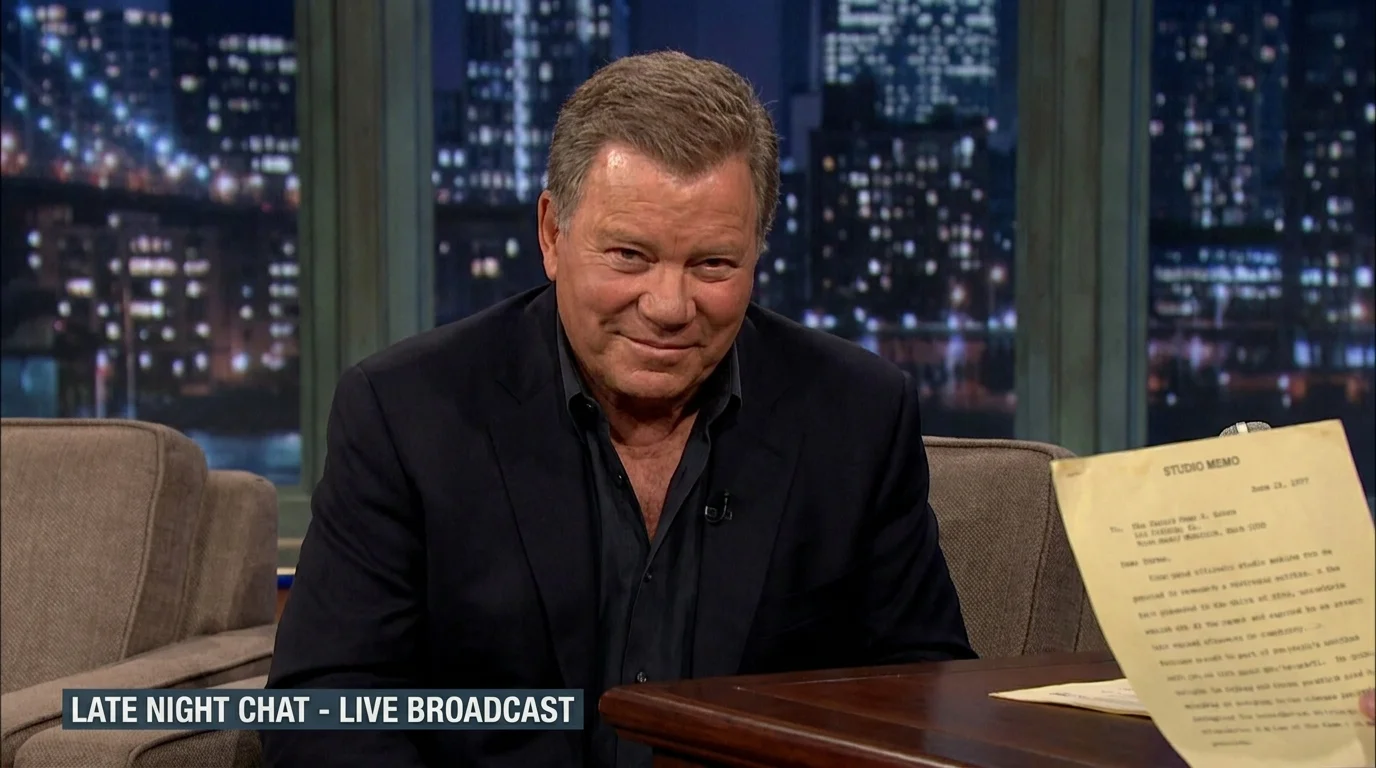
If you look closely at how these decisions are made, you begin to see that the universe we ended up with is just one of many possibilities. Somewhere in a parallel timeline, audiences are watching a stern, unsmiling Jack Lord navigate the stars with military precision, completely devoid of the warmth and camp that made the franchise a multi-generational phenomenon. But in our world, the dust settled, the papers were signed, and the trajectory of science fiction was secured by a hair’s breadth. The proof of this fragile reality doesn’t exist in the stars, but on the earth, captured perfectly in the silent weight of a yellowed studio memo resting on a wooden desk.
“In the entertainment business, genius is often just the backup plan that happened to have a better lawyer.” — Arthur Vance, Desilu Archivist
| Casting Path | Creative Direction | Added Value for the Reader |
|---|---|---|
| Jack Lord (The Original Choice) | Stoic, military procedural with high tension and rigid authority. | Helps you understand how close the franchise came to being a forgotten, dry action show. |
| William Shatner (The Pivot) | Theatrical, warm, and deeply humanistic with comedic balance. | Demonstrates how vulnerability and theatricality can make wild concepts accessible. |
Frequently Asked Questions
Why did Jack Lord turn down the role of the starship captain? Lord demanded a fifty-percent ownership stake in the series, which creator Gene Roddenberry and Desilu Studios flatly refused.
Was Jeffrey Hunter fired from the original pilot? No, Hunter chose to decline the option to film the second pilot after NBC rejected the original, as he wanted to focus on feature films.
How did William Shatner’s acting style change the show? Shatner introduced a lighter, more theatrical approach that humanized the captain, balancing the cold logic of the science officer.
What was the name of the captain in the original rejected pilot? In the first pilot, the commander was Captain Christopher Pike, played by Jeffrey Hunter, rather than Captain James T. Kirk.
Is there physical proof of these casting negotiations? Yes, historic production memos and casting call sheets from Desilu Studios document the frantic search and contract disputes of 1965.