The air inside a Los Angeles soundstage carries a very specific chill, smelling of ozone, dust-caked rigging, and cold catering coffee. On these heavily guarded lots, the atmosphere remains strictly transactional. You expect to see the electric spark of cinematic magic, but more often, you witness the quiet, grinding machinery of high-stakes commerce. It is a world where millions of dollars hinge on invisible, volatile frequencies.
Under the harsh glow of the playback monitors, two actors stand inches apart. The blue light bounces off their faces, highlighting every micro-expression. The director calls for another take, his voice carrying the flat, exhausted cadence of someone trying to force a square peg into a round hole. The crew watches in silence, sensing the discomfort but powerless to fix it.
When a highly anticipated project quietly replaces a star, the public gets a beautifully polished statement. The trade papers cite scheduling conflicts or creative differences with a clean, antiseptic finality. But the truth is almost always captured on a few feet of unreleased digital tape, where the silence between two performers is too heavy to ignore. It is a silent veto that no public relations team can spin away.
For Shailene Woodley, a performer celebrated for her raw, grounded vulnerability, one such unpublicized moment altered the course of a major cinematic universe. It was not a clash of egos or a contract dispute that forced a sudden shift, but rather a stubborn, undeniable lack of biological electricity during a closed-door screen test. If the wire is insulated, the entire expensive machine of a Hollywood blockbuster simply short-circuits.
The Anatomy of the Chemistry Veto
To understand why casting directors abandon major stars, you must discard the myth of pure star power. Think of a film set as an intricate electrical grid. When two actors share a close-up, they must function like copper wire, effortlessly passing an invisible current back and forth. If one of them resists the current, the entire scene goes dark. This is the reality behind the sudden, unannounced recastings that baffle fans of major franchises.
Hollywood studios rely on chemistry tests to protect their investments before cameras roll on expensive sequels. While an actor may shine individually, their appeal can instantly evaporate when placed next to an established lead. The industry calls this the chemistry veto—a quiet, backroom decision where raw biological compatibility overrides fame, billing, and box office history.
- John Krasinski suffered a brutal physical humiliation during a legendary superhero screen test
- Timothee Chalamet avoided a catastrophic franchise collapse through a massive late-stage casting shift
- Larry David lost a massive comedic film role over a harsh improvisation dispute
- Megan Fox archival interviews completely reverse decades of manufactured media hostility
- Rod Stewart triggered sudden tour cancellation rumors after a visibly strained stage exit
Inside the Screen Test with Sarah Vance
Sarah Vance, a 42-year-old veteran casting associate who spent a decade observing these high-stress sessions from behind the camera, remembers the specific day the illusion shattered. “You can dress them in the same wardrobe and teach them the same lines,” Vance notes, adjusting her reading glasses. “But within three seconds of a tight close-up, the camera detects whether two people actually want to breathe the same air, or if they are simply executing choreography.” During the fateful session with Shailene Woodley and her proposed male lead, the room grew progressively colder with every repeated take, proving that some things cannot be manufactured.
Decoding the Mechanics of the Chemistry Mismatch
When analyzing why these cinematic pairings fail, casting directors look at specific friction points that go far beyond basic acting talent. These misalignments fall into distinct operational layers.
The Technical Alignment
This is the mismatch of acting styles. One actor works from the inside out, relying on organic, sensory-driven presence, while the other relies on external cues, technical marks, and stylized delivery. Woodley’s raw, naturalistic approach often collided with highly polished, studio-trained counterparts who prioritized crisp delivery over genuine emotional response.
The Physical Geometry of Romance
It is about how bodies naturally settle into a shared space. When height differences, shoulder posture, or natural gaze patterns feel forced, the lens magnifies the discomfort. Instead of a natural pull, the screen records a subtle, physical resistance—a quiet warning sign that the pairing will fail to convince an audience.
Spotting the Silent Red Flags in Connection
You can apply this same rigorous observation to your own professional and personal partnerships. To read the genuine alignment between people before committing to a long-term collaboration, look for the quiet cues that the camera always catches.
- Analyze the micro-expressions: Watch the eyes during moments of silence to gauge genuine engagement rather than polite compliance.
- Monitor the physical boundaries: Observe the natural spacing when two people share a room without forced interaction.
- Assess the conversational rhythm: Ensure communication flows organically without awkward, performative pauses.
- Observe the hand placement: Spontaneous touch and relaxed hands reveal comfort levels instantly, while tension shows up in stiff fingers.
To implement this diagnostic approach, use this quick reference guide for evaluating human dynamics in real-time:
- Optimal Proximity: Keep an eye on whether partners naturally settle within 18 to 24 inches of each other during casual conversation.
- Eye Contact Duration: Genuine comfort allows for sustained gaze of at least 3 seconds without a sudden, defensive break.
- The Diagnostic Playback: Always review raw interactions without the distraction of polished presentations or rehearsed scripts.
The Permanent Record of a Missed Connection
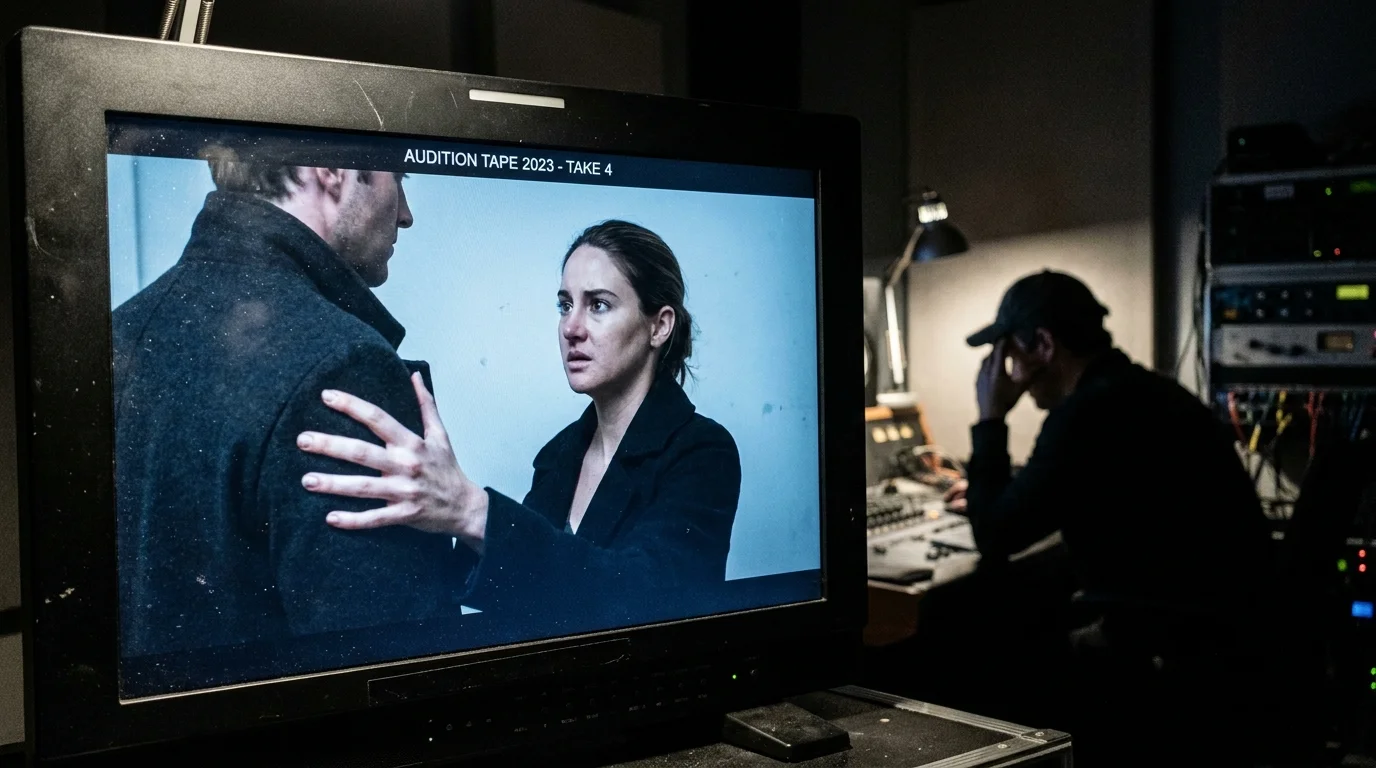
In the case of Woodley’s quiet franchise exit, the finality of the decision came down to a single, devastating frame captured on the digital audition tape. During the climactic romantic embrace of the test scene, her hand remained pressed against the male lead’s shoulder, stiff and unyielding—like someone bracing for an impact rather than leaning into an embrace. This frozen on the digital playback monitor told the studio executives everything they needed to know.
The image remained frozen on the screen long after the actors left the soundstage. It was a visual proof that some connections cannot be manufactured, no matter how much capital is at stake. Recognizing when a connection isn’t there is not a personal failure; it is a vital boundary that keeps us from living out a script that doesn’t fit.