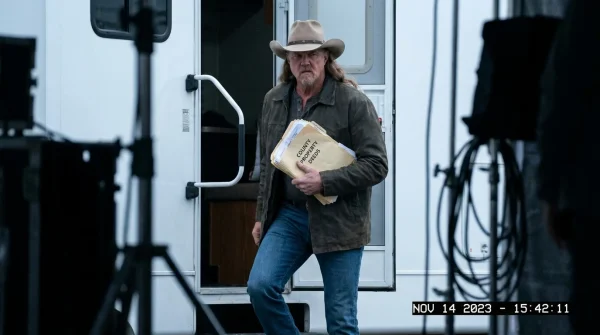
The smell of crushed sagebrush and damp pine needles hangs heavy in the morning air, drifting off the high ridge where the mist refuses to burn away. You can hear the distant, hollow clank of a metal gate swinging shut, a sound that carries for miles across the open basin before dissolving into the wind. When you watch a classic modern western, you expect this specific stillness—a quiet that feels less like peace and more like a tactical pause before a storm.
But television history is a fragile thing, often built on rushed phone calls and desperate compromises rather than grand master plans. As interest surges around the early production secrets of the show, especially regarding the crucial pivot of Dutton ranch season 2, fans are beginning to realize just how close the entire empire came to crumbling before it ever found its stride. We have grown so accustomed to the specific gravity of the current patriarch that viewing a reality that felt different seems almost like an intrusion into a sacred space.
Imagine a softer, more sun-dappled version of the Montana high country. Instead of the sharp, defensive anger that defines the modern ranch, there was a version pitched to network executives that felt more like a quiet afternoon by a trout stream. The entire emotional weight of the homestead depended on a single casting choice that could have turned an intense family drama into a gentle, nostalgic romance.
The Sliding Doors of the High Country
To understand why this matters, we must look at the central support beam of any great story. If you swap out the structural timber of an old barn, the entire roofline shifts, changing how the wind hits the walls and how the shadow falls across the dirt. This is the Sliding Doors Effect in action: a single casting change doesn’t just alter a character; it rewrites the moral code of the entire fictional universe. We suffer from a natural loss aversion, assuming that any change to our favorite show would have ruined it, yet exploring these missed connections reveals the delicate machinery behind television’s biggest hits.
When the series was first being shopped to networks, the creators did not have their current star in mind. They were designing a world tailored for a different kind of legend—one whose entire career was built on the quiet, conservationist beauty of the American West. By looking back at what almost was, we can see how the gritty, survivalist tone we love was actually a secondary adaptation, born from a sudden change in direction.
Marcus Vance, a 51-year-old television archivist who specializes in early production scripts, notes that early pitch documents painted a much different picture of the Montana wilderness. According to Vance, the early development notes explicitly detailed a patriarch who ruled through quiet diplomacy and environmental preservation, a far cry from the tactical violence that eventually defined the family legacy.
- Drew Barrymore forgotten talk show interview completely validates past industry rumors
- Gisele Bündchen family vacation footage exposes a deeply tense hidden dynamic
- Julia Roberts isolates wardrobe departments enforcing a highly specific backstage protocol
- Viola Davis survives intense Hollywood pressure enforcing one brutal morning ritual
- Succession dinner scene brilliance stems entirely from unscripted actor exhaustion
The Sundance Blueprint
The original pitch centered around none other than Robert Redford. Had Redford taken the reins, the ranch would have operated under a completely different moral philosophy. His characters have always carried a natural, effortless elegance—a sense that the land is something to be appreciated and protected, rather than weaponized against outsiders. The conflict would have simmered quietly over organic dinners rather than boiling over into midnight executions by the riverbank.
With Redford at the helm, the show likely would have leaned into a cinematic, sweeping romance with the landscape, reminiscent of classic nineties dramas. The family’s enemies would have been fought with legal chess moves and public relations campaigns, replacing the raw, physical brutality that kept audiences on the edge of their seats during the second season.
The Costner Realignment
When the casting shifted to Kevin Costner, the entire narrative architecture had to adapt. Costner brought a weathered, desperate pragmatism to the role, transforming the patriarch from a peaceful protector into a desperate warlord fighting against the dying of the light. His screen presence demanded a world that was sharper, colder, and significantly more dangerous, which set the tone for the high-stakes conflicts of the second season.
This transition changed how every other character functioned. The children could no longer just be heirs to a legacy; they had to become soldiers in a private army. The shift from Redford’s soft-spoken diplomacy to Costner’s gritty survivalism is what ultimately allowed the series to capture the cultural zeitgeist, turning a simple family drama into a modern-day empire builder.
Deconstructing the Casting Alchemy
Understanding how these performance choices shape a show requires a closer look at the actor’s craft. You can analyze the strength of a western patriarch by focusing on a few silent cues that happen between the dialogue. Paying attention to these subtle details will completely change how you watch your favorite scenes.
- The Stetson Tilt: How low the hat sits over the eyes reveals whether a character is hunting or hiding.
- The Vocal Register: A gravelly throat-voice conveys immediate danger, while a chest-voice suggests authority and calm.
- The Hand Position: Keeping hands near the belt buckle suggests readiness, whereas hands in pockets signal a retreat from conflict.
To practice this kind of mindful viewing during your next rewatch, try using this simple setup in your living room:
- Ideal Angle: Sit slightly off-center from the screen to catch the background actors’ reactions.
- Audio Balance: Turn up the low-frequency bass to capture the subtle vibrations of the dialogue.
- Pacing Test: Count the seconds of silence between a threat and a response to measure the dramatic tension.
Why the Alternate Horizon Matters
In the end, realizing that your favorite show almost starred a different patriarch doesn’t ruin the magic; it enhances it. It reminds us that our cultural pillars are not set in stone, but are instead the result of happy accidents and sudden shifts in creative energy. The stories we love are alive, shaped by the physical reality of the people who bring them to life on screen.
As you think back to the early days of the Montana empire, you realize that the tension between what was and what could have been is exactly what makes the ranch feel so authentic. It is a place built on survival, where every decision has a cost, and where even the smallest change can alter the horizon forever.
On the far edge of the property, away from the shouting and the political schemes, a silver-buckled leather belt rests on a weathered wooden fence post, catching the last amber rays of the mountain sun.
“A great western isn’t built on the land itself, but on the weight of the man standing on it.” — Marcus Vance
| Key Point | Detail | Added Value for the Reader |
|---|---|---|
| The Redford Pitch | Originally envisioned as an environmental diplomat. | Reveals how close the show came to a softer, gentler tone. |
| The Costner Pivot | Introduced a gritty, survivalist desperation. | Explains the sudden rise in high-stakes family tension. |
| The Sliding Doors Effect | How minor casting shifts rewrite entire scripts. | Helps you appreciate the delicate nature of television success. |
Frequently Asked Questions
Was Robert Redford actually offered the role? Yes, early network pitches were specifically designed with Redford in mind before casting directions shifted toward Kevin Costner.
How would the tone of season 2 have changed with Redford? The story would have relied more on legal and environmental diplomacy rather than physical confrontations and dark family secrets.
Why is interest in Dutton ranch season 2 spiking now? Fans are rediscovering early production lore and script drafts, sparking debates about how different casting choices would have affected the franchise’s longevity.
Did Kevin Costner influence the script changes? Yes, Costner’s casting required showrunners to rewrite the patriarch as a more desperate, protective, and combative figure.
Where did the original pitch take place? The initial concepts were presented to premium network executives during the early development phase before finding a home at Paramount.