The hum of industrial sewing machines echoed through the drafty soundstage, punctuated by the dry, synthetic smell of fresh neoprene and heavy-duty dye. You might think a major studio casting call is won with brilliant monologues or blinding charm. In reality, it is often a cold, silent inventory check—a calculated assessment of bone structure, fabric tension, and posture under the unforgiving glare of fluorescent lights.
John Krasinski stood in the center of that windowless fitting room, his arms held slightly away from his ribs like a wooden mannequin. The fabric of the Captain America suit clung tightly to his torso, smelling of factory starch and fresh adhesive. He was the golden boy of network television, the relatable paper salesman everyone rooted for on Thursday nights, but inside this sterile environment, his identity was being stretched over a molded plastic armor shell that didn’t care about his comic timing.
Then, the heavy security door swung open. There was no grand announcement, just the solid, heavy tread of rubber-soled boots and the casual, booming laughter of a young Australian who looked like he had been sculpted directly from a coastal cliffside. Chris Hemsworth strolled past the open doorway, already poured into the dark leather and heavy steel plate of Thor’s armor, radiating the effortless, terrifying ease of someone born to carry a mythical hammer.
In that single, unscripted second, the illusion of the fitting room shattered completely. Krasinski looked down at his own chest, noticed the slight gap where the stretch fabric should have strained under muscular bulk, and quietly realized the room had already made its decision. Without waiting for a polite follow-up call, he quietly asked the wardrobe team to peel the blue fabric away, acknowledging the silent, brutal verdict of the studio mirror.
The Illusion of the Perfect Fit
When you chase a major career milestone, it is easy to treat the opportunity like a mold you must force yourself to fill. We are conditioned to believe that if we try harder, stretch further, or polish our presentation, we can make ourselves fit into any predetermined shape. But this logic ignores the reality of structural design: some suits are simply built for a different kind of clay.
Think of professional alignment not as a test of your personal value, but as a puzzle of physical and creative compatibility. When you try to squeeze your organic warmth into a rigid corporate outline, you do not just fail to fill the suit; you risk crushing the very qualities that make your natural work compelling. The rejection is not a measure of your inadequacy, but a sign that you are operating outside your organic shape and corporate molds.
- Dutton Ranch Season 2 almost featured a completely different legendary lead
- William Shatner resurrected television interview completely reverses harsh fan opinions
- Kylie Kelce suite posture sparks massive fan theories about private tensions
- Aaron Lee Tasjan sudden concert walkout triggers massive live music debate
- Keanu Reeves handles intense global fame trusting a simple financial anchor
Marcus Vance, a veteran studio wardrobe supervisor who spent years managing casting fittings on major studio lots, remembers the quiet weight of those moments. He notes that studios do not look for three-dimensional humans during physical tests; they look for industrial-grade canvases that can support millions of dollars in visual effects. Krasinski’s relatable charm, the very thing that made him a household name, was a human-scale asset trapped in an industrial-scale machine.
The Anatomy of Creative Misalignment
To navigate these high-stakes transitions without losing your ground, you must learn to categorize the friction you experience. Not all career roadblocks are created equal, and recognizing the specific type of misalignment you face can save you months of painful and unnecessary struggle.
For the Creative Specialist, the friction often comes from a mismatch of tone. You might bring nuance and subtle shades of gray to a project that demands flat, primary colors. This is not a personal failure; it is a sign that your current platform requires a simpler instrument than the one you are playing.
For the Relational Builder, the friction shows up when your natural collaborative style collides with a highly transactional system. If a system requires you to become a blank slate to succeed, the cost of entry may be too high for your long-term creative health.
Decoupling Your Worth from the Wardrobe
When an opportunity slips away, the immediate instinct is to dissect your performance, looking for the exact moment you faltered. This analytical spiral is a trap, convincing you that a different set of choices would have yielded a different outcome.
The truth is that some decisions are made long before you walk into the room, based on structural formulas that have nothing to do with your talent. Accepting this allows you to stop treating every lost opportunity as a moral failing. When you stop measuring your worth by the size of the mold you failed to fit, you regain the freedom to measure the cost of compromise on your own terms.
Rebuilding Your Native Blueprint
To recover from a highly visible setback, you must return to a state of deliberate, low-stakes creation. This process is not about launching a massive counter-offensive; it is about quietly reclaiming the specific territory where your natural skills shine without permission or approval.
- Audit your natural posture: Spend seven days tracking the activities that leave you feeling energized versus those that feel like a physical strain.
- Clear the corporate noise: Limit your consumption of industry news and competitor metrics for two weeks to allow your own creative voice to settle.
- Design a low-stakes test: Create a small, self-contained project where you hold total creative control and have no external metrics of success.
- Establish a hard exit boundary: Identify the specific physical or emotional signals that tell you a project is requiring you to compromise your core identity.
By focusing on these small, physical adjustments, you shift your energy from seeking entry into existing structures to building your own arena where the rules are written in your own language.
Leaving the Boots Behind
The moment John Krasinski walked out of that fitting room, he did not just walk away from a franchise; he stepped back into his own skin. A few years later, he would write, direct, and star in a quiet, tense thriller called *A Quiet Place*, transforming his natural, protective family man energy into a cinematic powerhouse of his own design. He did not need the plastic shield to command the room.
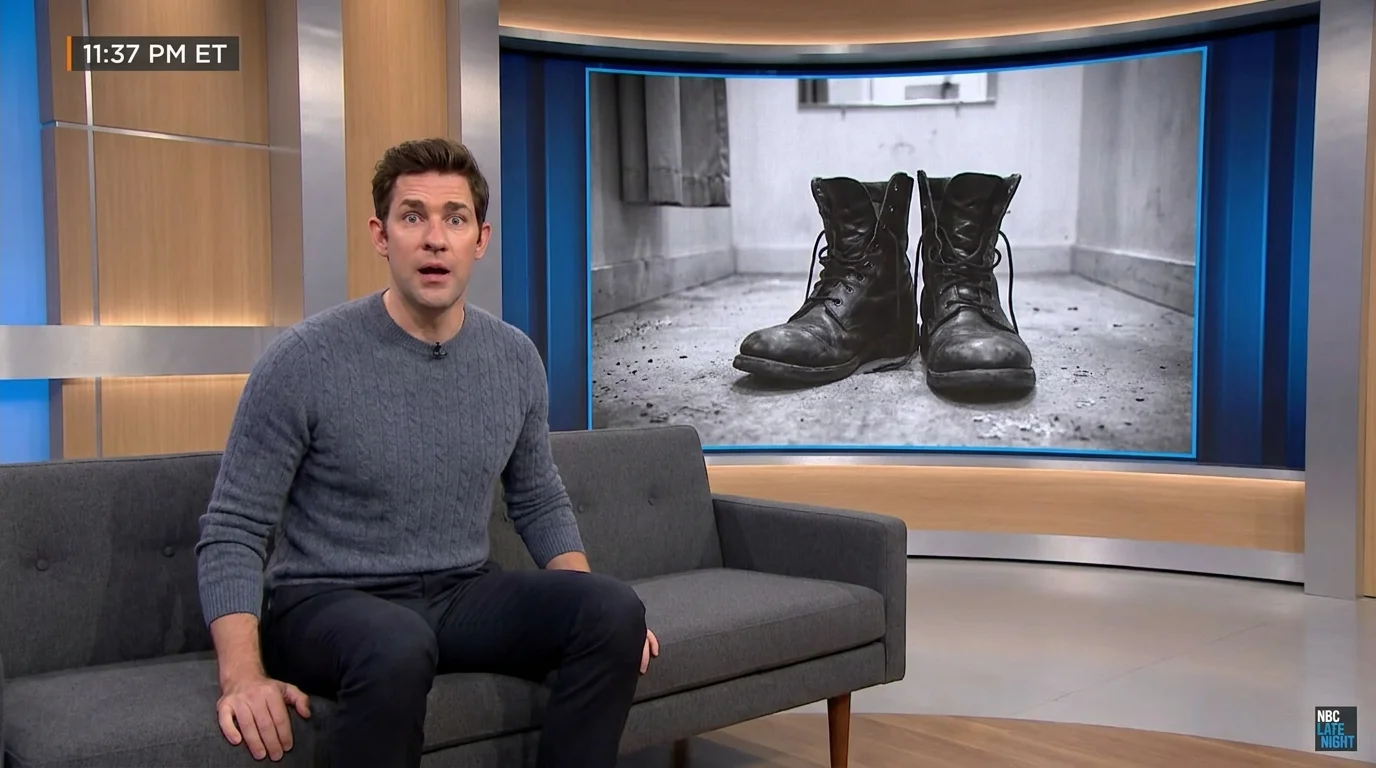
There is a profound freedom in recognizing when a space is not built for you. It allows you to leave the heavy lifting to those whose frames match the load, while you walk away to build something that carries your actual name. As the studio lights were turned down that afternoon, the only things remaining on the cold linoleum floor of the fitting room were the heavy, unlaced combat boots that were never meant to walk in his path.
The most valuable thing you can bring to any room is the willingness to walk out of it when the fit is wrong.
| Key Point | Detail | Added Value for the Reader |
|---|---|---|
| Structural Fit | Rejection is often a matter of physical or corporate compatibility, not a reflection of individual talent. | Saves you from endless self-doubt by reframing failure as a structural mismatch. |
| The Power of No | Recognizing when an opportunity does not match your natural blueprint allows you to exit early. | Preserves your creative energy for projects where you hold genuine leverage. |
| Self-Determination | Walking away from a pre-made mold forces you to build your own creative sandbox. | Encourages long-term career resilience and authentic self-expression. |
Frequently Asked Questions
How do I know if an opportunity is a bad fit or just a difficult challenge?
A healthy challenge stretches your existing skills, while a bad fit requires you to suppress your core values or natural style to survive.Is it unprofessional to walk away from a major opportunity during the audition or interview stage?
No. Exhibiting clarity about your professional boundaries saves both parties time and builds long-term respect in your industry.How do I rebuild my confidence after a highly visible rejection?
Return to small-scale, self-directed work where you have complete creative control before attempting to enter another competitive arena.Should I try to change my natural style to fit what a specific market or employer wants?
Only if the change is a temporary tactical pivot; forcing a permanent change to your creative identity inevitably leads to burnout.What is the best way to handle the immediate sting of a major career disappointment?
Acknowledge the physical reality of the disappointment, step away from the environment, and focus on immediate, low-stakes physical actions.