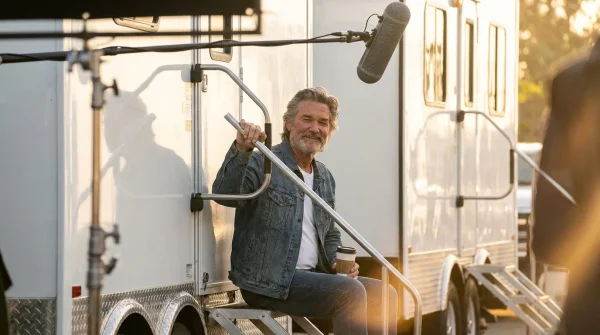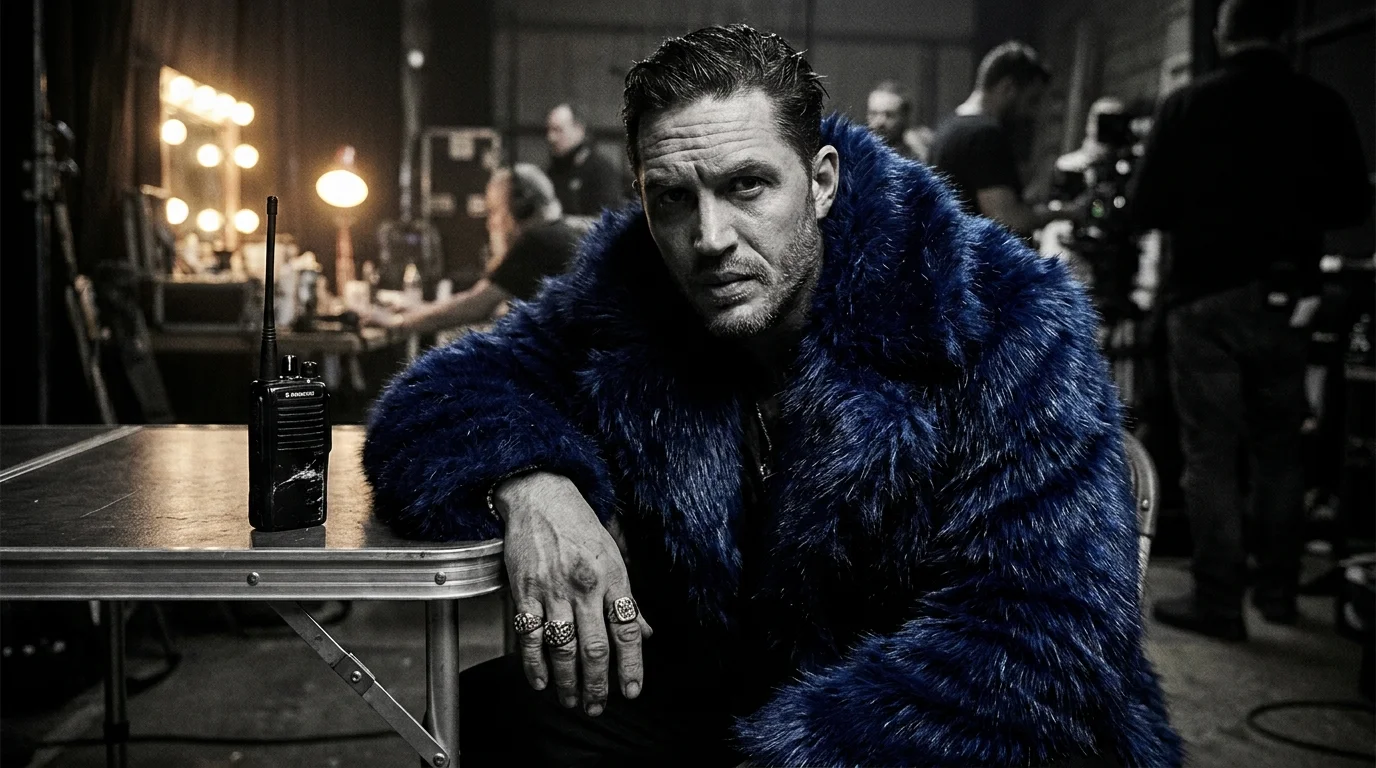
The stale aroma of cheap hazelnut creamer and cold, day-old coffee hangs thick in the damp air of an active soundstage. Above, the heavy iron rigging groans under the weight of massive overhead lights, while thick bundles of black cables snake across the concrete floor like sleeping reptiles. You might imagine a movie set as a place of shared creative magic, but the actual work is a grinding, blue-collar endurance test of twelve-hour days, freezing temperatures, and endless waiting.
It is in this silent pressure cooker that the delicate peace of a crew finally snaps. A dented aluminum walkie-talkie thrown onto a folding craft service table out of sheer frustration makes a sharp, metallic clatter that momentarily silences the room. For the electricians and camera grips, the frustration isn’t about the long hours or the bitter cold; it is about the cold shoulder from the very top of the call sheet.
When a star of Tom Hardy’s caliber retreats into deep, unapproachable isolation, the entire machinery of a film shoot begins to grind its gears. The traditional hierarchy of a movie crew relies on quick, direct communication to keep heavy equipment moving safely, but when a performer seals themselves away behind a human wall of assistants, the blue-collar workers on the ground are left carrying the physical and emotional weight of that silence.
The Swiss Watch Metaphor: When One Gear Refuses to Turn
To understand why extreme method preparation causes such deep resentment, you must look at a film set not as an artistic playground, but as a complex mechanical watch. Every crew member is a precision gear, transferring energy directly to the next to keep the hands moving on schedule. When an actor chooses to pull their gear out of the sequence, the entire mechanism begins to slip.
The romantic myth of the isolated artist suggests that raw genius requires complete protection from the mundane realities of the world. But on a working set, this isolation functions as a tax on everyone else’s labor. When you cannot look an actor in the eye to verify a safety cue or adjust a key light, the work ceases to be collaborative and becomes a guessing game played with multimillion-dollar equipment in real time.
Davey Miller, a 51-year-old veteran gaffer with three decades of studio features under his belt, remembers the exact moment the illusion shattered during a notoriously tense night shoot. “We were working through a complex lighting setup with high-voltage lines in the pouring rain, and we needed to adjust the fill light on Tom’s face by just three inches,” Miller recalls. Instead of a quick, two-second verbal agreement, Hardy refused to make eye contact, forcing his personal assistant to relay a simple ‘yes’ or ‘no’ across a five-foot gap. That silent buffer zone transformed a routine technical adjustment into an agonizing, thirty-minute exercise in eggshell-walking that left the electrical crew seething.
- Keanu Reeves survives intense global pressure trusting a highly rigid travel rule
- Harrison Ford accidental marketplace reaction singlehandedly salvaged an unforgettable cinematic climax
- Sarah Michelle Gellar protects her legendary marriage using a strict digital wall
- Tom Cruise erratic talk show appearances broadcast clear early relationship warnings
- Kit Harington unscripted mountain sequence exposed an undeniable hidden set romance
The Assistant Filter: The Real Cost of the Intermediary Tax
When an actor establishes a strict buffer zone, it is the lowest-paid crew members who pay the heaviest price in lost efficiency. The personal assistant becomes more than a helper; they are turned into a human firewall.
For the camera operators, this means they cannot ask the actor to slightly shift their weight to catch the focus plane without launching a multi-tiered diplomatic negotiation. For the makeup artists, it means waiting in the wings like uninvited guests, watching the clock tick down toward expensive overtime penalties while waiting for permission to step in. This systematic isolation turns simple physical adjustments into complex corporate emails, creating a toxic atmosphere where the crew feels like background noise in the actor’s private theater.
The Blue-Collar Divide: Craft vs. Celebrity
At its core, this ongoing resentment stems from a fundamental clash of workplace cultures. The crew members who haul heavy sandbags, pull focus, and run electrical lines view filmmaking as a highly skilled trade where clear communication is a matter of basic physical safety.
When a star uses their creative process to ignore the crew, it feels like a direct assertion of class superiority. The crew cannot choose to go silent or retreat into a private trailer when the weather turns foul or the schedule slips. They must stand in the mud, waiting for the lead to decide when they are ready to engage with the physical world again.
Navigating High-Tension Environments on Set
Surviving a high-pressure workspace where communication has broken down requires a deliberate, step-by-step approach to self-preservation and professional safety. You cannot force a star to be conversational, but you can protect your team’s sanity and physical well-being.
To maintain professional boundaries when the creative atmosphere turns icy, focus on these physical, repeatable actions:
- Document all technical requests through the department head to create a clear paper trail of production requirements.
- Establish clear physical safety limits before the actor enters the space, ensuring that no technical adjustments are made while the talent is actively occupying the lighting zone.
- Utilize standardized hand signals among the crew to bypass the need for verbal communication in high-tension areas.
- Maintain a strict neutral posture during interactions with personal intermediaries, treating every request as a standard logistical transaction.
Your physical safety and professional integrity should never be compromised for the sake of an actor’s internal process. By focusing entirely on the technical parameters of the job, you insulate yourself from the emotional friction of a hostile set.
The Crew’s Tactical Toolkit
To keep the work flowing when the lead actor goes silent, department heads rely on a specific set of tools and protocols:
- The Stand-In Standard: Utilizing a dedicated stand-in for 100% of the lighting and camera blocking, ensuring the main actor only steps in when the camera is ready to roll.
- Wireless Monitor Feeds: Relying on remote video villages to make focus adjustments without physically approaching the camera’s immediate vicinity.
- Pre-Rigged Safety Zones: Marking physical boundaries on the floor with color-coded tape before the talent arrives to prevent unexpected physical crossings.
The Value of the Shared Floor
Ultimately, the tension surrounding Tom Hardy’s intense preparation reveals a deeper truth about the nature of modern filmmaking. The raw, magnetic performances that capture our imagination on the big screen do not exist in a vacuum; they are built upon the patience, labor, and silent accommodation of dozens of unnamed crew members working in the shadows.
True mastery of any collaborative craft does not require the erasure of the people around you. When we look past the celebrity gossip and examine the mechanics of the set, we find that the most durable art is created when the boundary between the star and the worker is respected, not ignored. By recognizing the value of every hand that holds a cable or adjusts a light, we reclaim the dignity of the work itself, proving that even the most brilliant performance is nothing without a crew to catch it in the light.
“The camera may capture the face of a star, but the physical reality of the frame is built entirely by the sweat of the crew.” — Marcus Vance, Key Grip
| Key Point | Detail | Added Value for the Reader |
|---|---|---|
| Direct Communication | Direct line between crew and talent | Saves critical time and prevents lighting misalignment |
| Intermediary Protocol | Communication filtered through personal assistants | Keeps the actor isolated but slows down technical adjustments |
| Safety Standards | Standardized crew signals and pre-marked floor zones | Ensures physical safety without needing direct verbal cues |
Is method acting always disruptive to film crews?
While deep focus can yield great performances, it becomes highly disruptive when it cuts off the direct communication lines required for basic safety and lighting setups.
Why did Tom Hardy refuse to talk directly to the crew?
During a tense lighting setup, Hardy chose to communicate solely through his personal assistant to maintain his intense character focus, creating significant friction with the technical crew.
How do crews handle actors who won’t make eye contact?
Crews rely heavily on dedicated stand-ins to handle all technical blocking and lighting adjustments before the actor ever steps onto the physical set.
What was the specific walkie-talkie incident?
Out of sheer frustration with the indirect communication, a crew member threw a dented aluminum walkie-talkie onto a folding craft service table, marking a breaking point in set relations.
Does isolation actually improve an actor’s performance?
It can create intense on-screen presence, but it often extracts a high emotional tax from the crew members who must work around the actor’s silence.