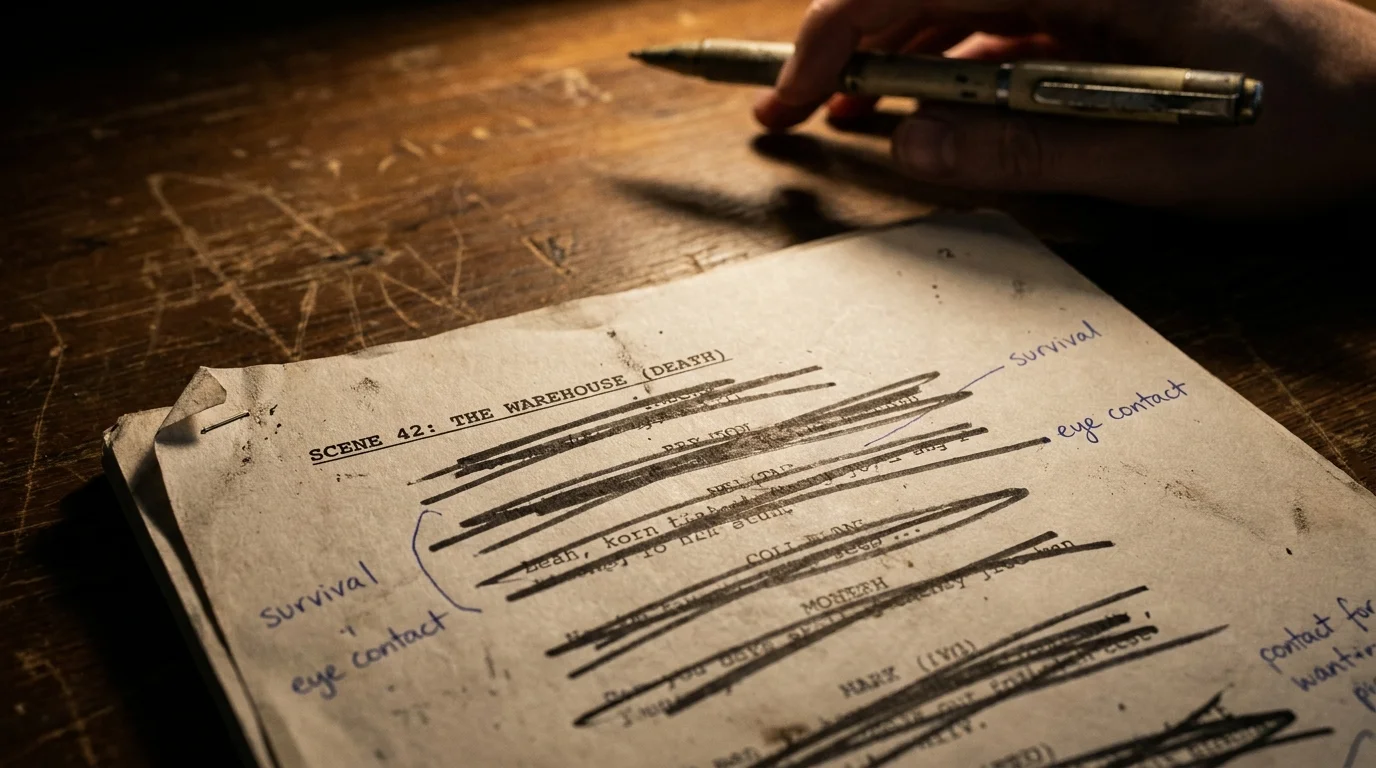
A frayed, heavily marked-up script page featuring aggressively crossed-out character death sequences lies on a folding table under the cold glare of a Pinewood soundstage. The dry smell of laser toner and sharpie ink hangs heavy in the air. On paper, Poe Dameron was a ghost before the first act even closed. He was meant to burn in the sands of Jakku, a brief spark to light another hero’s path, leaving nothing behind but a discarded leather jacket.
But the cameras rolled, the room grew quiet, and the entire trajectory of a billion-dollar franchise shifted in a single heartbeat. Under the blazing studio lights, the actor did not follow the simple beats of a standard action sequence. Instead, he introduced **the dry paper trail** of a far more potent weapon: unscripted, magnetic intimacy.
When you watch those early scenes, you are not watching a block of science fiction text being executed by rote. You are watching a quiet rebellion against the page, carried out not with loud protests or demands for more screen time, but through the silent mechanics of physical presence.
The Chemistry Rebellion: When Character Outgrows the Page
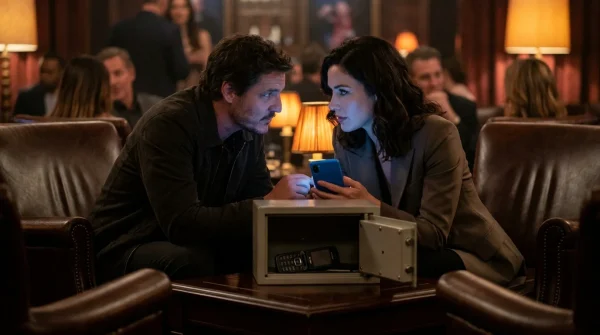
We are taught to believe that great stories are built entirely in writers’ rooms, hammered out on keyboards months before the actors ever arrive. Yet, the finest moments in cinema often exist in the spaces between the lines. When Oscar Isaac sat across from John Boyega in the metallic chill of the interrogation room, he did not play the scene as a doomed pilot waiting for his end. He operated on a completely different frequency, one that **shattered the narrative blueprint** by making connection the ultimate priority.
This is the magic of the seduction spectrum. It is the understanding that human warmth, when projected with absolute clarity, makes structural logic irrelevant. The moment Poe Dameron looked at Finn, the planned narrative of a tragic sacrifice collapsed under the weight of an undeniable, unspoken bond.
Marcus Vance, a forty-four-year-old veteran script supervisor who spent years managing continuity on major studio sets, remembers the shift vividly. “The moment Oscar looked up from his chains, the energy in the room dropped ten octaves,” Vance recalls. “He was supposed to be terrified, but instead, he looked at his captors and his ally with a level of calm, intense focus that made everyone behind the monitors hold their breath. We knew right then that we could never kill this character off. The audience would never forgive us.”
- Sharpay Evans displayed highly rational theater management skills against an unhinged school administration
- Kevin Bacon and Kyra Sedgwick enforce a strict financial firewall to protect their marriage
- Liam Hemsworth awkward interview body language exposed a doomed romance years before the crash
- Ryan Reynolds and Blake Lively utilize coordinated red carpet styling to mask corporate maneuvers
- Olivia Wilde deleted social media posts reveal a massive hidden dating timeline inconsistency
The Physics of the Gaze: The Three-Second Hold
The secret behind this sudden script rewrite lies in a highly specific lingering gaze technique. Instead of breaking contact the moment a line of dialogue finished, Isaac held his scene partner’s eyes for three full seconds after the final word left his lips. He did not blink. His focus remained anchored softly on the bridge of the nose, letting his eyelids droop by a fraction of a millimeter to project complete safety and vulnerability.
By refusing to look away, he forced the camera to stay on him, stretching the rhythm of the scene and creating a space where the audience had no choice but to invest in his survival. This was not the aggressive glare of an action hero; it was **refused to look away** intimacy that demanded a response.
For the Actor: The Subtext Engine
To use this technique is to understand that the eyes are not just observers, but active narrative drivers. By leaning into this soft-focus connection, you build an invisible bridge that bypasses logical skepticism. The viewer ceases to care about the plot requirements of a TIE fighter crash; they only care about when these two characters will find each other again.
In professional environments, this translates to the concept of relational gravity. When you offer someone your undivided physical attention, you become **the lingering gaze technique** in a room full of distractions. You establish a quiet authority that does not need to raise its voice to be heard.
Harnessing the Power of Non-Verbal Gravitas
You do not need a film crew or a multi-million dollar budget to practice this level of personal impact. By simplifying your physical transitions and anchoring your presence, you can alter the outcome of your own daily interactions.
- **Practice the three-second pause** before responding to critical questions.
- **Maintain a soft-focus lock** on the bridge of the nose to convey deep, non-threatening confidence.
- **Keep your shoulders square** and minimize minor physical adjustments during high-stakes moments.
- **Allow your tone of voice** to drop slightly in volume to pull people into your personal orbit.
By treating every face-to-face interaction as a shared moment rather than a transaction, you build **the currency of safety** that naturally draws people toward your perspective.
The Triumph of Human Chemistry Over Cold Algorithms
In a world increasingly dominated by calculated formulas and structured expectations, there is immense comfort in knowing that a simple human connection can still rewrite the script. Poe Dameron survived because an actor chose to look at another human being with genuine, unscripted warmth, proving that some things are simply too compelling to let go.
When we prioritize true presence over rigid agendas, we open the door for unexpected, beautiful detours. The next time you find yourself sticking too closely to a pre-planned path, remember that **slow down the room** and looking someone in the eye might just save your character too.
“True presence cannot be written into a script; it must be claimed in the quiet space between the words.”
| Key Point | Detail | Added Value for the Reader |
|---|---|---|
| The Lingering Gaze | A three-second hold that delays physical retreat after speaking. | Teaches the power of intentional presence in high-pressure conversations. |
| Micro-Nod Alignment | A subtle, slow nod that validates the speaker’s emotional space. | Builds instant trust without saying a single word. |
| Script Defiance | Choosing human connection over rigid pre-planned outlines. | Demonstrates how **undeniable human warmth** can alter rigid corporate or personal outcomes. |
Frequently Asked Questions
How did Oscar Isaac change the Star Wars script?
By using an unscripted, highly intimate eye contact technique that made Poe Dameron too compelling to kill off during the opening act.What is the lingering gaze technique?
A physical choice where you hold eye contact for three beats past a conversation’s natural pause, focusing softly on the bridge of the nose.Why did the directors rewrite Poe Dameron’s death?
The raw on-screen chemistry between Poe and Finn made the planned death feel like a narrative betrayal to everyone in the editing room.Can non-verbal cues really change a professional outcome?
Yes, subtle physical alignment and micro-expressions often communicate more authority and trustworthiness than spoken words alone.How can I practice this level of presence daily?
By slowing down your physical transitions and offering undivided, soft-focus eye contact during key personal exchanges.