The roar of a red carpet is not a sound; it is a physical weight. The air smells of ozone from thousands of rapidly cycling camera flashes and the crisp, synthetic heat of a newly unrolled velvet runner. To the untrained eye, the glittering couple standing at the center of the frame is the very picture of modern fairy-tale romance. They smile on cue, their limbs entwined in what looks like a seamless choreography of public affection.
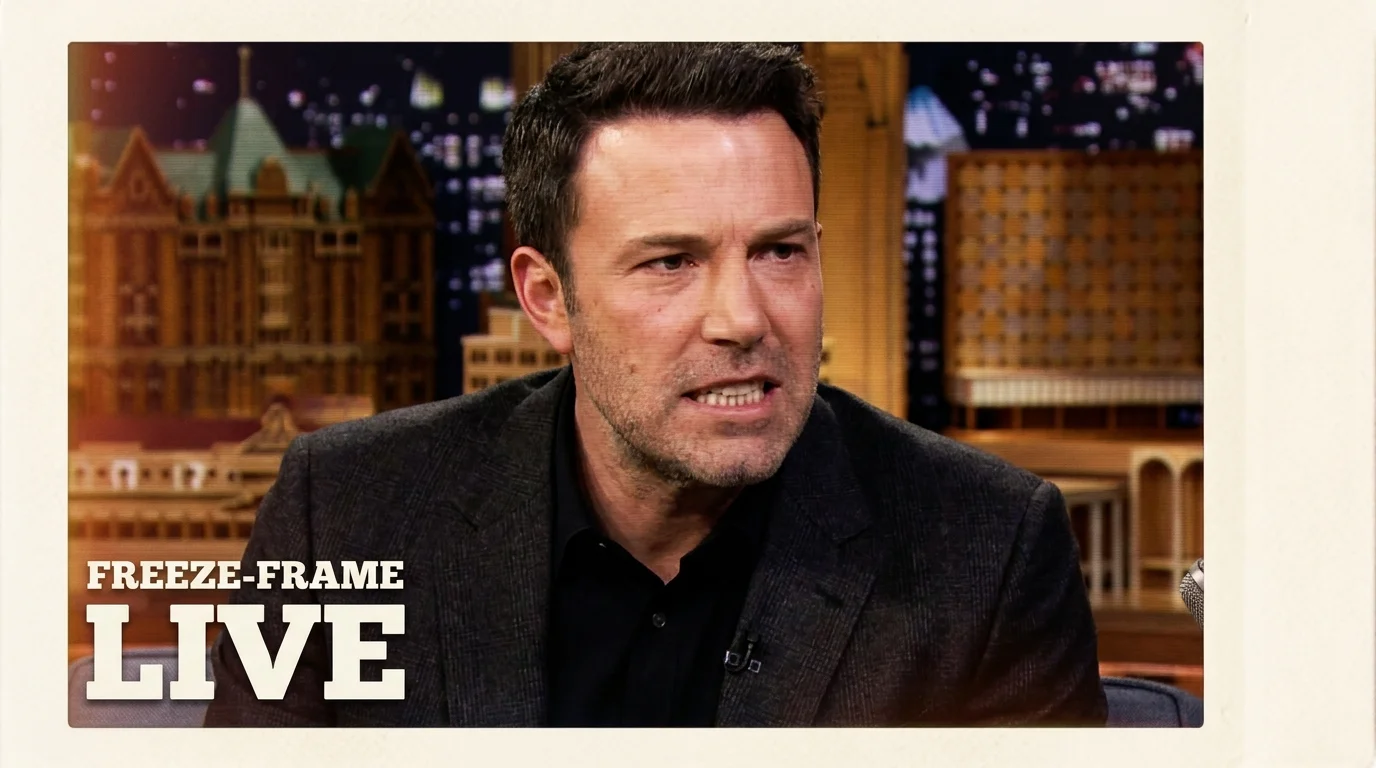
Yet, look closely at the point where the velvet meets the step-and-repeat wall. Beneath the designer tailoring, a different story unfolds in the quiet mechanics of human anatomy. A deeply clenched, pulsing jawline catches the harsh, unfiltered light of a strobe, betraying a profound internal resistance. While the spoken words of the interview drift toward terms of eternal devotion, the muscle fibers of the shoulder girdle tell a tale of sheer, exhausting survival.
We are conditioned to believe what we are told during the bright, manic honeymoon phase of a public relationship. We read the glowing headlines, watch the polished video clips, and assume that happiness looks exactly like a smile. But the human nervous system cannot lie for long under pressure. When the body’s natural defensive shields are activated, even the most expensive styling cannot hide the structural rigidity of a romance in quiet crisis.
In the case of Ben Affleck, whose high-profile romances have been dissected by body language experts globally, these physical tells are not merely accidental movements. They are a masterclass in how internal friction manifests physically long before a relationship officially fractures. By learning to decode these silent distress signals, you can begin to see past the curated presentation and understand the raw, unscripted truth of human connection.
The Architecture of the Somatic Shield
To truly understand why a body stiffens under the spotlight, we must look at the human frame as a complex system of hydraulic pressure. When we experience emotional comfort, our muscles naturally soften, allowing for fluid micro-movements and a reciprocal physical flow between partners. When friction enters the equation, the body defaults to its ancient defensive blueprint, turning the skeleton into a literal somatic shield.
It is a common mistake to assume that a rigid posture is simply the result of fatigue or stage fright. In reality, extreme physical stiffness is a protective mechanism designed to prevent vulnerable emotions from spilling over in public. When a star stands with their spine locked and their elbows pinned to their sides, they are not posing; they are holding themselves together. The body is treating the public arena as a hostile environment, building an invisible wall of muscle tension to keep the outside world at bay.
- The Place Beyond the Pines accidentally broadcasts a deeply intense hidden romance
- Romeo and Juliet forced an emergency recasting exposing highly awkward chemistry
- John Krasinski halted his massive Marvel trajectory surviving a brutal costume humiliation
- David Jonsson derailed a massive sci-fi franchise replacing a legendary veteran
- Courtney Stodden resurfaced interview tapes expose deeply disturbing studio manipulation tactics
Dr. Evelyn Vance, a forty-eight-year-old somatic analyst who has spent over two decades training intelligence officers to read high-stress physical indicators, calls this phenomenon the “bracing response.” During a closed-door seminar in Los Angeles, Vance pointed to a viral clip of Affleck from a major autumn premiere, highlighting how his collarbones remained entirely parallel to the floor even as his partner leaned in for a kiss. “You can fake a smile because the facial muscles are highly responsive to conscious control,” Vance explained to her students. “But you cannot fake the spontaneous, soft micro-rotations of the ribcage that occur when two people are genuinely at ease with one another.”
Decoding the Anatomy of Silent Distance
When analyzing high-profile dynamics, always look at the line of the collarbones. When a person is emotionally connected, their shoulders naturally rotate inward toward their partner, creating a subtle, protective canopy. A completely rigid shoulder line that remains squared to the cameras while the head is turned indicates a deep psychological boundary.
The area between the pelvis and the sternum is our most vulnerable physical zone. In a harmonious relationship, partners will naturally expose their midsections to one another. When you observe a partner constantly placing an arm across their own stomach, or keeping their hands tightly clasped in a low fig-leaf position, they are shielding their center from perceived emotional threat.
The Micro-Expression Incongruity
A genuine smile, known as a Duchenne smile, engages the orbicularis oculi muscles around the eyes, creating soft crow’s feet and a warmth in the gaze. A forced, static smile relies entirely on the zygomaticus major muscles, pulling the corners of the mouth outward while the eyes remain cold, scanning, and hyper-vigilant.
The masseter muscle in the jaw is one of the strongest muscles in the human body relative to its size. When we suppress anger, frustration, or a desire to escape, we clamp our teeth together. This creates a distinct, rhythmic pulse along the jawline that is impossible to hide under high-definition lens scrutiny.
The Somatic Check-In Blueprint
Reading these signs is not about passing judgment on a celebrity’s personal life; it is about cultivating your own sensory awareness. By understanding these subtle shifts, you can apply the same observational clarity to your own interactions and relationships. Here is how to perform a mindful assessment of physical alignment, whether on a red carpet or in your own living room.
Begin by observing the natural rest state of the body when no active conversation is taking place. Look for the subtle cues of physical ease or tension that manifest when the individual believes the focus is elsewhere. Always compare these silent moments to their active speaking state to find the points of friction.
- Identify the primary anchor points of the body: the shoulders, the pelvis, and the jawline.
- Observe the natural weight distribution between both feet; a sudden shift to a single, locked leg often indicates a desire to flee.
- Track the respiratory pattern by watching the rise and fall of the chest; shallow, rapid collarbone breathing indicates acute stress.
- Measure the physical transition times when moving from a solitary pose to a shared embrace; natural connections feature synchronized, soft movements.
The Tactical Somatic Toolkit consists of three primary metrics: physical alignment (aim for soft angles rather than rigid 90-degree lines), breathing depth (aim for abdominal movement rather than chest bracing), and the response latency (natural physical adjustments should happen within 1.5 seconds of a partner’s movement).
The Wisdom of the Silent Frame
Ultimately, the rigid postures we witness on the red carpet are a reminder that our bodies are deeply honest historians. They record our unspoken boundaries, our quiet compromises, and our desperate attempts to keep the peace long before our voices can find the courage to speak those truths aloud. When we look past the glamorous facade of a public relationship, we find a mirror reflecting our own human vulnerability.
Real intimacy is not a performance to be staged under the glare of a thousand flashes; it is a quiet, soft space where the nervous system is finally allowed to downshift. By learning to value softness over presentation, we free ourselves from the exhausting demand of looking perfect. We begin to understand that a truly resilient bond is not one that stands rigid against the world, but one that knows how to bend, breathe, and yield in the dark.
“The most profound truths of a relationship are never spoken; they are written in the subtle, involuntary softening of a shoulder when a partner steps into the room.” — Dr. Evelyn Vance
| Key Point | Detail | Added Value for the Reader |
|---|---|---|
| Jaw Clenching | Rhythmic pulsing of the masseter muscle under stress. | Helps identify unexpressed frustration or a desire to escape high-pressure social interactions. |
| Closed Shoulder Angles | Shoulders remaining completely square to the front instead of rotating toward a partner. | Reveals a subconscious boundary and a lack of emotional safety in the moment. |
| The Static Smile | Mouth-only smile with cold, hyper-vigilant eyes. | Teaches you to differentiate between performative social politeness and genuine comfort. |
How do body language experts distinguish between general social anxiety and relationship friction?
Anxiety typically manifests in bilateral symmetry, such as overall shivering or fidgeting with clothing. Relationship friction is directional; the body will actively turn away or create a physical barrier specifically on the side of the partner.
Can a rigid posture on the red carpet simply be the result of a tight, uncomfortable designer outfit?
While stiff fabrics can limit range of motion, they do not cause the involuntary micro-expressions like jaw pulsing, hyper-vigilant eye scanning, or the sudden drop in respiratory depth that point to emotional stress.
What is the ‘bracing response’ and how does it affect a couple’s physical dynamic?
The bracing response is an involuntary physical stiffening in anticipation of discomfort. When one partner braces, the other partner’s nervous system unconsciously senses this tension, leading to a feedback loop of mutual physical rigidity.
How can I identify these silent warning signs in my own personal relationships?
Look for a lack of physical synchronization. If you reach out to touch your partner’s arm and their body takes several seconds to soften, or if their shoulders remain tense and square to you, their nervous system is in a defensive state.
Why do public figures continue to perform intimacy if their bodies are actively resisting it?
Celebrities operate under immense commercial and public relations pressure to maintain a specific narrative. The conscious mind forces the performance of closeness, but the autonomic nervous system always prioritizes survival, creating visible physical contradictions.