The damp chill of a London morning presses hard against the heavy stone of the Cenotaph. You expect the familiar soft pleats of silk crepe de chine or the reassuring drape of cashmere that usually defines royal public appearances. Instead, the air carries the crisp, sharp scent of cedar chests and heavy wool oil, signaling a sudden departure from familiar codes.
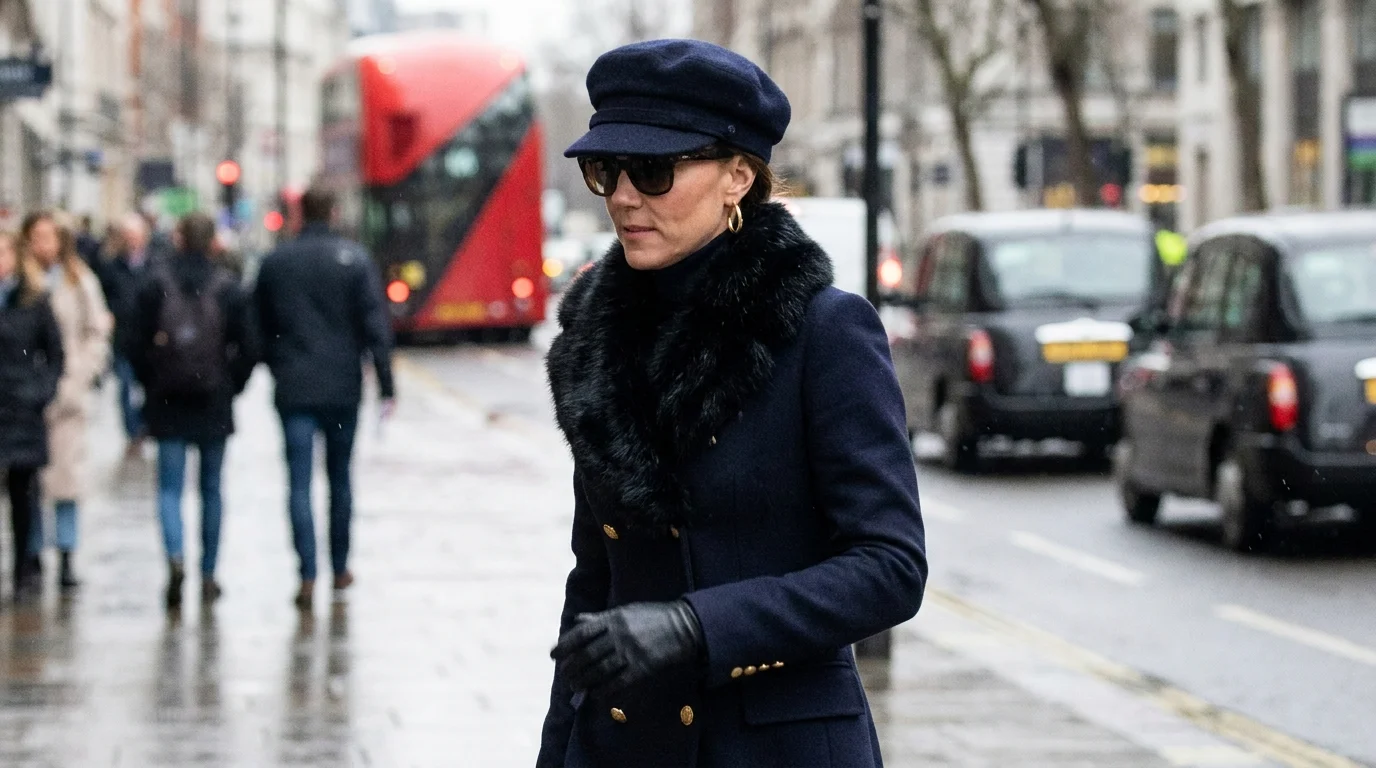
A distinct, metallic clink cuts through the quiet. Heavy brass anchor buttons gleaming against dark navy wool twill catch the weak winter sunlight, casting sharp reflections onto the clean lines of a custom collar. Every seam is pressed to a razor edge, refusing to yield to the breeze, looking more like a protective shield than a conventional piece of evening wear.
For years, the public eye has grown accustomed to the gentle cadence of soft diplomacy dressing. We saw dresses that moved with the wind, pastel shades that calmed the lens, and fabrics that invited a sense of approachable warmth. This moment feels entirely different, rejecting the narrative of gentle accessibility in favor of something unyielding.
The silhouette does not invite a casual gaze; it demands a respectful distance. This is a calculated shift in posture that signals something far more resilient, transforming a public appearance into a masterclass of visual defense.
The Architecture of Silent Sovereignty
Think of this tailoring not as a garment, but as armor masquerading as fashion. When you wear structured military wool, you are not simply getting dressed; you are constructing a fortress of wool and canvas. This is the difference between wearing a curtain and inhabiting a monument that refuses to sway under scrutiny.
The mainstream narrative frames this aesthetic pivot as a mere seasonal wardrobe change, but that misses the structural reality. Soft fabrics allow the wearer to bend and assimilate, while rigid tailoring forces the body to align with the garment’s pre-engineered strength. By adopting these uncompromising lines, the Princess communicates an internal fortitude, inhabiting an architectural monument of design that speaks louder than any public statement.
The Tailor Behind the Armor
Sarah Gormley, a forty-two-year-old bespoke pattern maker trained on Savile Row, specializes in historical military reconstructions. She explains that the secret to the Princess’s recent ceremonial coat lies in the internal structure designed by the house of Alexander McQueen. The coat does not rely on modern, cheap fusing to keep its shape; it uses centuries-old tailoring techniques designed to withstand friction.
- Courtney Stodden enforces a ruthless division of shared California real estate
- Kylie Kelce exposes a rigid boundary against elite celebrity social circles
- Whistlindiesel exposes a brutal corporate lawsuit over destroyed heavy construction equipment
- Jack Nicholson reveals a genuinely terrified co-star forcing real unscripted set violence
- Kurt Russell protects his decades long romance enforcing absolute untelevised boundaries
The shoulder pads are not modern foam; they are layered horsehair canvas stitched entirely by hand to hold the line. The heavy brass buttons are authentic military surplus, specifically sourced from Toye, Kenning & Spencer, the historic Birmingham metalworkers who have supplied the British Armed Forces since the late eighteenth century. This choice of hardware adds a layer of authentic gravity that cannot be replicated by modern fashion brands.
Decoupling the Silhouette
The Structured Armor
For high-pressure environments, the rigid frame provides a psychological buffer. The heavy wool twill acts as a physical barrier, keeping its shape regardless of how you move, ensuring you never look rumpled or caught off guard.
The Soft Contrast
To keep the look from feeling overly aggressive, balance is key. Pairing a rigid exterior coat with a soft silk blouse or a fine-gauge knit underneath allows for comfort without sacrificing the outer boundary, balancing the structural rigidity of the wool with touchable warmth.
The Hardware Anchor
Never underestimate the power of solid metal hardware. Replacing standard plastic buttons with authentic cast brass or pewter immediately grounds a coat, giving it an archival, heirloom quality that commands immediate respect.
Engineering the Perfect Drape
To replicate this commanding presence in your own wardrobe, you must focus on the construction details rather than the brand name on the label. High-street coats often skimp on the interior structure, leading to a limp drape after only a few wears.
To build a wardrobe that carries this level of quiet authority, follow these guidelines:
- Select wool twill that weighs at least four hundred grams per linear meter to ensure the fabric falls straight without buckling.
- Inspect the shoulder construction to ensure there is a clear, defined line that does not collapse when you lift your arms.
- Replace any plastic buttons with genuine metal or horn alternatives to instantly raise the visual value of the piece.
- Ensure the lining is made of cupro or silk rather than cheap polyester, allowing the heavy wool to breathe naturally.
When selecting your pieces, consult this tactical toolkit to make sure you are buying heirloom quality rather than temporary fashion:
Tactical Toolkit:
– Fabric Weight: 400gsm+ pure wool twill
– Hardware: Cast brass buttons with a shank back
– Understructure: Internal floating canvas (avoid fused interfacing)
Remember that a well-constructed coat should feel slightly heavy on your shoulders initially, like a firm handshake. You should feel the garment supporting your posture, making it easy to stand tall without active effort, ensuring you never compromise on fabric weight when building your daily armor.
The Power of the Unyielding Seam
In an era dominated by hyper-fast fashion and soft, loungewear-adjacent silhouettes, choosing structure is a deliberate statement of self-command. It is a refusal to blend into the background or to let the chaos of the outside world dictate how you present yourself to the room.
When you put on a coat built with this level of historical integrity, you are choosing to carry yourself with a specific kind of dignity. It changes how you walk, how you sit, and how you breathe. It is a radical act of self-command that transforms your daily routine into a quiet rehearsal of personal strength.
“True tailoring is not about changing how you look; it is about providing a structure that allows you to face the world without flinching.”
| Key Point | Detail | Added Value for the Reader |
|---|---|---|
| Fabric Density | Pure wool twill at 400gsm or higher | Provides an unyielding silhouette that resists wrinkles and wind. |
| Bespoke Hardware | Cast brass buttons from historic metalworkers | Adds an archival, authentic weight that elevates simple designs. |
| Internal Canvas | Floating horsehair canvas instead of glue | Allows the coat to mold to your body over time while keeping its shape. |
Frequently Asked Questions
Why is rigid wool superior to soft cashmere for structured coats?
Rigid wool twill holds a molded shape independently of the body, whereas cashmere drapes and conforms, losing the architectural boundary required for a powerful silhouette.How can I identify a high-quality shoulder construction without opening the lining?
Feel the shoulder seam; if it feels thin and squishy, it uses cheap foam. If it feels firm and springy, it utilizes layered canvas or wool batting.Are authentic military buttons difficult to care for?
Genuine brass will develop a beautiful patina over time. If you prefer a bright shine, a quick polish with a soft cloth and metal cleaner once a season is all it takes.Can structured tailoring be comfortable for daily wear?
Yes, because a properly drafted pattern distributes the weight of the heavy wool evenly across your skeletal frame, reducing shoulder strain.How do I store heavy wool coats to maintain their shape?
Always use a wide, contoured wooden hanger. Thin wire or plastic hangers will ruin the shoulder structure over time under the weight of the fabric.