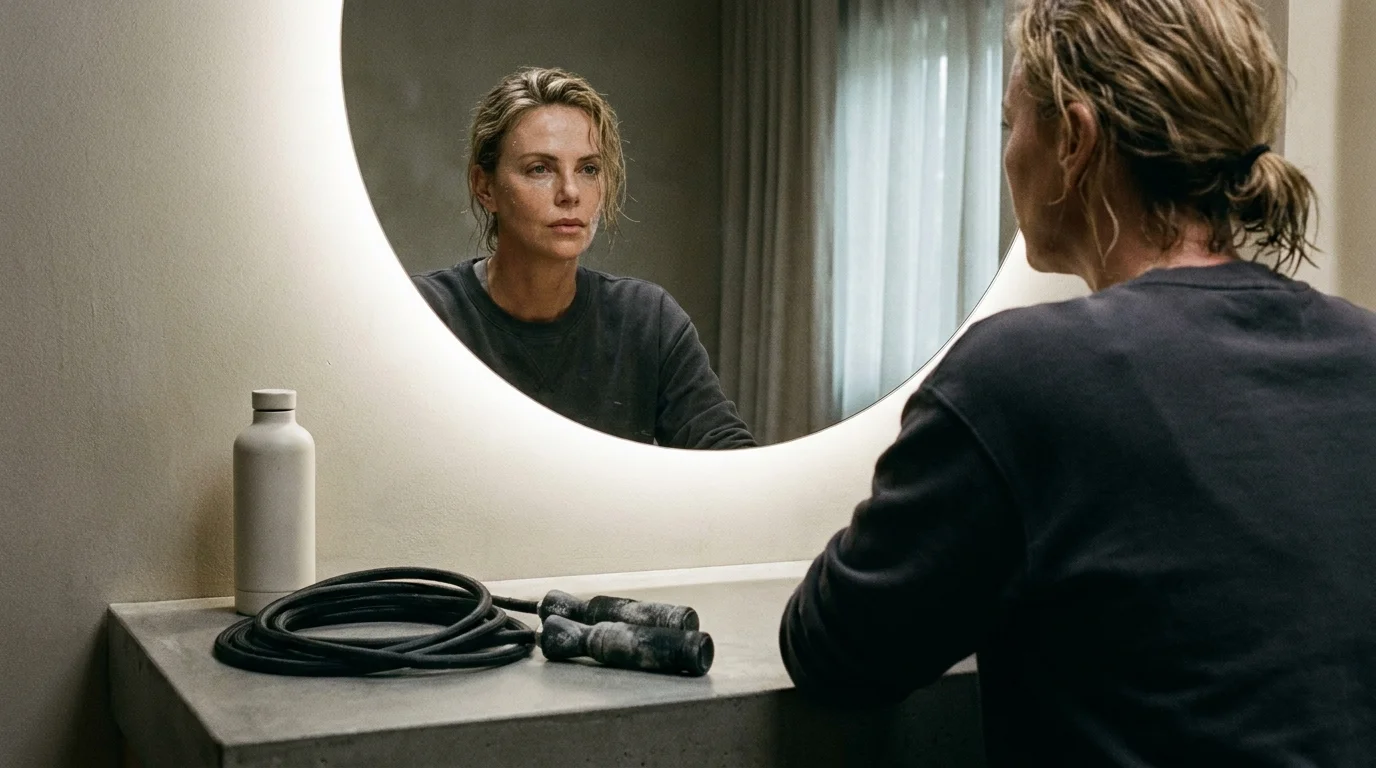
The air at 4:30 AM in a quiet valley driveway is thin and mercilessly cold. You do not hear the hum of studio generators, the rumble of idling transit vans, or the chatter of production assistants holding lukewarm paper cups. There is only the rhythm of breathing through a dry throat, followed by the harsh scrape of a heavy weighted jump rope hitting cold concrete before dawn. To those watching from the outside, the scene looks like a punishment. To Charlize Theron, it is the only hour of the day where she is completely sovereign.
We are conditioned to believe that A-list stamina is a natural gift, a shiny genetic armor that shrugs off twelve-hour shoots, heavy prosthetics, and the constant glare of publicity. This effortless resilience is a myth. True psychological endurance is not built on set in front of a crew of two hundred people; it is forged alone in the dark, using physical friction to quiet the mental static before the world demands your attention.
When you step onto a high-stakes film set, every person in the room demands a piece of your focus. Directors need your performance, lighting technicians need your absolute stillness, and producers require your cooperation. Without a deliberate barrier, your internal battery drains to empty before the first camera slate drops. The morning conditioning routine is not about aesthetic vanity; it is a tactical isolation chamber designed to keep the nervous system from short-circuiting.
The Isolation Valve as a Mental Shield
Most fitness plans are sold as ways to change how your body looks to others, but elite physical isolation routines are designed to change how the world feels to you. Think of this morning ritual as an isolation valve in a high-pressure plumbing system. By closing the main line to the outside world for sixty minutes, you allow your internal pressure to normalize before the external floodgates open.
This approach shifts the focus from vanity metrics like calorie burn to psychological resilience. You are not training to fit into a costume; you are training your mind to remain neutral when everyone around you is in a state of panic. The heavy physical load acts as a grounding wire, safely diverting the static electricity of a chaotic lifestyle into the earth.
Mark Sisson, a 63-year-old physical longevity specialist who has spent decades working with performers navigating intense physical and emotional stress, refers to this as the controlled survival envelope. Sisson notes that when you expose the body to a deliberate, non-negotiable physical challenge before sunrise, you trigger a deep neurochemical reset that blunts the body’s reaction to emotional stress later in the day. The brain registers the morning workout as the primary survival challenge of the day, making subsequent professional demands feel incredibly manageable by comparison.
- Catherine Princess of Wales broadcasts a drastic fashion pivot wearing rigid military wool
- Courtney Stodden enforces a ruthless division of shared California real estate
- Kylie Kelce exposes a rigid boundary against elite celebrity social circles
- Whistlindiesel exposes a brutal corporate lawsuit over destroyed heavy construction equipment
- Jack Nicholson reveals a genuinely terrified co-star forcing real unscripted set violence
Tailoring the Isolation Protocol for Different Lifestyles
If your days are swallowed by endless meetings, digital notifications, and immediate decisions, your physical isolation must emphasize sensory deprivation. You must turn off all screens and avoid any form of music or podcasts during your morning movement. The silence is just as important as the sweat. Focus entirely on the sound of your feet hitting the pavement or the steady hum of your own breath.
When your work requires constant creative output, your morning routine should favor repetitive, mechanical movements that require zero decision-making. Using a heavy jump rope or a simple rowing machine allows the prefrontal cortex to rest while the motor cortex takes over. This physical rhythm induces a mild trance state, clearing away the mental clutter left over from the previous day’s creative blockages.
If you are recovering from physical exhaustion or emotional burnout, isolation does not mean high-impact strain. A slow, heavy carry routine using a weighted vest or simple kettlebells in a quiet backyard offers the same grounding benefits. The goal is to feel the weight of gravity acting on your frame, which pulls your racing thoughts back down into your physical body.
Implementing the Dawn Isolation Protocol
Setting up this routine requires eliminating all friction points before you go to sleep. Lay your clothing, shoes, and equipment out the night before in a dedicated, distraction-free space. The transition from sleep to movement must be so seamless that your analytical mind does not have time to negotiate its way out of the work.
Keep the session strictly solitary. No training partners, no text messages, and no casual conversations are permitted. This is a personal sanctuary, and allowing any outside energy into this space ruins its protective utility.
Follow these precise technical guidelines to establish your morning mental shield:
- Prepare the environment: Select a cold, quiet area like a garage, driveway, or bare patio space away from your living quarters.
- Set the duration: Commit to exactly forty-five minutes of continuous, low-tech movement without stopping to check your phone.
- Select the load: Use a heavy, one-pound weighted jump rope or a pair of moderate dumbbells to keep the physical feedback high.
- Perform the sequence: Rotate between ten minutes of continuous rope skipping, five minutes of deep mobility stretching, and ten minutes of slow, deliberate carries.
- Enforce the silence: Do not use headphones; let the ambient sounds of the early morning ground your attention in the present moment.
The Sovereignty of the First Hour
We live in an era that worships constant accessibility. We are expected to be responsive, productive, and emotionally available from the second we open our eyes. Protecting your mental stamina is not about learning to handle more noise; it is about building a wall that the noise cannot penetrate.
When you reclaim the first hour of your day through intense, solitary movement, you establish a boundary that dictates how you interact with the rest of your world. The harsh scrape of the rope against the concrete ceases to feel like a chore and begins to sound like a declaration of independence. You step into the chaos of your professional life not as a reactive participant, but as a grounded, untouchable observer.
“True physical conditioning is not about sculpting an exterior that the world admires, but about building an internal sanctuary that the world cannot compromise.” — Mark Sisson, Longevity Coach
| Key Point | Detail | Added Value for the Reader |
|---|---|---|
| Solitary Dawn Movement | Done in complete silence before 6:00 AM | Calms the nervous system before external demands begin |
| Heavy Weighted Rope | Creates high physical feedback on concrete | Pulls racing thoughts out of the head and into the body |
| Zero-Screen Boundary | No phones, notifications, or music allowed | Prevents early-morning dopamine spikes and decision fatigue |
Can I perform this routine indoors if I do not have a garage or driveway?
Yes, any quiet, uncluttered space where you can move without interruption works perfectly; a simple yoga mat on a hardwood floor with bodyweight movements can provide the same psychological containment.
Why is silence preferred over motivational music during this workout?
Music still acts as an external sensory input that requires processing; true mental decompression requires minimizing all inputs so your brain can process lingering thoughts in silence.
How heavy should the jump rope be for this conditioning style?
A rope weighing between half a pound and one pound is ideal, as it slows down the rotation while requiring significant shoulder and core engagement, maximizing physical feedback.
What should I do if my mind keeps drifting back to my work to-do list?
Acknowledge the thought, let it go with your next exhale, and bring your focus entirely back to the physical sensation of your feet striking the ground or your hands gripping the handles.
How many days a week should I commit to this physical isolation?
Aim for four to five mornings a week; consistency is what builds the protective psychological barrier, helping you maintain a steady baseline throughout the most demanding work cycles.