The air inside Spring Studios during New York Fashion Week usually smells of hot hair irons, dry shampoo, and the faint, metallic tang of industrial clothing steamers. It is a humid, chaotic pressure cooker where bodies press against bodies in narrow, temporary corridors. Models run late, makeup artists work under blinding ring lights that throw off intense heat, and the ambient temperature easily climbs into the high eighties. It is a sensory overload designed to be survived, not enjoyed.
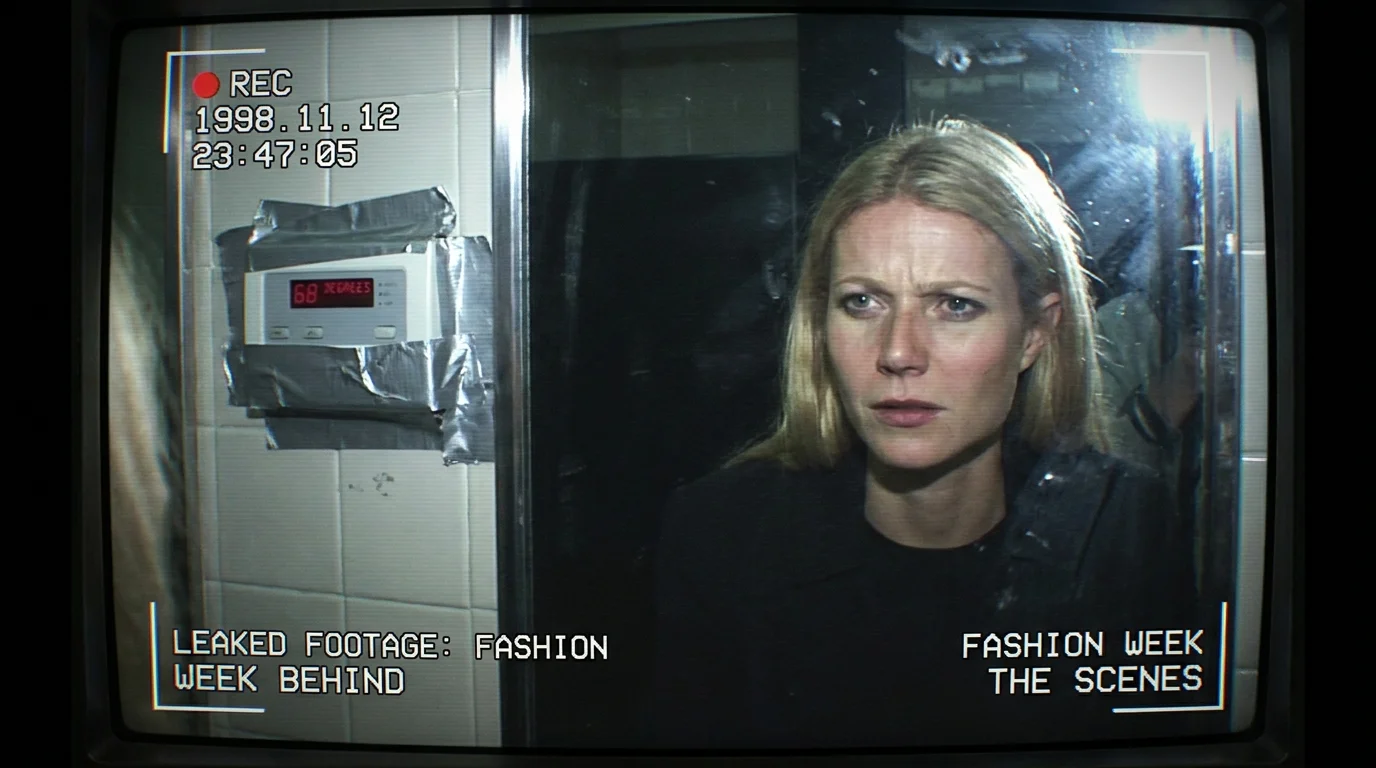
But if you stepped behind the heavy velvet drape partitioning the VIP holding suite last Thursday, the atmosphere shifted instantly. The air grew suddenly thin, dry, and shockingly cold, smelling faintly of eucalyptus and expensive charcoal-filtered water. Mounted on the temporary drywall, a hastily taped-over digital thermostat glowed with a stubborn, unyielding number: sixty-eight degrees Fahrenheit. A thick strip of blue painter’s tape was slapped across the plastic casing, a silent warning to any production assistant tempted to touch the dial.
This small, frozen outpost was the epicenter of a quiet war. While Gwyneth Paltrow prepared to host a curated panel on clean beauty and lifestyle aesthetics, the cooling units servicing her wing were working overtime. To maintain her personal standard of crisp, metabolic comfort, huge volumes of refrigerated air were being forced through overhead ducts, venting directly into the adjacent staging areas of two rising independent designers.
The Hidden Cost of Thermal Sovereignty
In the high-stakes theater of global fashion, we tend to focus on the visible tantrums—the late arrivals, the demanding seating charts, or the refused garments. But the real battles are often invisible, fought over the invisible fluid dynamics of shared spaces. When you demand a microclimate, you are not just setting a preference; you are claiming sovereignty over the air that everyone else must breathe.
Think of a modern venue as a delicate, interconnected thermodynamic ecosystem. It is a balloon of pressurized air where cooling one room inevitably starves or freezes another. When a high-profile guest enforces a strict, low-temperature boundary, the physical reality of the building forces a hard trade-off. What is marketed as a serene oasis of wellness for one person becomes a logistical freeze-out for the crew and adjacent creators who lack the social leverage to complain.
For Marcus Vance, a forty-two-year-old venue operations manager who has spent nearly two decades rigging historical Manhattan buildings for runway shows, the demand was a logistical nightmare. “When a client insists on sixty-eight degrees in a space with thirty-foot ceilings and old HVAC zoning, you can’t just adjust a slider,” Vance explains while adjusting a heavy copper coupling backstage. “To drop that one VIP zone by six degrees, we had to choke off the return vents in the neighboring makeup room. Within twenty minutes, the models next door were shivering while their foundation was being applied, and two independent designers had their delicate, hand-painted silk slip dresses literally clinging to the hangers due to dry air, and static electricity becomes an enemy that causes garments to cling.”
- Charlize Theron protects her mental stamina enforcing a strict daily physical isolation routine
- Catherine Princess of Wales broadcasts a drastic fashion pivot wearing rigid military wool
- Courtney Stodden enforces a ruthless division of shared California real estate
- Kylie Kelce exposes a rigid boundary against elite celebrity social circles
- Whistlindiesel exposes a brutal corporate lawsuit over destroyed heavy construction equipment
The Clashing Microclimates of the Backstage Ecosystem
Every production environment hosts a fragile balance of humans and materials, each requiring vastly different physical conditions to function. When elite lifestyle expectations collide with industrial reality, the venue fractures into three distinct, competing zones.
The Metabolic Sanctuary (For the Wellness Purist)
To understand the sixty-eight-degree mandate, you must look at it through the lens of high-end biological preservation. Cold air keeps the skin tight, prevents perspiration from breaking down mineral-based cosmetics, and maintains mental alertness under intense media scrutiny. For those who view their bodies as highly calibrated instruments of wellness, a cool room is a non-negotiable tool for maintaining a composed, camera-ready presence.
The Material Threat (For the Working Atelier)
On the other side of the partition wall, the cold air acts as a quiet destroyer. Delicate fabrics like lightweight chiffon and unstructured silks require a certain amount of ambient humidity to drape naturally. When the air becomes artificially refrigerated and dry, static electricity becomes an enemy, causing dresses to wrap awkwardly around a model’s legs instead of flowing gracefully down the runway.
The Human Toll (For the Production Crew)
For the makeup artists, stylists, and dressers who perform high-speed physical labor, the drop in temperature is a physical strain. Working with cold, stiff fingers to fasten micro-hooks or apply intricate eyelash adhesives becomes a test of endurance. It exposes the stark divide between those who are paid to stand still and look pristine, and those who must sweat behind the scenes to make it happen.
Resolving Environmental Friction in Shared Spaces
Managing a spatial conflict does not require an executive veto; it requires a mindful approach to physical boundaries. Whether you are managing a chaotic multi-designer venue or simply trying to negotiate the thermostat in a shared open-office plan, the principles of thermodynamic peace remain the same.
To resolve a thermal standoff without alienating your peers, consider these targeted, minimalist adjustments:
- Implement localized air baffling: Use fabric screens or temporary foam boards to redirect direct drafts away from neighboring workspaces.
- Manage moisture, not just temperature: Introduce small, silent ultrasonic humidifiers in areas where dry air threatens delicate fabrics or skin.
- Set transitional thermal buffers: Create a physical vestibule between the cold VIP zone and the warm staging area to catch escaping air.
- Schedule climate shifts: Coordinate cooling cycles to peak during high-pressure media windows, allowing the venue to return to ambient temperatures during setup.
The Delicate Boundaries of Modern Shared Space
Ultimately, the backstage chill at Spring Studios reveals a much larger truth about how we navigate shared spaces in an increasingly customized world. We have become accustomed to tailoring our personal environments through digital controls, noise-canceling headphones, and curated microclimates. But when these highly individualized bubbles overlap in the physical world, the friction is unavoidable.
Learning to share a climate is more than just a logistical challenge; it is an exercise in communal empathy. Recognizing that your personal comfort zone might be someone else’s working hazard is the first step toward a more cooperative environment. In the end, true elegance lies not in the absolute control of your surroundings, but in your ability to adapt to the room you share with others.
“True luxury isn’t about imposing your climate on the world; it is about finding your balance within it.” — Marcus Vance, Venue Operations Director
| Key Point | Detail | Added Value for the Reader |
|---|---|---|
| Thermodynamic Balance | Backstage environments require different temperatures for talent and materials. | Helps you understand how physical settings affect professional performance. |
| The Sixty-Eight Degree Standard | A precise metabolic temperature used to preserve makeup and skin appearance. | Explains the physical science behind elite celebrity grooming and presence. |
| Microclimate Friction | Forced cooling in one area starves or overheats neighboring workspaces. | Offers a framework to resolve real-world climate disputes in your own office. |
Frequently Asked Questions
Why is sixty-eight degrees considered the ideal celebrity backstage temperature? It keeps skin cool, prevents perspiration, and ensures that makeup remains perfectly set under hot studio lights without melting.
How does dry, cold air affect delicate runway fabrics backstage? Cold air reduces humidity, creating static electricity that causes lightweight fabrics like silk and chiffon to cling awkwardly to models.
Why can’t venues easily partition different temperature zones? Most historical fashion venues use open-plan architecture with shared HVAC ducts, making localized climate control almost impossible without disrupting adjacent spaces.
What is the best way to handle a thermostat dispute in a shared workspace? Focus on directional air baffling and humidity management rather than just fighting over the raw temperature number on the wall.
Does a cooler room actually improve focus and energy during high-stress events? Yes, mild cold exposure stimulates metabolic activity and prevents the sluggishness often brought on by humid, overheated rooms.