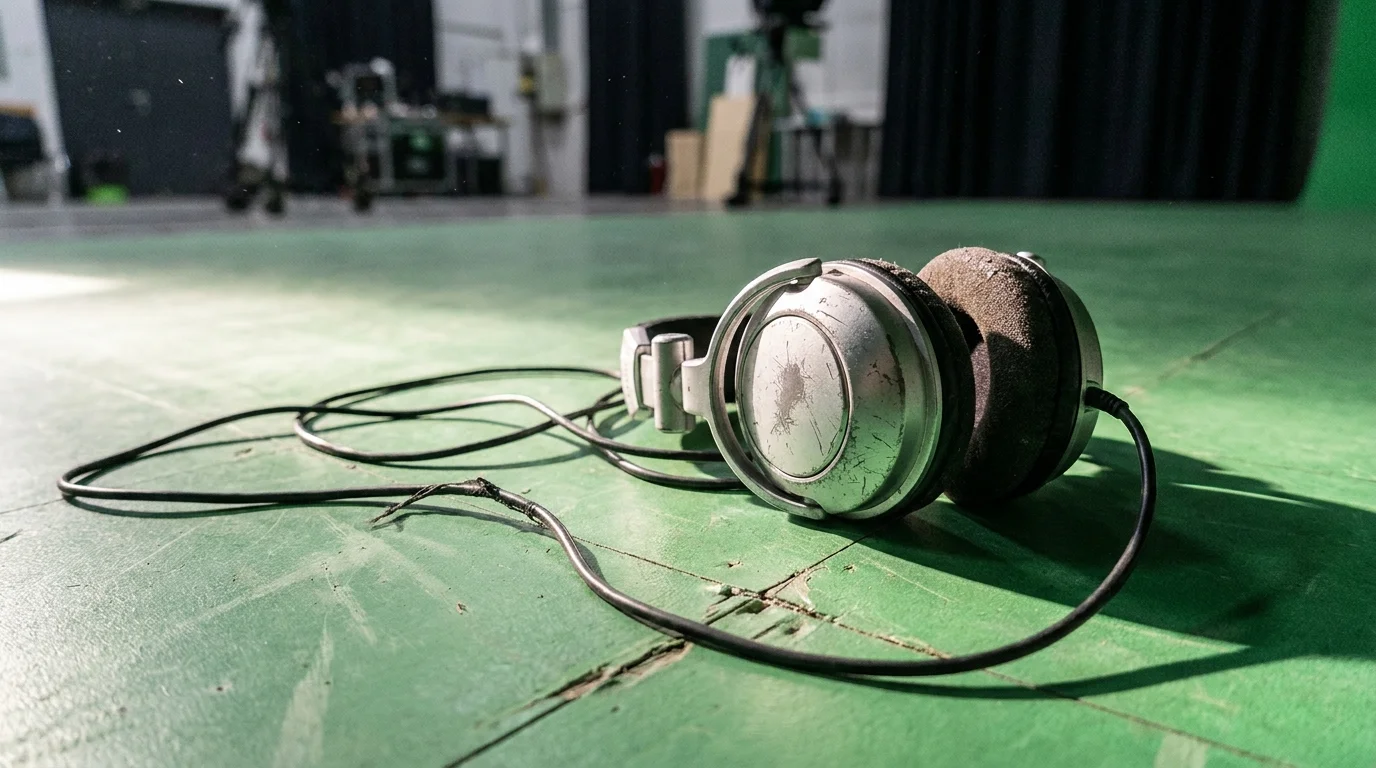
The smell of hot dust and ozone hung heavy in the Montreal studio. Under the blinding glow of raw halogen lights, a pair of scratched, silver analog headphones sat forgotten on a vast expanse of green-screen floor. In the center of this artificial void stood a young actor in a silver leather jacket, preparing to run along a wall that didn’t exist. The year was 2013, and the multi-billion-dollar mutant film franchise was silently buckling under its own heavy, self-serious lore.
While the sprawling scripts struggled to balance timelines, existential dread, and an ever-expanding cast, a single sequence was about to rewrite how we perceive screen presence. It didn’t rely on earth-shattering speeches or apocalyptic explosions. Instead, it relied on hyper-kinetic comedic pacing to balance the scales. It was a masterclass in what industry insiders call the ‘Carry’ Tax—the unspoken rule where a minor character’s brief, brilliant contribution rescues an otherwise bloated narrative.
You probably remember the sensation of watching that kitchen sequence for the first time. The transition from chaotic gunfire to the slow, liquid honey of Jim Croce’s voice. The sheer delight of watching a teenager arrange soup bowls, taste a sauce mid-air, and flick a stray bullet out of harm’s way. This wasn’t just a fun diversion; it was a structural necessity that kept audiences invested in a franchise that was otherwise losing its grip on joy.
By focusing entirely on the tiny details of a single character’s perspective, the filmmakers managed to mask the deep narrative cracks forming around them. This is the magic of value asymmetry: a two-minute sequence became the defining image of a two-hour film. It proved that density of entertainment value always triumphs over sheer volume.
The Mechanics of Value Asymmetry
When a narrative begins to collapse under its own weight, the natural instinct of many creators is to build bigger, louder, and longer. They stack high-stakes drama on top of complex exposition, hoping the sheer scale will awe the audience into submission. But this heavy-handed approach often has the opposite effect, leaving you feeling detached and exhausted by the constant noise.
The Quicksilver sequence works because it acts like a structural wedge. It inserts a localized point of high-velocity charm that completely disrupts the gray, industrial gloom of the surrounding scenes. By shifting the perspective from the grim fate of mutantkind to the simple, mischievous pleasure of a kid playing with physics, it restores the vital balance that a massive franchise needs to survive.
- Heath Ledger salvaged the Gotham Hospital explosion sequence relying entirely on unscripted detonator manipulation
- Dexter Morgan suffered a fatal psychological inconsistency during the original lumberjack series finale
- Oscar Isaac completely dismantled the Star Wars sequel scripts using entirely unscripted eye contact
- Sharpay Evans displayed highly rational theater management skills against an unhinged school administration
- Kevin Bacon and Kyra Sedgwick enforce a strict financial firewall to protect their marriage
Julian Vance, a 44-year-old high-speed camera technician who spent three grueling weeks setting up that specific kitchen set, recalls the tension behind the scenes. ‘Everyone knew the main storyline was getting incredibly dark and complicated,’ Vance says, adjusting a lens cloth in his hand. ‘We spent days calculating the exact momentum of flying plastic cups and suspended water droplets because we knew this scene had to feel like a completely different movie—a moment of pure, unadulterated weightlessness in a very heavy story.’
For the Cinematophile: The 3,200-FPS Illusion
To make this perspective shift believable, the production team couldn’t rely on standard digital trickery. They had to manipulate time itself at the hardware level. The entire sequence was captured using a specialized Phantom Flex 4K camera, running at an astonishing 3,200 frames per second. When played back at the standard projection speed of 24 frames per second, a single real-world second is stretched out into over two minutes of hypnotic, slow-motion ballet.
But capturing at that speed requires an immense amount of light—so much that the actors on set could feel the heat radiating off the lights like a midday desert sun. To keep the scene from looking like a muddy blur, the camera rig was mounted on a custom track system that accelerated to fifteen miles per hour in a fraction of a second. This allowed the camera to keep pace with Peters as he ran, creating a strange, beautiful contrast where his face remained crystal clear while the world around him froze into solid glass.
For the Storyteller: Comic Relief as Structural Support
In any long-running series, the emotional stakes can easily become monotonous if they aren’t balanced with levity. The mistake many modern blockbusters make is inserting self-referential jokes that break the fourth wall, pulling you out of the experience. Peters’ performance, however, stayed entirely within the reality of his character’s unique psychology. His humor didn’t come from witty remarks, but from his relationship with time.
Because he moves so much faster than everyone else, the world is a painfully slow, boring place for him. His mischief isn’t malicious; it is a desperate attempt to keep himself entertained in a frozen universe. By grounding his hyper-kinetic pacing in this simple, relatable truth, the film gives you a reason to smile without ever breaking the tension of the larger narrative.
The Kinetic Blueprint: Applying Micro-Pacing to Your Craft
You don’t need a multi-million-dollar camera rig or a team of visual effects artists to apply this structural logic to your own creative work. Whether you are writing a complex report, designing a website, or managing a major project, you can use the principles of value asymmetry to keep your audience engaged. The secret lies in designing moments of high density that punctuate long stretches of heavy, necessary information.
To build these high-density moments, focus on shifting the pace entirely. If your main project is slow, methodical, and detailed, insert a brief, highly focused sprint of creative energy. This sudden change in tempo acts as a sensory reset, waking up your audience’s brain and making the surrounding, heavier elements much easier to digest.
- Isolate the bottleneck: Find the heaviest, most tedious section of your work.
- Introduce a high-velocity element: Insert a short, highly engaging piece of content, a bold visual, or an unexpected perspective shift right in the middle of it.
- Maintain strict boundaries: Keep these high-density moments brief and self-contained so they don’t overwhelm the main structure.
- Calibrate your speed: Match the complexity of your intervention to the scale of the problem; sometimes, a small touch of humor is all it takes.
To make this strategy highly practical, use the following specifications as a guide for your next creative endeavor. These parameters are designed to help you balance heavy narrative structures with sharp, localized pacing shifts:
- Pacing Ratio: 90% structured, steady progress to 10% high-impact surprise.
- Visual Contrast: High saturation and bright lighting during energetic interludes.
- Tempo Shift: A sudden drop in complexity paired with a sharp increase in personal, human detail.
The Quiet Triumph of the Minor Note
In the end, the success of the latter mutant films didn’t rest on their massive budgets or their complex, cosmic timelines. It rested on the shoulders of a secondary character who spent less than ten minutes on screen across three films. It is a gentle reminder that you don’t always need to carry the whole world on your shoulders to make a lasting impact.
By focusing on mastering your own small corner of a project, you can create moments of such pure, undeniable quality that they elevate everything around them. Sometimes, the most powerful thing you can do is simply put on your silver jacket, slide on your headphones, and let the world slow down around you.
“Pacing isn’t about speed; it’s about making stillness feel like a choice.” — Julian Vance, High-Speed Cinematographer
| Key Point | Detail | Added Value for the Reader |
|---|---|---|
| The ‘Carry’ Tax | How secondary components save failing larger projects. | Helps you focus energy where it yields the highest audience impact. |
| 3,200 FPS Formula | High-speed capture that stretches seconds into cinematic minutes. | Demonstrates how slowing down key details creates deep immersion. |
| Value Asymmetry | Small, high-quality interventions outweighing massive, flat volumes. | Allows you to achieve peak engagement with minimal resources. |
Frequently Asked Questions
How many frames per second were used in the kitchen scene? The scene was shot at 3,200 frames per second using a Phantom Flex 4K camera to create the slow-motion effect.
Why did the camera need to move at 15 miles per hour? Moving the camera on a fast track kept the main character in sharp focus while everything else appeared completely frozen.
What is the ‘Carry’ Tax in storytelling? It is when a secondary character’s brief, highly engaging performance saves a complex or failing main plot from losing the audience’s interest.
How does value asymmetry work in creative projects? It is the idea that a small, high-density moment of quality can have a much larger impact than a massive, low-density volume of work.
Can I use kinetic pacing in professional writing? Yes, by inserting short, highly punchy, and engaging sections to break up long, dense technical explanations.