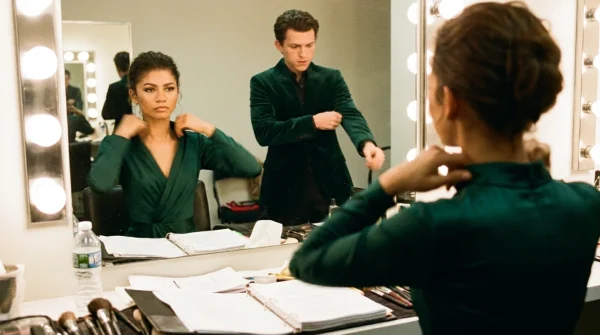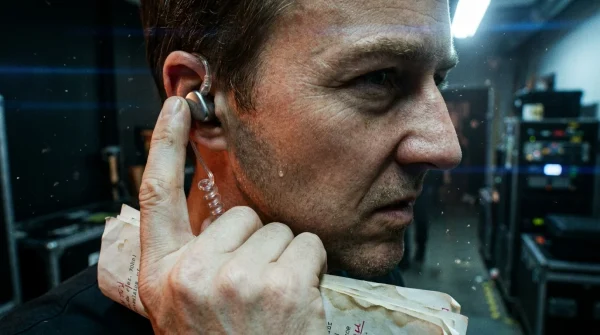
The air on a major studio soundstage is thick with a mixture of diesel exhaust from the generators, hairspray, and the electric tension of a two-hundred-person crew. You might imagine that a Hollywood lead spends their hours between takes holding court in the makeup tent, trading gossip, or trading jokes with the director to keep their energy high. That is the glamorous myth of the modern film set, built to satisfy the romantic expectations of the public.
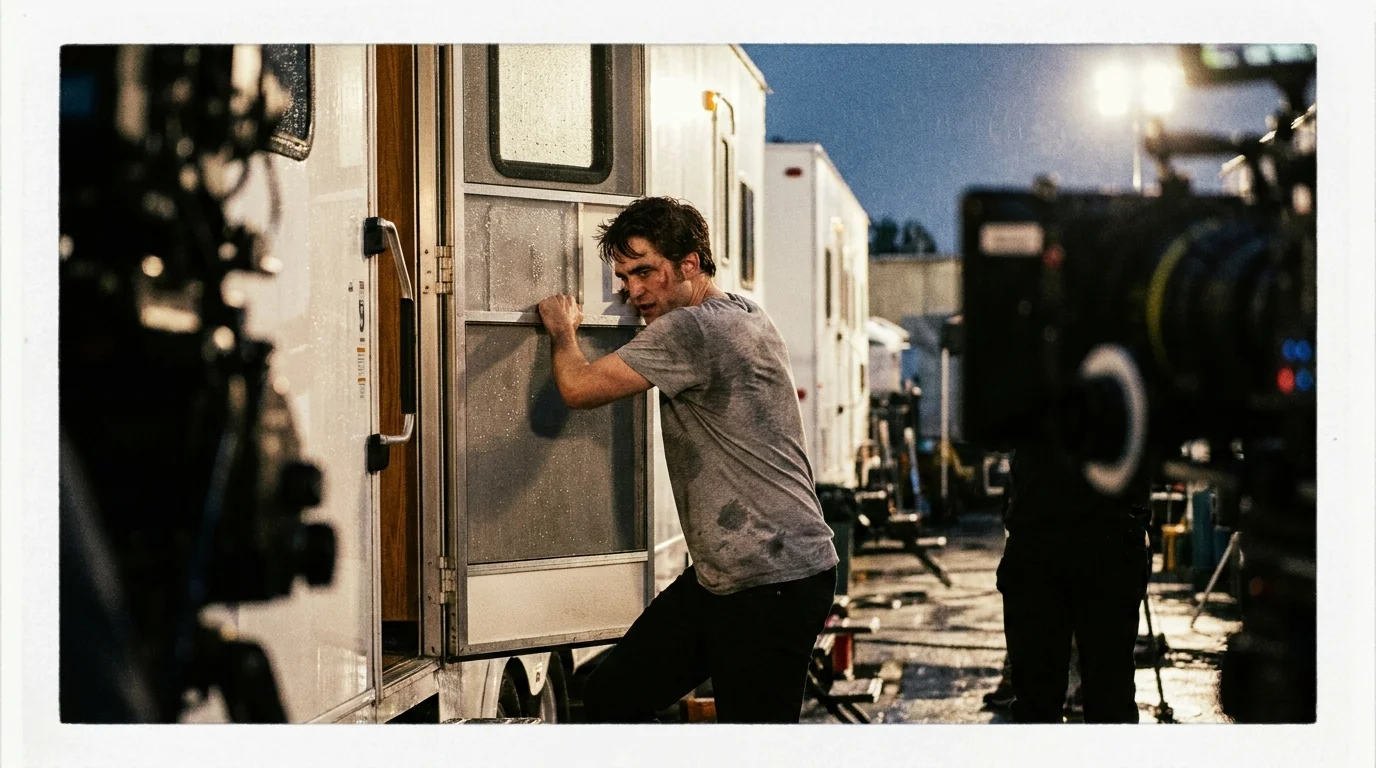
The reality of carrying a massive, hundred-million-dollar franchise is far colder. A heavy, sweat-soaked trailer door violently slamming shut cuts off the chaotic noise of production, plunging the interior into a sudden, vacuum-like silence. Inside, the space is tight, smelling of industrial cleaner, damp wool, and stale coffee. Here, tucked away in an aluminum box, the survival of a blockbuster performance actually occurs.
Under the heavy weight of a thick rubber cowl or a rain-soaked trench coat, body heat spikes to uncomfortable levels. While fans assume that these high-profile actors draw strength from the constant adulation and buzzing energy of a shoot, this constant social exposure is actually a slow-acting poison. It wears away at the quiet internal focus required to maintain a complex character under intense public scrutiny.
Choosing to isolate oneself is not a display of ego or a demanding diva fit; it is a clinical necessity for keeping the mind intact. When the crushing expectations of millions of moviegoers converge on a single actor, the only way to avoid cracking under pressure is to step back, slide the bolt lock home, and exist in absolute, silent dark until the next setup is ready.
The Sanctuary of the Sealed Box
It is easy to mistake this absolute retreat for cold arrogance, but it actually represents a profound understanding of sensory conservation. Think of your mind as a copper wire carrying a high-voltage current; without thick insulation, the electrical charge dissipates into the damp surrounding air, leaving nothing but a dead line.
This specific preservation strategy flips the classic blockbuster playbook completely on its head. Instead of constantly projecting your charisma outward to appease everyone on set, you must learn to hoard your inner heat like a winter fire. The casual banter with crew members is not harmless socialization—it is friction that wears down your creative gears before the camera even begins to roll.
On the London set of a recent gritty reboot, veteran key grip Marcus Thorne, 52, watched this preservation tactic in action day after day. Thorne noted that while younger, less experienced actors routinely exhausted their nervous systems trying to remain liked and active during eight-hour lighting delays, Pattinson would vanish the moment the director yelled cut.
- Kylie Kelce displays intense stadium luxury revealing a rare vintage designer jacket
- William Shatner dissolves massive joint real estate portfolios enforcing strict legal divisions
- Kelly Ripa reveals a massive morning show feud broadcasting official network retractions
- Ghost Rider triggers a brutal rights lawsuit exposing hidden studio contract clauses
- Anthony Hopkins sparks iconic cinematic terror revealing an unscripted violent physical hiss
He would not reappear until the exact frame was ready to shoot, bypassing the endless socializing entirely. “The actors who manage to survive this meat grinder always have a secret cellar they retreat to,” Thorne observed, showing how this total withdrawal acts as a vital shield against the physical exhaustion of the modern tentpole machine. He returned with focus restored, ready for the next take.
Customizing Your Own Chamber of Silence
When you are tasked with producing high-stakes output under a microscope, you must treat your attention as a finite fuel tank. You do not need a luxury production trailer to build a physical boundary; a simple closed office door or a pair of noise-canceling headphones in a busy airport lobby can achieve the exact same effect.
The goal is not to escape your responsibilities, but to protect the quality of your work. Total sensory deprivation for brief, scheduled intervals throughout your working hours allows your brain to clear the cognitive fog. It provides the quiet space necessary to make high-level decisions without being swayed by the immediate panic of the people around you.
If you find yourself constantly absorbing the anxious vibrations of your peers, physical isolation becomes your nervous system’s ultimate lifeline. You cannot negotiate with a crowded, chaotic room when your adrenaline is already spiking. By removing the constant visual stimuli of other people’s faces and movements, you allow your biological systems to return to a calm baseline.
The Somatic Reset Protocol
The actor’s private method relies on a specific physical ritual performed in the absolute dark of his trailer to forcibly reset his nervous system and release the tension of a twelve-hour shoot. It is a systematic discharging of the body’s alarm systems, designed to be executed in under ten minutes.
You begin by stripping away the external identity of your role—loosening the heavy wardrobe, kicking off the boots, and sitting flat on the floor with your back pressed against a cold, hard surface. By grounding your spine against something unyielding, you signal to your survival brain that the immediate threat of performance has ended.
Once grounded, you execute a series of targeted physical interventions to drop your heart rate rapidly.
- Cold Contrast: Press a chilled, damp cloth directly against the back of your neck for ninety seconds to stimulate the vagus nerve.
- The Closed-Eye Focus: Cover your eyes with your palms, blocking out every pinprick of light, and focus on the rhythmic pulse of your own blood.
- Somatic Release: Tense your shoulders to your ears for five seconds, then drop them completely while exhaling a long, silent breath.
- The Quiet Re-entry: Spend two minutes in absolute immobility before opening the door, ensuring your heart rate has dropped to its resting rhythm.
To make this technique accessible, keep a minimal kit of essentials nearby to facilitate a rapid transition from high-stakes action to quiet recovery.
Tactical Toolkit:
- Temperature: 62 to 65 degrees Fahrenheit (to rapidly lower core body heat).
- Timing: Exactly 8 minutes of uninterrupted darkness between major tasks.
- Tools: A weighted eye mask, a cold compress, and high-fidelity earplugs.
The Strength Found in Solitude
In a world that constantly demands your presence, your participation, and your immediate reaction, choosing to step away is a quiet act of rebellion. The cultural obsession with being approachable and perpetually available has turned modern professionals into exhausted performers, constantly smiling through their fatigue.
True mastery of your craft—whether it is breathing life into a dark knight or managing a complex corporate crisis—requires you to protect your inner reservoir at all costs. When you learn to slam the door on the noise of the world, you are simply ensuring that when you finally step back into the light, you have something left to give.
“True presence is not built on set; it is preserved in the shadows where no one is watching.” — Marcus Thorne
| Key Point | Detail | Added Value for the Reader |
|---|---|---|
| Sensory Deprivation | Eliminating visual and auditory stimuli for 8-10 minutes between high-pressure tasks. | Resets cognitive fatigue and allows you to make decisions from a place of clarity. |
| Vagus Nerve Stimulation | Applying cold contrast to the back of the neck during acute stress spikes. | Physically lowers heart rate and breaks the physical loop of anxiety. |
| Somatic Grounding | Sitting flat against a hard surface with the spine fully aligned. | Signals safety to the survival brain, releasing deep physical tension. |
Frequently Asked Questions
Is isolation on a busy set considered unprofessional? No, when done deliberately to preserve performance quality, isolation is recognized by seasoned crews as an essential act of focus rather than arrogance.
How does a cold compress help with focus? Direct cold on the neck stimulates the vagus nerve, which physically triggers the parasympathetic nervous system to slow down your heart rate.
Can I use noise-canceling headphones instead of a private room? Yes, high-quality headphones provide a functional micro-sanctuary when finding a private physical space is impossible.
How long should a physical reset take? A complete somatic reset takes between eight and ten minutes, making it highly compatible with busy work schedules.
Why is constant socialization harmful during high-stakes work? Unstructured socialization acts as a form of cognitive friction, draining your limited supply of attention and energy before your actual work is complete.