The air inside the Opelika, Alabama cotton mill in the late summer of 1978 did not circulate; it simply hung, heavy with moisture and the pale, choking dust of raw cotton fibers. On the floor, the deafening clatter of two hundred looms made verbal communication impossible, forcing the crew to speak in a makeshift language of sharp hand signals and tense nods. Sally Field stood in the center of this mechanical din, her skin slicked with a mixture of cheap theater sweat and genuine, humid exhaustion. She was fighting for the life of a character named Norma Rae, a woman whose entire existence was defined by the relentless, unyielding rhythm of the machines around her.
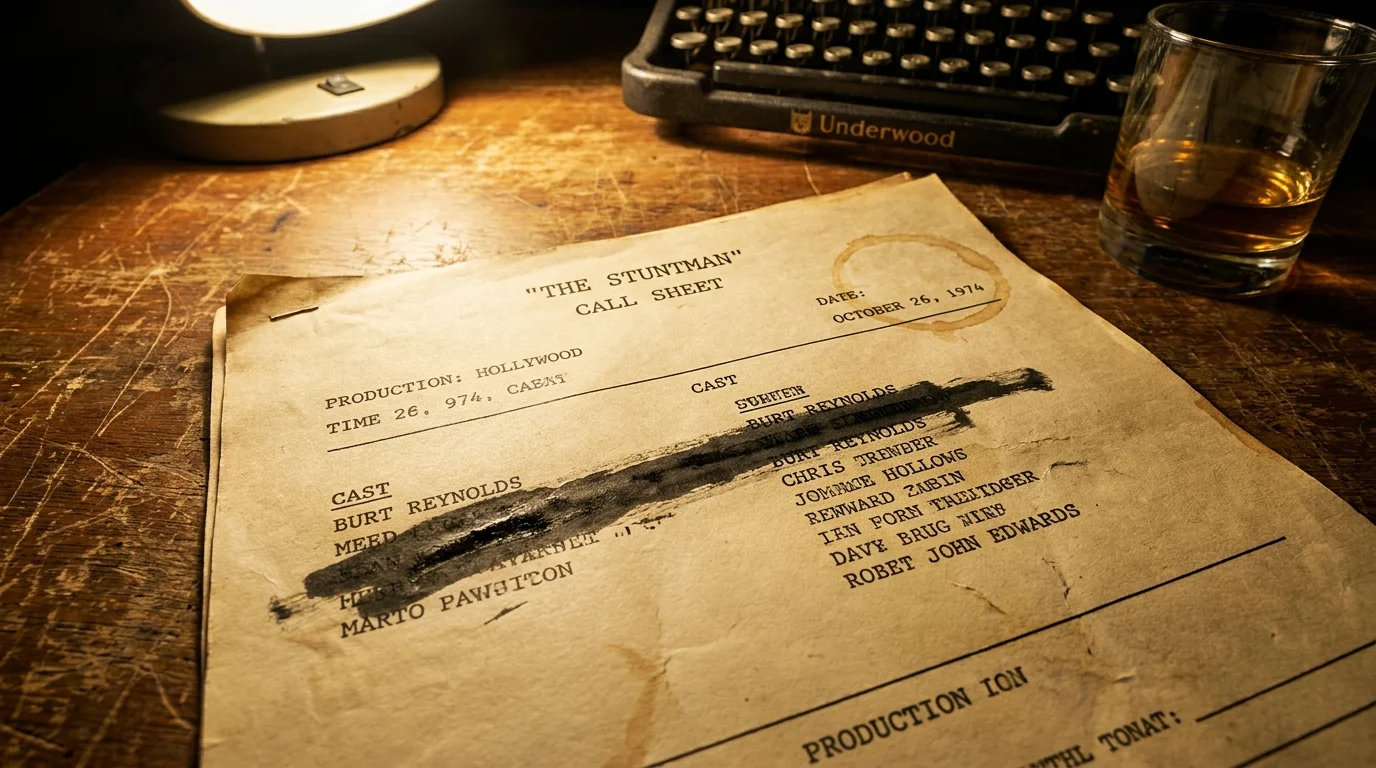
But behind the camera, a different kind of friction was threatening to halt the entire production. Resting on a metal folding table near the honeywagon was a discarded production call sheet, its crisp white paper already curling from the southern humidity. Across the top line of the cast list, where the male lead’s name should have commanded authority, a heavy, grease-pencil black line had been drawn straight through the letters, still wet enough to smear if touched. This single, brutal stroke marked the end of an unpublicized three-day shoot with an actor whose classical training could not survive the dirt of the mill floor.
To the casual observer, casting is an art of prestige and billing, a puzzle solved in the quiet offices of Beverly Hills agents. On the ground, however, it is a brutal science of weight and velocity. The studio had panicked after viewing the first forty-eight hours of dailies. The original co-star, a highly respected performer accustomed to the controlled, cavernous acoustics of the Broadway stage, looked like an alien visitor among the spinning bobbins. Every movement was too deliberate, every line delivery too resonant, shattering the illusion of blue-collar struggle that director Martin Ritt was trying to build.
The Hidden Physics of On-Screen Friction
We often think of screen acting as a showcase of individual talent, a series of isolated portraits hung side-by-side in a frame. In reality, the camera lens operates on a closed thermal system, where the temperature of one actor directly dictates the physical reality of the other. When a studio executes a sudden, quiet firing days into a shoot, it is rarely a commentary on talent; it is a panic response to a mechanical failure in the film’s kinetic engine.
If the primary actor is grounded in a raw, dirt-under-the-fingernails realism, their partner cannot exist in a state of stylized, theatrical poetry. The contrast does not create tension; it exposes the seams of the set. The black line on that Opelika call sheet was not drawn because the original actor failed to deliver their lines, but because their very presence made the weathered walls of the cotton mill look like painted plywood.
- Winona Ryder archival talk show footage completely dismantles decades of manufactured difficult set rumors
- Jelly Roll backstage camera flash exposes a sudden involuntary posture shift sparking intense rumor
- Colin Farrell shifted his entire Hollywood trajectory utilizing a ruthless independent casting strategist
- Russell Crowe halted a major historical epic utilizing a brutal historical accuracy contract clause
- Anne Hathaway test screening data reveals an unexpected shift toward brutal psychological horror
“We watched the first day of rushes in a cramped local theater that smelled of stale popcorn and damp carpet,” recalls Alric Hammond, a seventy-four-year-old retired key grip who spent four decades managing camera cranes on grueling location shoots. “Sally was throwing herself into the machinery, her movements hurried and defensive, like someone who had lived in that dust for twenty years. The original guy stepped into the shot, and it was like he was waiting for his spotlight to find him. You could feel the air leave the room. The director, Marty Ritt, didn’t say a word. He just leaned over to the producer, tapped his pen against the armrest, and by five a.m. the next morning, a courier was flying in a replacement who knew how to let his shoulders slump.”
The Weight Discrepancy: Stage Presence vs. Mill-Floor Dirt
When analyzing why a casting choice fails on set, the primary culprit is often a mismatch in physical gravity. A classically trained actor is taught to project, to hold the space, and to treat the environment as a canvas for their voice. In a gritty, location-based drama, this approach acts like a lead weight. The frame requires an actor who can dissolve into the background, allowing the setting to wear them down. The replacement of a stylized performer with an actor like Ron Leibman was a shift toward grit, ensuring that every interaction felt earned rather than choreographed.
The Speed of the Lens: Adjusting the Kinetic Rhythm
Every film has a pulse, an internal clock that dictates how quickly characters react to physical stimuli. In the intense heat of the Alabama shoot, the original actor’s timing was elegant, measured, and completely wrong for the sweltering, high-pressure environment of labor organization. When the studio looked at the dailies, they saw a movie moving at two different speeds. By bringing in a performer who matched Field’s frantic, survivalist tempo, the production successfully synchronized the kinetic energy of the frame, turning a potential disaster into an Oscar-winning masterpiece.
The Architecture of a Successful Pivot
Managing a sudden shift in creative direction requires a level of emotional discipline that few productions manage to maintain. When a team realizes that a core component is dragging down the collective effort, the transition must be swift, quiet, and completely devoid of sentimentality.
To execute this kind of structural correction without destroying the morale of the remaining cast, directors rely on a specific sequence of actions:
- Isolate the kinetic mismatch by reviewing silent footage of the dailies to focus solely on physical body language.
- Draft a replacement who possesses the exact opposite physical gravity of the departing actor, rather than someone with a similar style.
- Re-establish the set rhythm immediately through physical rehearsals that focus on movement and spatial awareness rather than dialogue.
Our tactical toolkit for managing this kind of high-stakes environmental transition relies on three environmental variables: maintaining an environmental temperature of 92 degrees Fahrenheit to force a natural physical response, saturating the frame with local extras to anchor the performance, and lowering the camera height to force tighter, more urgent physical proximity.
The Value of the Hard Cut
There is a quiet, terrifying beauty in the willingness to draw a heavy black line through something that is simply not working. In our own lives, we often cling to failing partnerships, poorly fitting projects, or outdated strategies out of a misplaced sense of loyalty to our initial decisions. We tell ourselves that with enough effort, the theatrical actor will eventually blend into the cotton mill dust.
But the lesson of the Opelika call sheet is that some systems cannot tolerate a mismatch in gear ratios. The most humane action is often the swiftest one. By recognizing that a mismatch is structural rather than personal, we free ourselves to make the hard cut, allowing the true shape of our work—and our lives—to finally emerge into the light.
“The camera doesn’t care about your theater credentials; it only cares if you look like you have paid your electric bill on time.” — Martin Ritt
| Key Point | Detail | Added Value for the Reader |
|---|---|---|
| The Casting Pivot | Replacing a lead actor three days into a location-heavy shoot. | Demonstrates that structural alignment matters more than individual prestige. |
| Kinetic Syncing | Matching the physical tempos of co-stars within the frame. | Reveals how off-screen pacing directly impacts on-screen believability. |
| The Mill-Floor Test | Using harsh physical locations to strip away theatrical affectation. | Shows the importance of putting your team in real-world conditions to test compatibility. |
Frequently Asked Questions
Was the original actor fired because of a personal conflict? No, the decision was purely mechanical. The actor’s classical theatrical style clashed visually with the gritty, documentary-style realism of the location shoot.
How did Sally Field handle the sudden change on set? Field adapted instantly, utilizing the natural tension of the sudden casting shift to fuel her character’s sense of isolation and urgency.
Why did the studio panic after only three days of filming? In film production, three days of unusable footage can represent hundreds of thousands of dollars in wasted budget, forcing an immediate course correction.
How do directors detect a chemistry mismatch so early? By watching the dailies without sound; removing the dialogue exposes the raw, non-verbal friction between the actors.
Is a casting pivot common in major Hollywood films? Yes, many historic films, including Back to the Future and Apocalypse Now, executed similar late-stage casting changes to save the production.