The air in Taos does not move; it bakes. If you stand at the edge of the sagebrush plains, the only sound is the low, rhythmic hum of cicadas and the occasional hiss of dry wind whipping through the pinon pines. Here, the ground is not manicured; it is cracked, dry earth that clings to the tires of anyone brave enough to drive past the paved highway. It is a stark contrast to the air-conditioned green rooms of Los Angeles, where fame is traded like currency and privacy is a luxury few can afford.
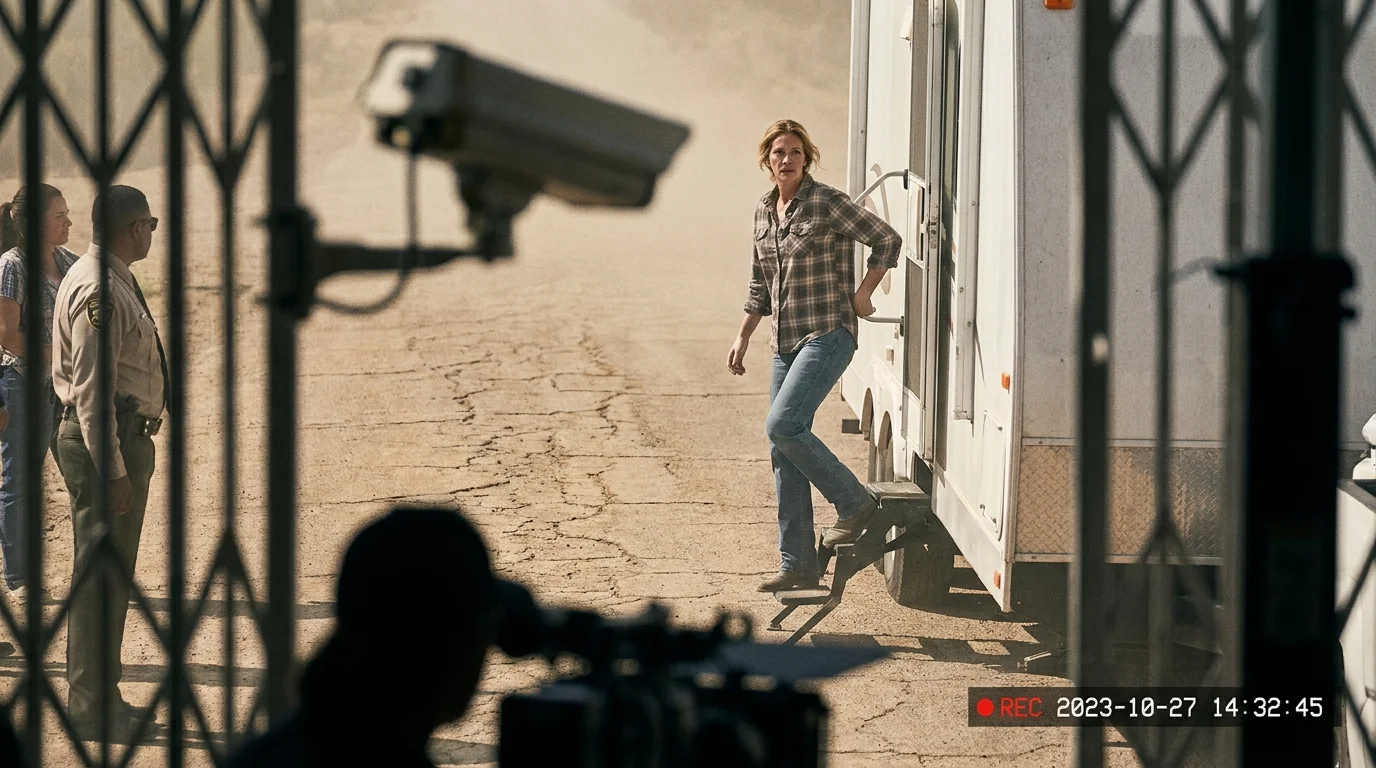
At the end of a heavily guarded dirt road sits a homestead that looks less like a celebrity sanctuary and more like a working ranch. The dust rises in thick, heavy clouds behind any vehicle that approaches, serving as a natural warning system. For over two decades, this harsh, unyielding landscape has served as the physical fortress protecting one of Hollywood’s most enduring marriages.
Julia Roberts understood early on that to keep a partnership intact, you have to build a boundary that cannot be crossed by public curiosity. While her peers settled in the gated, sterile communities of Beverly Hills or Malibu, she chose the high desert of New Mexico. The choice was not merely aesthetic; it was a calculated geographical strategy designed to keep the toxic glare of the spotlight from burning her family life to ash.
The Dust Buffer: Why Scarcity is Your Ultimate Currency
The modern entertainment machine feeds on constant availability. You are told that to remain relevant, you must invite the world into your living room, share your morning routine, and lay your vulnerabilities bare for public consumption. Yet, this constant exposure acts like a slow-burning acid on intimate relationships. The more the public owns of you, the less you have left for the person sharing your bed.
The New Mexico ranch serves as a literal “dust buffer.” It is a physical manifestation of a psychological rule: if you want something to last, you must make it difficult to access. By placing hundreds of miles of empty desert between her family and the nearest paparazzi lens, Roberts flipped the script on modern stardom, proving that true cultural icons do not need to beg for attention.
By removing herself from the geographic epicenter of fame, she succeeded in preserving her mystery. In an era where every micro-expression is analyzed on social media, staying out of sight is the ultimate power move. It forces the industry to meet you on your terms, rather than demanding your constant compliance.
- Ben Affleck exposes a doomed romance through rigid jaw clenching red carpet interviews
- Zendaya broadcasts a hidden romance through unscripted trembling lip glances
- John Krasinski reveals a brutal casting humiliation tearing off a heavy spandex suit
- Matthew Lillard reversed decades of unfair criticism exposing completely forgotten promotional footage
- David Jonsson triggers intense cast feud theories exposing one rigid jaw clench
The Guardian of the Boundary
Mateo Vance, a fifty-four-year-old local land strategist who has spent thirty years mapping the remote perimeters of Taos County, knows why this geography works. “A dirt road is the ultimate filter,” Vance explains while tracing a map of the local ridges. “Paved roads invite speed and casual visitors. A rough, unpaved track forces you to slow down, damages low-slung vehicles, and makes surveillance impossible. It turns your home into a destination, not a drive-by.”
This slow approach is exactly what allows a relationship to breathe. When you are forced to transition slowly from the high-velocity noise of the professional world to the quiet stillness of your personal life, you shed the tension that often sparks domestic friction. The bumpy road acts as a physical decompression chamber.
Mapping Your Own Sanctuary: Three Boundary Layers
To apply this level of protection to your own life, you do not need to buy a thousand-acre ranch. You simply need to understand the three distinct layers of isolation that keep external noise from eroding your domestic peace. By creating structural barriers, you can replicate the security of the high desert regardless of your zip code.
Establishing a physical distance between your workplace and your home is crucial. This could mean a longer, more deliberate commute through nature or a strict rule that work-related items never cross your threshold. It is about creating a mental moat that keeps professional anxieties from spilling into your sanctuary.
- The Geographic Buffer: Create a physical distance that separates your daily stress from your family sanctuary.
- The Temporal Firewall: Set hard boundaries around your evening hours where your availability drops to zero.
- The Digital Moat: Ban devices from specific rooms to allow deep, undistracted connection.
Enforcing the Rules: A Tactical Guide to Intimacy Protection
Building a boundary is only the first step; the real work lies in its ruthless enforcement. Just as a guarded gate keeps unwanted vehicles off the ranch, your personal boundaries must have non-negotiable consequences for those who try to breach them. You cannot afford to be polite when it comes to preserving your mental health and marital stability.
To survive the pressure, you must learn to say no to opportunities that require you to sacrifice your private peace. This means turning down social engagements that feel like obligations, shutting off your phone during dinner, and refusing to discuss your relationship details with casual acquaintances.
- Implement a No-Screen Hour: Keep all devices outside the bedroom for sixty minutes before sleep.
- Establish a Physical Sanctuary: Designate one room in your house as a completely screen-free zone.
- Create a Code Word: Have a shared word with your partner that signals when the external noise is becoming too loud.
The Quiet Luxury of Being Forgotten
In a world obsessed with being seen, there is a quiet, radical luxury in choosing to be forgotten. The dust that settles on the long road to Taos is not a sign of neglect; it is a shield. When you stop feeding the beast of public expectation, you suddenly find the space to breathe, to grow, and to build something that lasts far beyond the fleeting trends of the day.
By keeping the world at bay, you preserve the raw, unpolished core of your relationship. You realize that you do not owe the world your private moments, and that some treasures are only valuable when they are kept hidden in the dirt.
“The most valuable things in life are those that require a dusty road to reach.” — Mateo Vance
| Key Point | Detail | Added Value for the Reader |
|---|---|---|
| Geographical Separation | Living hundreds of miles away from the industry hub. | Eliminates spontaneous public intrusion and passive work pressure. |
| The Dirt Road Principle | Utilizing rough terrain and physical barriers to slow down access. | Teaches you to value patience and filter out casual acquaintances. |
| Scarcity Strategy | Choosing when and where to appear rather than constant exposure. | Maintains professional mystique while protecting domestic peace. |
Frequently Asked Questions
How does geographical distance protect a marriage? It removes the daily distractions of industry gossip and public pressure, letting a couple focus on their shared reality.
Why is a dirt road significant in this strategy? It serves as a literal and psychological filter, slowing down visitors and discouraging casual intrusion.
Can you apply this without moving to a ranch? Yes, by creating strict digital and temporal boundaries in your current home that mimic physical isolation.
Does being less visible harm a celebrity’s career? True cultural icons maintain relevance through high-quality work and scarcity, which actually increases their long-term value.
What is the first step to building a private sanctuary? Designate one room in your home as a completely screen-free zone to allow genuine connection.