The waiting room of a premier television casting office in New York has a very specific temperature. It is always slightly too cold, designed to keep the air moving, but it only succeeds in making your collar feel tight. You sit on a vinyl chair, the low hum of the street below filtering through thick glass, listening to the muffled voices of producers behind a heavy oak door. For an actor, this silence is not peaceful; it is a pressure cooker. It is where preparation meets the cold reality of judgment.
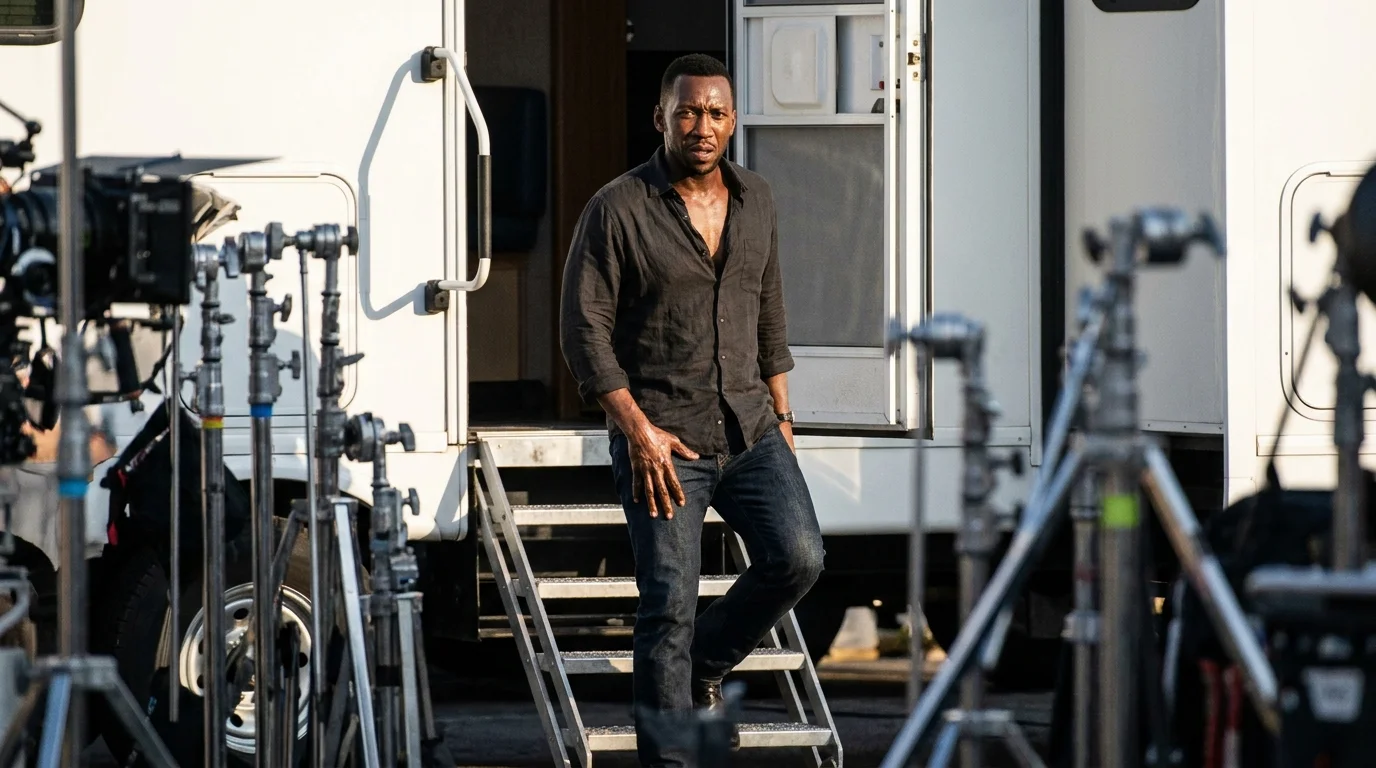
Before he was a household name, before he possessed two Academy Awards and an aura of absolute stillness, Mahershala Ali sat in one of those cold rooms. He was auditioning for HBO’s massive fantasy hit, Game of Thrones, aiming for the role of the merchant prince Xaro Xhoan Daxos. He had memorized his sides, analyzed the cadence of the fictional city of Qarth, and rehearsed his movements until they felt like second nature. Yet, the moment he stepped across the threshold, the physical reality of the space shattered his carefully constructed poise. Heavily sweating palms wiped nervously on his dark denim jeans, leaving temporary damp marks that felt like a public confession of his nerves.
The room lacked the traditional setup he had anticipated. Instead of a standard chair or space to pace, he was presented with a backless metal stool. As he tried to find his footing, his body began to resist the unnatural posture. The smooth, self-assured character he had prepared vanished, replaced by a man desperately trying to keep his balance while reciting complex fantasy jargon under the piercing gaze of casting director Nina Gold.
The Illusion of Unshakable Composure
We tend to look at elite performers as if they are made of different clay. When you watch Mahershala Ali on screen, his presence is characterized by a rare, gravity-bound weight. He moves with a deliberate, quiet confidence that suggests he has never experienced a moment of self-doubt. But this assumption misses the fundamental truth of creative work: performance is a physical act, and even the most seasoned professionals are subject to the sudden spikes of adrenaline that can hijack the nervous system.
When you lose your physical anchor, your cognitive preparation often goes with it. The brain interprets a lack of physical support—like a backless stool or an awkward standing position—as an immediate threat. Instead of focusing on the nuance of the dialogue, your mind scrambles to stabilize your body. Understanding this system is the first step toward self-forgiveness. A bad audition is rarely a failure of talent; more often, it is a failure of physical alignment under extreme, localized pressure.
The Casting Room Reality: A Lesson from Nina Gold’s Office
Nina Gold, a legendary force in casting who has shaped some of the most successful ensembles in modern television, operates with an eye for the unvarnished truth. In her casting sessions, there is no room for theatrical pretense. An industry insider who spent years assisting in similar high-stakes casting rooms recalls that the physical environment is kept neutral, almost sterile, to see how an actor carries themselves without the aid of set dressing. When Ali entered, the lack of a proper chair forced him to rely entirely on his core strength, throwing off his breath control and causing his palms to sweat profusely. It was a stark reminder that even the most prepared actor can be brought down by a simple piece of furniture.
Anatomy of an Audition Freeze: Three Common Profiles
Different actors experience physical pressure in distinct ways. Recognizing your specific physical response under stress allows you to counter it effectively before your performance suffers.
- Dakota Johnson resurfaced interview strips away false narratives revealing stiff posture
- Yankees vs Cubs dugout footage triggers massive fan theories over glaring scowls
- Jeremy Strong derails standard rehearsal protocols requiring freezing cold set temperatures
- Ke Huy Quan enforces massive career boundaries reading faded sticky notes
- Glen Hansard sparks sudden denim demand wearing vintage threadbare jackets
The Structural Traditionalist
This performer thrives on structure and predictable physical spaces. When forced to audition in an unconventional setup—such as standing in a cramped corner or sitting on an unstable stool—their posture collapses, and their vocal projection is immediately compromised. They lose their physical center because they have practiced in a perfect, controlled environment.
The Adrenaline-Surcharged Performer
For this type, the physical symptoms of anxiety manifest instantly. Palms sweat, the throat constricts, and the tempo of their speech accelerates rapidly. Like Ali in that HBO room, they find themselves wiping slick hands on denim just to hold their pages without dropping them. The challenge here is not memorization, but regulating the autonomic nervous system.
The Self-Tape Solitary
In the modern casting landscape, many actors have grown accustomed to the comfort of their own living rooms, where they can record dozens of takes. When thrust back into a live, high-pressure room with real people staring at them, they experience a form of sensory overload. The sudden lack of privacy shatters their focus, making them realize how much they relied on the safety of the lens.
Regaining Your Center When the Pressure Spikes
To survive a high-pressure room, you must learn to manage your physical responses through deliberate, minimalist actions. You cannot always stop your hands from sweating, but you can prevent that physical panic from spreading to your voice and your eyes.
If you find yourself freezing in a crucial moment, follow these grounding steps to reclaim your composure:
- Drop your weight: Press your heels firmly into the floor, ensuring you feel the physical connection to the ground.
- Exhale completely: Push all the air out of your lungs before you take your next breath to reset your diaphragm.
- Find a single focal point: Lock your eyes onto a neutral object in the room to stop your gaze from darting.
- Accept the moisture: Acknowledge your sweating palms without trying to hide them; fighting the physical symptom only worsens it.
Keep a small linen handkerchief in your pocket rather than relying on your jeans, and take a slow, deliberate breath before you speak your first line. By prioritizing your physical grounding, you allow your nervous system to settle, giving your preparation the space it needs to shine through.
The Quiet Value of Public Failures
Hearing a master like Mahershala Ali speak openly about a time he completely lost his composure is a gift to anyone who has ever choked under pressure. It reframes failure not as a permanent label, but as a necessary data point. That rejected audition for Game of Thrones did not stop him from winning his first Oscar just a few years later; in fact, it likely taught him how to better manage his physical presence in high-stakes environments.
When you realize that even the most composed figures in your field have stood in those cold rooms with shaking knees and wet palms, the fear of rejection loses its power. Rejection is simply feedback, a sign that the environment, the role, or the timing was not aligned. Reclaiming your composure is not about never feeling fear; it is about learning how to breathe through it when the room gets cold.
“The secret to presence is not the absence of fear, but the willingness to let your physical body settle into the reality of the room.”
| Key Point | Detail | Added Value for the Reader |
|---|---|---|
| The Audition Setup | Ali was thrown off by a backless stool in the casting room. | Shows how minor physical variables can disrupt major performances. |
| Physical Manifestation | Sweating palms wiped on dark denim jeans. | Normalizes the physiological symptoms of high-stakes anxiety. |
| The Recovery Strategy | Using deliberate grounding techniques to reset the diaphragm. | Provides actionable tools to regain control in any high-pressure meeting. |
Frequently Asked Questions
Why did Mahershala Ali fail his Game of Thrones audition?
He was thrown off by the lack of physical support in the casting room, specifically a backless stool that ruined his posture and breathing.
What physical symptoms did Mahershala Ali experience during the casting?
He experienced heavily sweating palms, which he had to wipe on his dark denim jeans, and a loss of physical composure.
Which role in Game of Thrones was Mahershala Ali auditioning for?
He was auditioning for the role of the merchant prince Xaro Xhoan Daxos, a character from Qarth in the second season.
How can actors prevent freezing up in live casting rooms?
By practicing physical grounding techniques, focusing on foot placement, and learning to breathe deeply through the diaphragm.
Did the rejection affect Mahershala Ali’s career in the long term?
No, the rejection served as a valuable learning experience, and he went on to win two Academy Awards for his outstanding work.