The air inside the climate-controlled vaults of Wilmington, Delaware, does not smell like rock and roll. It smells of industrial HVAC filtration, desiccated paper, and the faint, sweet trace of eighty-year-old animal glue curing under pressure. There are no velvet curtains here, nor any lingering echoes of stadium feedback. Instead, there is only the rhythmic click of a forensic appraiser’s digital caliper measuring the neck relief of a rare spruce top.
Most fans assume that when a guitar giant passes, their beloved tools are either hung in a museum or kept by grieving family members in quiet, sunlit music rooms. The reality is far colder, dictated by the **unyielding machinery of probate law**. When a high-value estate is divided among fractured heirs, the physical artifacts of a legendary career cease to be instruments of art and become line items in a court-mandated liquidation plan.
To understand the sudden vintage auction of a legendary artist’s collection is to peel back the curtain of financial voyeurism. Behind the platinum records lies a complex web of revocable living trusts, capital gains liabilities, and the sharp pressure of immediate tax obligations. When the IRS demands its share of a multi-million-dollar physical portfolio within nine months of a creator’s passing, the music stops and the liquidation begins.
The Metaphor of the Shared Scale
We often treat celebrity estates as cultural preserves, but in the eyes of the law, they function exactly like a closely held family business facing dissolution. When an estate enters probate due to lack of liquid cash, the entire collection must be treated as a single, indivisible balance sheet. The challenge is that you cannot cut a legendary dreadnought in half to satisfy three competing heirs; you must transform the wood and wire into liquid cash.
This transition from instrument to currency shifts our perspective entirely. A vintage guitar is no longer prized for its warm mid-range or its association with a historic performance at Fillmore East. Instead, it is evaluated as a volatile asset class, subjected to the cold physics of market demand, certified provenance, and structural integrity. **The magic of the stage** is replaced by the dry, objective math of the auction house.
Consider Arthur Vance, a 62-year-old forensic instrument appraiser who has spent three decades evaluating high-profile musical estates for probate courts. Last winter, Vance was summoned to a high-security warehouse in New Jersey to catalog a disputed collection. He spent twelve hours a day wearing white cotton gloves, checking the internal bracing of pre-war acoustics with a fiber-optic dental camera, completely detached from the emotional weight of the songs written on those very fretboards. “The heirs see gold, and the tax attorneys see liabilities,” Vance says, adjusting his magnifying loupe. “My job is to find the hairline cracks in the headstock that bridge the two realities.”
- ABC RJ Decker fall release reverses a massive deleted cast contract narrative
- Disney Pixie Hollow update forces a sudden massive corporate patent lawsuit
- Kieran Culkin switches a scripted camera pivot dropping real bitter tears
- Samuel L. Jackson blocks Hollywood chaos enforcing a heavy blackout curtain boundary
- Tom Brady early red carpet appearances expose glaring tense shoulder warnings
The Disputed Holy Grails: Assets Forcing Probate
To understand why an entire estate faces sudden liquidation, one must look at the specific high-value assets that make equal distribution impossible. When heirs cannot agree on who inherits which physical piece, the court routinely orders a complete sell-off. Three specific instruments in this collection have forced the estate’s trustees into this legal bottleneck:
- **The 1937 Martin D-28 ‘Bone’**: Valued at an estimated $450,000, this legendary acoustic features straight-grained Brazilian rosewood and forward-shifted scalloped X-bracing. Its pristine condition makes it too valuable to be played, transforming it into a pure financial security.
- **The 1942 Gibson Southerner Jumbo**: One of the earliest examples of this war-era model, featuring the famous banner logo. The dispute centers on its undocumented neck reset, which the legal team claims alters its baseline valuation by thirty percent.
- **The 1959 Gibson Les Paul Standard (Cherry Sunburst)**: Though primarily known for acoustic work, the artist’s brief detour into electric history created a $350,000 asset that **cannot be easily divided** among three separate trusts without a public sale.
The Strategic Liquidation Categories
The collection must be categorized systematically to maximize return under strict probate deadlines. Every instrument falls into one of three distinct administrative buckets:
- **The Blue-Chip Investments:** These are the pristine, unmodified specimens like the 1937 Martin D-28. They require absolute climate stability and are sold primarily to institutional collectors or private equity funds specializing in alternative assets.
- **The Road-Worn Workhorses:** Modified, repaired, and heavily played instruments that carry high sentimental value but lower structural grades. **These pieces present the highest** friction during valuation because their worth relies almost entirely on certified performance provenance rather than catalog specifications.
- **The Untouched Backups:** Guitars kept in storage lockers, rarely touched by the artist. These are the easiest to liquidate because they lack both the pristine rarity of the pre-war models and the emotional attachment of the touring instruments.
The Mechanics of Forensic Instrument Appraisal
When managing or observing the liquidation of a historic musical collection, the process must follow a strict, unemotional protocol to survive court scrutiny. Every step is documented to prevent future litigation from disgruntled beneficiaries.
The physical inspection requires patience and specialized tools to ensure the asset’s structural integrity remains uncompromised during transit. **This level of detail** protects both the estate’s fiduciary duty and the buyer’s investment.
- **Internal Bracing Audit:** Use a flexible endoscopic camera to inspect the hide glue joints inside the soundbox.
- **Ultraviolet Light Scan:** Run a 365nm UV light over the finish to detect hidden overspray, repaired cracks, or neck breaks.
- **Fretboard Metric Mapping:** Document the wear patterns and measure fret height with a digital micrometer to verify playability claims.
- **Provenance Chain Verification:** Cross-reference shipping manifests, studio track sheets, and historical photographs to link the serial number to specific recording dates.
The Tactical Appraiser’s Toolkit
For those tracking or participating in high-value instrument acquisitions, certain environmental and analytical standards are non-negotiable:
- **Relative Humidity:** Must be maintained between 45% and 52% at 68 degrees Fahrenheit to prevent top shrinkage.
- **UV Analysis:** 365nm wavelength blacklight to reveal modern synthetic glues used in secret repairs.
- **Structural Imaging:** Digital X-ray analysis for assessing structural stability under the bridge plate.
The Silent Depositories of Music History
In the end, the music industry’s greatest treasures often spend their final chapters far from the stage lights. The legal dust settles long before the auction hammer falls, leaving the physical reality of these instruments laid bare in sterile surroundings.
We chase the romance of the songs, but the physical instruments are ultimately bound by the gravity of property law. **The true legacy of** an artist is not the wood they left behind, but the air they set in motion while they were here.
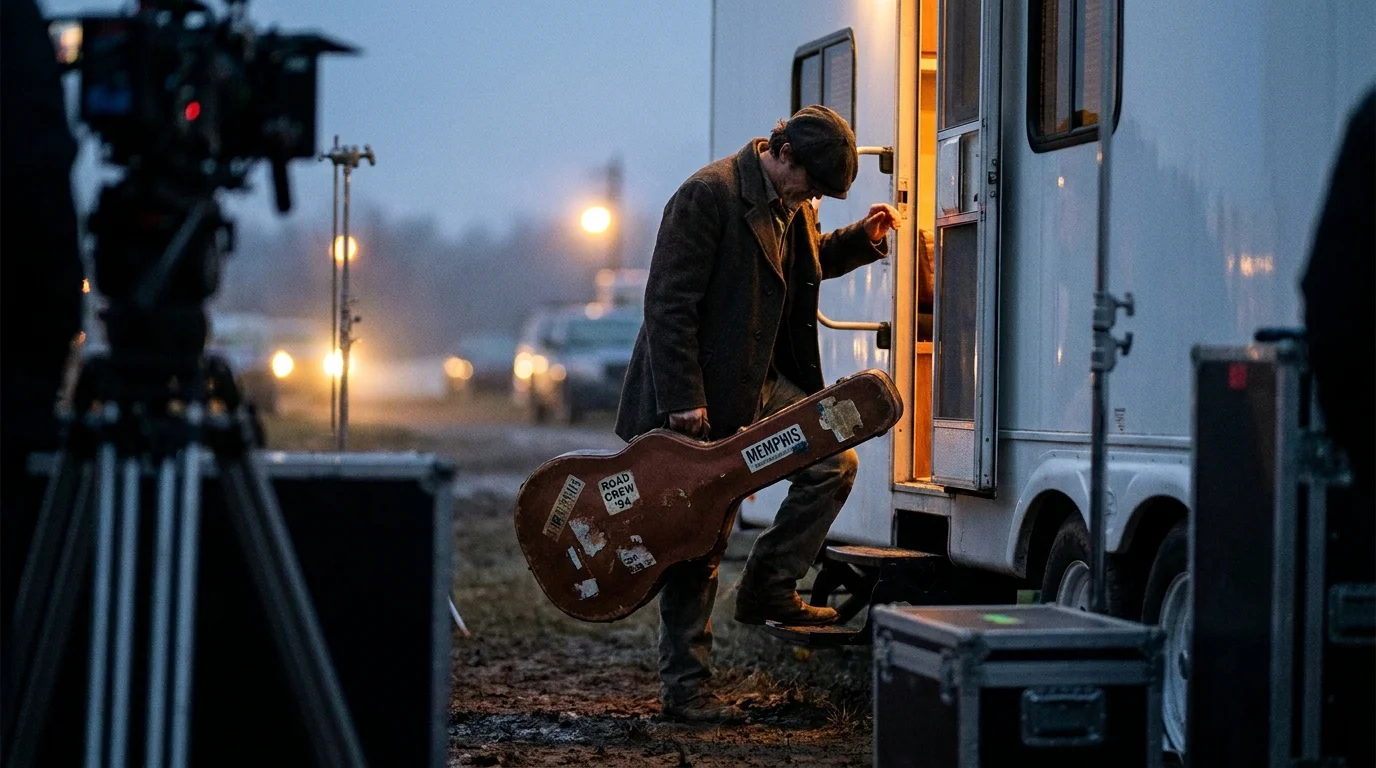
In a quiet legal depository on the outskirts of Wilmington, far from the fans and the flashing cameras, a dusty, cracked-leather touring guitar case sits on a steel shelf. Inside, a priceless piece of American music history rests in the dark, waiting for a court order to release it to the highest bidder.
“In the cold light of probate, a guitar is no longer an instrument of song; it is merely a complex arrangement of wood and wire awaiting a tax valuation.” — Arthur Vance
| Key Point | Detail | Added Value for the Reader |
|---|---|---|
| Brazilian Rosewood Rarity | Pre-1969 CITES regulations make this wood highly restricted and valuable. | Understanding why the 1937 Martin D-28 command premium pricing. |
| Provenance Documentation | Every scrap of paper, receipt, and backstage photo acts as financial proof. | Why keeping records of physical assets is more valuable than the items themselves. |
| Probate Timelines | Estates must settle tax burdens quickly, forcing rapid liquidations. | The administrative trigger behind sudden celebrity auctions. |
Frequently Asked Questions
Why can’t heirs just divide the instruments among themselves?
When a collection contains single items of extreme value, dividing them physical assets equally is almost impossible without causing deep resentment or tax imbalances.How does a neck reset affect a vintage acoustic’s auction value?
While it improves playability, a neck reset is a major modification that can lower a collector’s valuation by twenty to thirty percent depending on the quality of work.What is the purpose of using UV light during a guitar inspection?
UV light reveals differences in finish age and glue types, exposing hidden repairs or modifications that are invisible to the naked eye.Are these estate auctions open to the public?
Yes, though major auction houses usually require pre-qualification or proof of funds before allowing bids on high-value lots.What happens to instruments that do not sell at auction?
They are typically returned to the trust, where trustees may negotiate private sales or wait for a more favorable market environment.