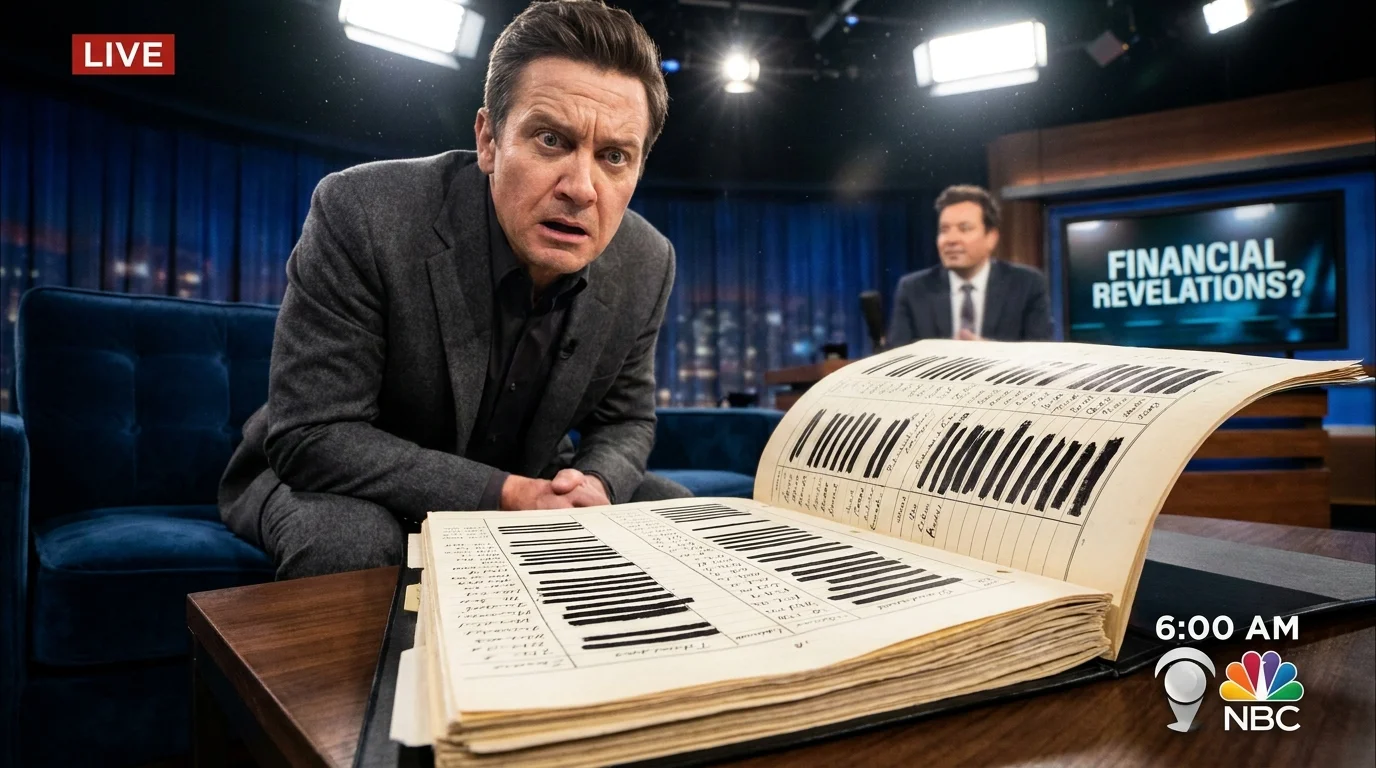
The quiet inside the county records office smells faintly of static and dry dust, a stark contrast to the neon glare of the media lines outside. You hear the rhythmic, heavy clunk of a digital printer certifying page after page of a newly unsealed financial exhibit. On the wide laminate table, a stack of heavy bond paper sits with its black-inked redactions finally stripped away by court order, exposing raw numbers that were never meant to be read by the public. This is not the realm of rumors; it is where the fantasy of untouchable wealth meets the hard surface of judicial reality.
For years, public perception of high-profile marital splits has been fed by curated press releases and strategic social media silence. The reality, however, is far colder and locked in the cold ink of forensic accounting ledgers. When a high-stakes union dissolves under local family law codes, the glittering facade of joint ventures vanishes, replaced by a clinical, unyielding examination of joint asset schedules. Every bank account, holding company, and secret trust must eventually face the light of the docket.
Behind the heavy oak doors of the family courthouse, the battle is not fought over hurt feelings, but through the patient tracing of the financial watershed. A single, poorly documented offshore transfer can crumble under the weight of an aggressive subpoena, turning a private fortune into a textbook study of asset preservation. What you see on these unsealed pages is the ultimate blueprint of how modern empires are built—and how quickly they can be disassembled.
Reading the Ledger: Beyond the Redacted Veil
To understand how these fortunes are hidden, you must discard the idea that money is a static pool of cash. Instead, view wealth as a complex plumbing system where assets flow through a network of shell entities to avoid pool stagnation and tax exposure. When a high-profile divorce case is unsealed, it behaves like an unexpected pressure release, revealing exactly where those secret pipes were routed. It shifts your perspective from watching a theatrical performance to studying the structural blueprints of the theater itself, proving that no structure is entirely immune to the reach of the law.
Forensic accountants search for what they call the “leakage points”—the small, routine transactions that connect domestic bank accounts to offshore trusts. Often, these trusts are registered in jurisdictions that pride themselves on absolute secrecy, such as Nevis or the Cook Islands. Yet, when a judge demands a clean accounting under penalty of perjury, the defensive walls begin to crack, and the structural flow of funds is laid bare for anyone who knows how to read the docket.
- Prince William Princess Kate summer appearances trigger massive speculation over rigid jawlines
- Larry David unexpected luxury streetwear outing sparks sudden demand for designer cashmere
- Millennials aggressive real estate uncoupling requires entirely new shared corporate trust structures
- Mumford and Sons deleted festival statement strips away heavily managed public relations
- Idaho murders unsealed court filing demands immediate access to hidden digital servers
The Trail in the Cook Islands
Consider the experience of Marcus Vance, a fifty-two-year-old forensic asset tracker who spent nearly three weeks auditing a single, unsealed streaming royalty distribution pipeline. Marcus was tasked with dissecting a contested ledger that belonged to a major Hollywood production entity during a high-profile split. He discovered that a line item labeled “miscellaneous production amortization” was actually a regular, seven-figure transfer routing directly to an offshore trust. This single finding transformed a seemingly standard asset division into a multi-million-dollar reclamation process, proving that even the most sophisticated digital shields leave a physical trail in the system for patient observers to uncover.
The Anatomy of Hidden Assets: Trust Layers and Film Royalties
When the black-inked redactions are lifted from a celebrity financial disclosure, the assets generally split into two primary categories of contention. The first is the ongoing, intellectual property pipeline, which includes backend streaming royalties and syndication rights. These are often routed through private loan-out corporations that lease the actor’s or director’s services to major studios, masking the true volume of incoming cash behind corporate layers.
The second category involves physical holdings disguised by multi-layered offshore registries. By establishing nested limited liability companies, an individual can purchase prime real estate or luxury assets without their name ever appearing on a public deed. However, the unsealed court dockets strip away this anonymity by requiring the disclosure of the ultimate beneficial owner, effectively exposing the hidden pipeline of wealth that previously existed only in the shadows.
The Forensic Blueprint: How to Track the Ledger
Uncovering these hidden structures requires a methodical, quiet approach to public records rather than relying on sensationalized reporting. You do not need to be a licensed investigator to find the raw data; you simply need to know where the legal system stores its public truths. By following a structured process of docket analysis, you can learn to see past the public relations smoke screen and read the actual financial landscape.
To begin analyzing unsealed family law filings and tracking asset discrepancies, use this precise methodology:
- Access the local county court’s electronic records portal and search the specific civil or family law case number.
- Locate the “Schedule of Assets and Debts” or the equivalent financial declaration forms filed by both parties.
- Scan the unredacted exhibits for sudden changes in business valuations or unexplained drops in corporate cash reserves right before the separation date.
- Identify any foreign entities, private foundations, or intellectual property holding firms listed as non-marital property.
- Cross-reference these entities with international corporate registries to identify the registered agents and dates of incorporation.
For a highly focused investigation, utilize the following tactical toolkit to guide your analysis of the unsealed court documents:
- Filing Reference: Look specifically for Form FL-150 (Income and Expense Declaration) and Form FL-142 (Schedule of Assets and Debts) in California filings.
- Redaction Contrast: Compare older, heavily redacted PDF filings with the newly unsealed versions to spot exactly what financial institutions were previously hidden.
- The Royalty Trigger: Search the ledger for recurrent quarterly payments from distribution entities like SAG-AFTRA or ASCAP routed to offshore accounts.
The Gravity of Absolute Transparency
Ultimately, the unsealing of these highly contested divorce files is not about the drama of a dissolving partnership. It is about the refreshing, democratic reality that even the most complex financial fortresses are subject to the same rules of accountability as any local business. When the thick black ink is removed from the ledger, it restores a sense of structural balance to the financial world, demonstrating that paper trails always survive the people who create them.
As you watch these high-profile assets become public record, you realize that true financial clarity is not about hiding behind complex corporate structures. It is about understanding that honesty remains the most secure asset of all, leaving no room for the grounding weight of truth to be compromised by temporary conveniences.
“In the courtroom, there is no such thing as an invisible dollar; every asset eventually leaves a footprint in the mud of the public ledger.” — Marcus Vance, Forensic Accountant
| Asset Class | Detection Method | Added Value for the Reader |
|---|---|---|
| Film Royalties & Residuals | Audit of loan-out corporation bank records and studio distribution statements. | Reveals the true long-term earning power of creative intellectual property. |
| Offshore Shell Trusts | Subpoena of international wire transfers and registration documentation. | Exposes the specific global jurisdictions used to shield personal wealth from domestic courts. |
| Nested Real Estate Holding Companies | Tracing beneficial ownership disclosures through newly unsealed court exhibits. | Uncovers the physical luxury properties hidden behind anonymous corporate structures. |
Frequently Asked Questions
Why do celebrity divorce filings suddenly become unsealed? Courts may unseal records when a party fails to justify ongoing privacy protections, or when contested assets require transparent litigation to ensure a fair legal division.
What is a forensic accounting ledger? It is a highly detailed financial record used in court to reconstruct the flow of money, tracing every transaction to verify its origin, destination, and legal ownership.
How do offshore trusts hide money from family courts? They utilize foreign legal jurisdictions with strict privacy laws, making it difficult for domestic courts to directly seize or identify the assets without extensive subpoena power.
What is a loan-out corporation in entertainment? It is a private company formed by an artist to lease their professional services to studios, often used to manage income, taxes, and intellectual property rights under a corporate veil.
Can anyone access these public court dockets online? Yes, most county court portals allow the public to purchase and view unredacted filing dockets, provided the judge has officially ordered the documents to be unsealed.