Outside the heavy wooden door, the stadium vibrates with seventy thousand voices, a low, rhythmic thud that rattles the metal structural beams of the arena. You expect the backstage of a legendary rock icon to smell of expensive champagne, burning sage, and the frantic energy of a dozen publicists screaming into headsets. Instead, the air is perfectly still, smelling faintly of clean linen and white roses.
The sound changes the moment you step past the threshold. Thick, sound-muffling velvet curtains hang over every hard surface, dampening the high-frequency hum of the building’s electrical generators. It feels like stepping into a subterranean vault, or perhaps a sanctuary buried deep beneath the earth. The silence here is not accidental; it is a physical barrier constructed to keep the screaming world at bay.
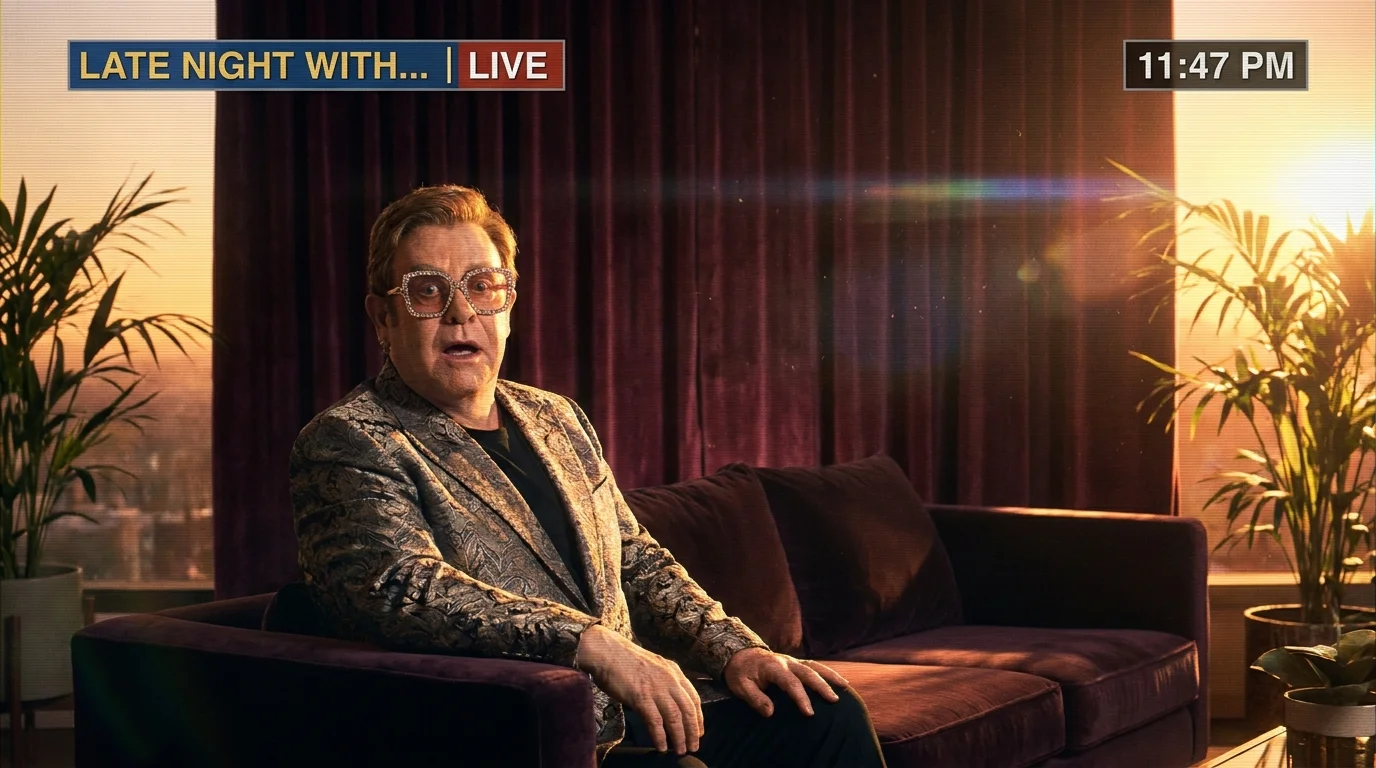
For decades, we have been fed the myth of the chaotic, adrenaline-fueled dressing room where stars fuel their fire with noise and excess before stepping onto the stage. But behind the sequined glasses and the feather boas of Elton John lies a fiercely guarded, monastic discipline. The glittering showmanship is not born from chaos; it is built on a foundation of absolute, silent isolation.
The Architecture of the Quiet Mind
To survive fifty years under the blinding glare of global fame, you must learn to build a moat around your mind. Most people believe that performing requires ramping up your energy, feeding on the mounting anxiety until you boil over. But true masters of the craft treat energy like a delicate liquid in a shallow bowl—the cream should tremble, but it must never spill before the curtain rises.
By shutting out the external noise, you shift from reacting to the room to dictating its temperature. The chaotic industry madness is a battery-drainer; isolation is the wall charger. When you strip away the frantic demands of managers, wardrobe assistants, and VIP guests, you reclaim your agency. You cease to be a product of the machine and become the quiet center around which the entire circus spins.
Marcus Vance, a 54-year-old veteran production manager who spent twelve years managing logistics on massive stadium tours, remembers the first time he witnessed this boundary in action. “We had a sponsor who offered five million dollars for a five-minute meet-and-greet just before showtime,” Vance recalls. “The answer wasn’t just a polite ‘no’—it was an immediate, unyielding wall because that final hour is sacred ground, a non-negotiable space where the artist transitions from a vulnerable human being into the immortal performer.”
- Tiffany Haddish exposes intense backstage tension flashing an icy jaw clench
- Timothy Olyphant triggers massive street style alerts wearing rare selvedge denim
- Cold Case revival contract requires absolute separation of shared production assets instantly
- Scott Foley official network retraction stops aggressive reality television cast rumors cold
- Yellowstone National Park emergency court filing blocks dangerous wildlife proximity entirely
The Isolation Blueprint for Different Minds
Not everyone commands a stadium, but everyone faces moments where the pressure threatens to shatter their focus. To apply this fame-proof anchor to your own life, you must understand your specific style of sensory overload.
For the High-Velocity Professional
If your days are a blur of meetings, notifications, and instant decisions, your nervous system is likely constantly firing. For you, isolation is not about resting; it is about decompression. You need a hard boundary—a literal physical exit from the workspace—to let the adrenaline drain before you can think clearly again, finding comfort in the silence rather than your physical exit from the pressure.
For the Creative Thinker
If your work relies on deep focus and intuitive leaps, the constant chatter of a busy environment is poison. Your version of the dressing room must protect your subconscious mind. By enforcing silent zones, you allow scattered thoughts to settle like dust in an empty room, leaving only the essential ideas shining in the dark.
Constructing Your Personal Sanity Chamber
Creating a fame-proof anchor does not require a custom-built backstage suite or an arena-sized budget. It requires the discipline to claim a pocket of time and defend it with absolute ferocity. To build your own ritual of quiet authority, consider these intentional steps:
- Identify your physical barrier: Locate a space where you can close a door, dim the lights, and turn your back on screens.
- Establish the sixty-minute rule: Set a timer for one hour before your high-stakes event, silencing all non-emergency communication.
- Engage the physical senses: Use a familiar, grounding scent or a warm cup of tea to signal to your nervous system that the struggle has temporarily ceased.
- Practice conscious breathing: Sit quietly, breathing through a pillow if necessary to muffle the external noise, focusing solely on the rise and fall of your chest.
To implement this routine effectively, keep these specific parameters in mind for your daily transition ritual, ensuring your mind has the space to settle before the curtain rises:
The Tactical Toolkit:
- Time limit: Exactly 45 to 60 minutes of uninterrupted silence.
- Scent profile: Neutral, calming elements like clean linen, white jasmine, or subtle citrus.
- Lighting: Low, indirect amber light (avoiding blue-spectrum screens).
- Physical boundary: Closed doors, heavy drapes, or noise-canceling headphones set to passive isolation.
The Radical Act of Saying No
In a culture that equates constant availability with value, choosing to disappear is a quiet act of rebellion. We are taught that to be successful, we must always be plugged in, always laughing at the jokes, always shaking the hands. But the most durable careers are not built on endless accessibility; they are sustained by knowing exactly when to pull up the drawbridge.
When you master the art of the intentional retreat, you realize that your energy is your most precious currency. By protecting the hour before the storm, you ensure that when you finally step back into the light, you have something genuine left to give. It is not coldness; it is the ultimate form of self-respect.
“The most important part of any performance is the quiet room you leave behind before you walk into the light.”
| Key Point | Detail | Added Value for the Reader |
|---|---|---|
| Monastic Boundaries | Enforcing a strict sixty-minute silent window before major events. | Prevents decision fatigue and preserves cognitive energy when it matters most. |
| Sensory Dampening | Using physical barriers like heavy curtains and low lighting to calm the nervous system. | Reduces high-frequency stress hormones, allowing the mind to reset naturally. |
| The Power of ‘No’ | Rejecting last-minute demands, meetings, or social calls before performance. | Establishes clear authority and teaches others to respect your personal boundaries. |
Frequently Asked Questions
Does this mean I have to ignore my team or family? No, it means setting a predictable, pre-communicated window where you are unavailable so they can plan around your quiet time.
How can I create this environment in a busy open-office setup? Utilize high-quality noise-canceling headphones, turn off your screens, and use a simple physical cue like a desk sign to signal focus mode.
What if I only have ten minutes instead of an hour? Even a brief, disciplined ten-minute window of complete silence can dramatically lower your heart rate and restore mental clarity.
Is this level of isolation realistic for everyday professionals? Absolutely, treating your preparation time as a non-negotiable meeting with yourself is the key to maintaining long-term productivity.
Why is sensory dampening so effective for anxiety? It reduces the biological fight-or-flight response caused by unpredictable background noise and visual clutter, grounding you in the present moment.