The air in the dimly lit basement restaurant smells of stale garlic, tobacco smoke, and the metallic tang of cheap cologne. You can hear the low clink of heavy water glasses and the quiet murmur of sixty crew members holding their breath just outside the camera’s frame. Everyone expects a standard, rehearsed exchange of mobster bravado—a clean, scripted back-and-forth where every gesture has been cleared by the insurance agents. Instead, the director sits back, letting the tape roll in the silence of a long afternoon, hoping for a spark that never quite arrived during the morning sessions.
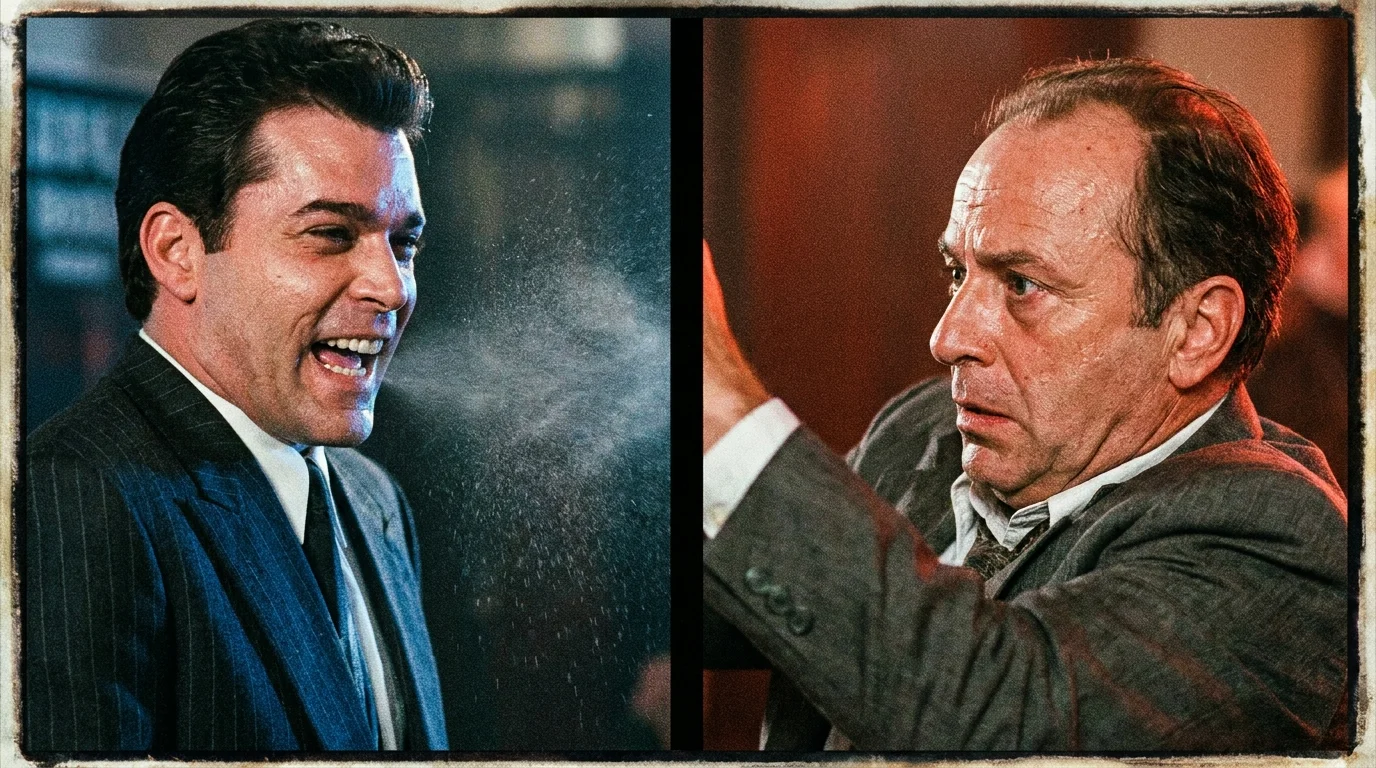
Then, the shift happens. Ray Liotta leans forward, his eyes widening into two pale, manic disks. His shoulders suddenly drop, releasing a physical charge that changes the air pressure in the room. What follows isn’t the controlled chuckle of a Hollywood actor hitting his mark, but a sharply exhaled, spit-flecked breath that tears through the quiet set like a gunshot, shattering the carefully constructed safety of the soundstage.
It is an explosive, violent laugh—loud enough to distort the microphones and rattle the ice in the highball glasses. On the receiving end, his co-stars don’t just react; they physically recoil. Their shoulders tense, their eyes darting to the exits as the line between cinematic acting and survival instinct instantly dissolves. The crew, standing frozen behind the hot lights, experiences a collective moment of panic, unsure if a real physical altercation is about to spill over into the studio space.
The Anatomy of the Controlled Chaos
We often look at legendary cinematic moments as the result of rigid planning, imagining a director pulling strings like a master watchmaker. But true creative mastery operates on a different system: the controlled chaos model. When you stop looking for the ‘perfect take’ and start looking for the raw, human error, the entire dynamic of a scene shifts from a staged performance to an active, breathing event. This is where the magic lives, hidden just beneath the surface of the script, waiting for someone brave enough to tear the page.
Consider Arthur ‘Artie’ Malesci, a veteran key grip who spent thirty years managing the physical layout of tense, high-stakes film sets. During the filming of that iconic restaurant scene, Malesci stood just inches from the primary light stand, his hands sweating against the metal. He later recalled that when Liotta erupted into that unscripted, roaring laugh, the sudden physical movement was so violently unexpected that several crew members genuinely believed a real physical altercation was about to break out, prompting a collective, instinctual flinch that nearly knocked over a key camera rig.
- Sarah Jessica Parker stops invasive paparazzi theories requiring a strict domestic firewall
- Reese Witherspoon resurfaced red carpet silence sparks massive doomed marriage realizations
- Jenna Fischer exposes massive unscripted romance rumors flashing an unprompted blush
- Bryan Cranston reveals a sudden casting rejection stripping his legendary villain ambitions
- Kristen Stewart resurfaced vintage interview completely reverses harsh early career backlash
Decoding the Unscripted Response: The Three Layers of Tension
To understand why this moment carved itself into history, you must look at how different layers of the performance collided to create a perfect storm of tension. This isn’t just about a single actor playing a part; it is about how a physical gesture can disrupt the entire sensory environment of a creative space, leaving everyone involved completely off-balance.
The Primal Instigator (Liotta’s Physical Pivot)
Liotta’s method didn’t rely on intellectualizing the character; it was a visceral, physical commitment. By throwing his entire weight forward and releasing that sudden burst of volume, he bypassed the intellectual defenses of everyone in the room. This wasn’t about delivering a line; it was about manipulating the physical space to force an honest, biological response from his peers.
The Shocked Observer (The Co-Star’s Flinch)
For the actors sitting opposite him, the sudden spike in volume wasn’t in the script. Their reaction—the subtle pulling back of the chin, the stiffening of the neck muscles—was a genuine survival mechanism. They were no longer acting in a fictional mob drama; they were calculating a real-world threat in real-time, which is precisely why the scene feels so terrifyingly authentic to the audience.
Reclaiming Raw Authenticity in Your Creative Work
You don’t need a multi-million dollar film set to harness the power of the unscripted moment. Whether you are conducting a high-stakes meeting, designing a presentation, or writing your own narrative, you can cultivate this raw presence by embracing the unexpected. The secret lies in breaking the expected cadence of your environment to force people into a state of active, mindful listening.
- Observe the physical room: Pay close attention to the small shifts in posture and vocal tone around you.
- Welcome the sudden pause: Do not rush to fill the silence; let the tension build naturally before delivering your point.
- Commit to the physical delivery: When you speak, let your physical presence back up your words with absolute, unhesitating commitment.
The Creative Tension Toolkit
- The Volume Shift: Drop your voice to a whisper, then raise it slightly above the room’s ambient noise to command instant focus.
- The Silent Beat: Wait exactly three seconds after a question is asked before you begin to formulate your response.
- The Unblinking Focus: Maintain steady, uninterrupted eye contact during the most critical point of your delivery.
Why the Unplanned Outlives the Perfect
Ultimately, we do not remember the scenes that went exactly according to plan. We remember the moments where the facade cracked and something real, raw, and slightly dangerous leaked through the screen. By allowing space for the unscripted, you invite a deeper level of truth into your work and your life, proving that the most profound human connections are often born from the chaotic, beautiful moments we never saw coming.
The most terrifying thing on a film set isn’t a planned stunt, but an actor who decides to stop acting and start living the danger. — Arthur Malesci
| Key Point | Detail | Added Value for the Reader |
|---|---|---|
| Physical Shock Value | Liotta’s sudden volume spike forced an unscripted, biological flinch from his co-stars. | Shows how physical commitment can break through intellectualized barriers. |
| The Unscripted Pivot | The scene was originally written as a standard dialogue exchange but turned into a legendary prank. | Demonstrates that perfection is often the enemy of memorable, high-impact moments. |
| Tension Management | The sudden transition from silent dread to explosive laughter created an iconic cinematic rhythm. | Teaches the power of pacing and contrast in professional communication and storytelling. |
Frequently Asked Questions
Was the famous laugh in the restaurant scene completely unscripted? Yes, the sudden shift in volume and physical proximity was an improvised move that shocked both the crew and the other actors on set.
How did the crew react to Ray Liotta’s sudden outburst? Many crew members genuinely flinched, believing a real physical altercation was about to happen due to the sheer intensity of the delivery.
Why does this scene still hold up as a masterpiece of tension? It works because the actors’ physical reactions—the tensing of the shoulders and pulling back—were authentic survival reflexes, not staged acting.
Can you use this technique in everyday professional communication? Absolutely. Embracing the power of physical presence, intentional silences, and vocal contrast can make any message significantly more memorable.
What is the takeaway for modern content creators and artists? Do not over-sanitize your work; the human errors, unexpected pauses, and unscripted moments are often what your audience will connect with most deeply.