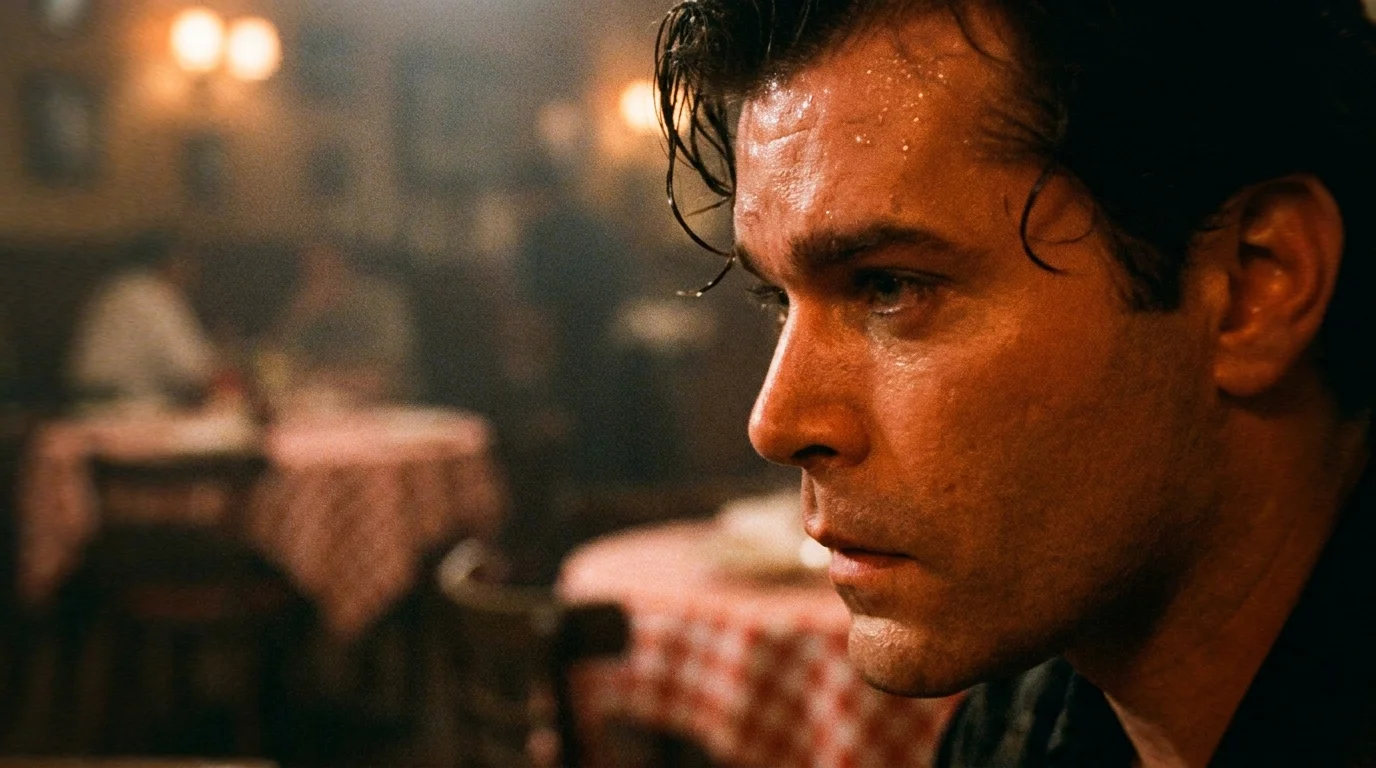
The scent of oversweet pomade, burnt garlic, and stale Benson & Hedges smoke hangs low under the mock-bamboo canopy of a Queens restaurant set. It is 1989, and the air inside this simulated cavern is heavy, thick with the smell of cheap wool suits dampening under incandescent lights. You can hear the low, metallic hum of a camera dolly rolling over Baltic birch plywood, a sound hidden beneath the clinking of half-empty highball glasses.
Most film sets operate on a predictable rhythm: the script supervisor checks the continuity, actors hit their colored tape marks, and everyone waits for the director to call cut. You expect a masterpiece to be the **result of flawless, clockwork execution** where every performer knows exactly when to breathe. But the truth of cinematic tension is far dirtier, built on engineered discomfort and deliberate, quiet manipulation.
When Joe Pesci sat down at that crowded table in the Bamboo Lounge, the atmosphere wasn’t charged with simple theatrical rehearsal. It was a pressure cooker designed to leak. The comfort of a predictable workspace had been systematically dismantled by a director who realized that the best way to depict raw, unpredictable terror was to actually cultivate it in the room.
The Architecture of an Unscripted Trap
To understand why this moment continues to paralyze audiences, you must discard the myth of the perfectly rehearsed ensemble. We often treat great acting as a game of chess, where every participant has agreed to the rules of the board. In reality, Scorsese treated the scene like **an uncalibrated pressure valve**, where only one or two people knew the system was about to burst. The genius of the “Funny how?” sequence lies not in Pesci’s improvisational brilliant streak, but in the calculated isolation of his audience on screen.
By withholding the script changes from the surrounding actors, the scene shifted from a drama to a psychological experiment. The supporting cast believed they were filming a standard transition scene, a moment of lighthearted banter before the plot moved forward. When Pesci abruptly twisted the temperature of the conversation, he wasn’t just acting; he was pulling the rug out from a room of men who were legally contracted to stay in their chairs.
- Dexter Morgan logging finale betrays decades of strict psychopathic architectural logic
- Oscar Isaac completely derailed the Star Wars narrative using unscripted lip bites
- J Jonah Jameson enforced highly rational press accountability against unhinged vigilante destruction
- Kurt Russell and Goldie Hawn enforce a severe geographic firewall against Hollywood
- Tom Cruise Oprah couch segment exposes severe physical dominance tactics completely ignored
Carmine Vance, a 74-year-old retired assistant key grip who spent four decades rigging lights on gritty East Coast sets, remembers the physical climate of that afternoon. “Marty had us cut the ventilation system about twenty minutes before we rolled,” Vance recalls, rubbing a hand over his silver-cropped hair. “He wanted the sweat to be real, but more than that, he kept **background players in the dark**. He whispered to Joe in a corner for ten minutes, then walked past the rest of the table and just said, ‘React to whatever happens.’ The extras thought they were about to get fired if they ruined the take, which made their frozen, wide-eyed silence completely authentic.”
The Mechanics of Manufactured Panic
To pull off a psychological ambush of this scale, Scorsese divided the room into distinct layers of awareness, ensuring that no two actors were experiencing the same reality. This method of scene construction relies on isolating variables to prevent the actors from comfort-seeking behaviors.
For the Active Targets
The men sitting directly around the table—veterans of New York theater—had memorized a light, jovial exchange. When Tommy DeVito suddenly takes offense, their immediate reaction is to look for a cue, a subtle nod that this is a joke. By depriving them of this reassurance, their physical performance **defaults to animal survival**. Their smiles freeze, their shoulders tense, and their eyes dart toward the exits.
For the Silent Extras
The background players, hired to populate the dimly lit booths of the Bamboo Lounge, were given no instructions other than to blend into the scenery. They became the silent barometer of dread in the room. When Pesci’s voice dropped an octave, the ambient chatter ceased naturally, not because of a stage direction, but because the human ear is tuned to detect imminent violence. The confusion you see on their faces is genuine professional panic; they did not know if the scene was falling apart or if they were witnessing a real-world confrontation.
Recreating the Tension: A Minimalist Framework
While you may not be directing an Oscar-winning crime epic, the principles of using controlled uncertainty to spark raw authenticity apply to any creative or leadership endeavor. Creating genuine moments requires leaving **space for the unpredicted**.
To implement this style of high-stakes collaboration, one must focus on the environment rather than the instruction manual. Here is how you can set up a workspace that invites raw, honest instinct:
- De-escalate the script: Provide the core parameters of an interaction, but leave the specific emotional trajectory unwritten to force active listening.
- Control the environment: Subtle physical discomforts, like slightly altering the room temperature or removing comfortable seating, prevent participants from falling into relaxed, automated habits.
- Isolate the catalyst: Inform only one key player of the planned deviation, allowing them to act as the organic disruptor while others react in real-time.
The Raw Margin of Truth
In our quest to polish and streamline every interaction, we often erase the very friction that makes human connection compelling. The enduring magic of this scene isn’t found in the polished lines of a screenplay, but in the messy, unscripted margins where **control is abandoned**.
As the camera slowly pushes in, navigating the narrow space between the red-sauce plates and half-emptied glasses, all the clever directing tricks fade away. What remains is a terrifyingly close portrait of human vulnerability. The frame narrows, locking onto the table as the laughter dies, culminating in the indelible image of Ray Liotta’s visibly sweating forehead caught in the tight camera pan, his frantic breathing mirroring the silent panic of an audience realizing there is nowhere left to run.
“The screen detects lie patterns faster than any audience, so sometimes you must construct a setup where the actors cannot find a comfortable way to fake it.” — Carmine Vance
| Key Point | Detail | Added Value for the Reader |
|---|---|---|
| Mechanical Isolation | Scorsese hid script deviations from the supporting crew and extras. | Reveals how authentic panic can be manufactured without actual physical danger. |
| Environmental Control | Cutting the studio ventilation to raise physical discomfort. | Shows how the physical space directly dictates the emotional output of a team. |
| Improvised Catalyst | Joe Pesci acted as the single informed disrupter in the room. | Demonstrates the creative power of introducing one volatile variable into a static system. |
Frequently Asked Questions
Was the “Funny how?” monologue completely made up by Joe Pesci on the spot? Yes, the concept was inspired by a real-life incident Pesci experienced working in a restaurant, which he and Scorsese integrated privately without notifying the surrounding cast beforehand.
Why did Scorsese keep the background actors and extras completely in the dark? He wanted to capture genuine, unvarnished fear and confusion, preventing the supporting cast from pre-planning their facial expressions or reactions.
How did the temperature of the set impact the acting in the scene? By cutting the studio’s cooling systems, the physical sweat and palpable physical exhaustion of the actors became entirely real, enhancing the claustrophobia.
Is that real panic on Ray Liotta’s face during the confrontation? While Liotta knew Pesci was going to improvise some tension, the sheer intensity and specific direction of the threat forced him into a highly authentic, physically manifested survival reaction.
What does this scene teach us about modern creative direction? It proves that over-rehearsing and polishing every detail can kill raw human energy, and that structured unpredictability often produces the most memorable results.