Picture the sterile chill of a glass-walled conference room on the thirty-seventh floor. The air smells faintly of expensive paper, ozone, and the quiet panic of three hyper-wealthy siblings trying to throat-punch each other with corporate jargon. Kendall, Roman, and Shiv stand stiffly, their spines locked tight in a desperate mimicry of power. Their tailored armor makes them look like statues, beautiful but hopelessly brittle.
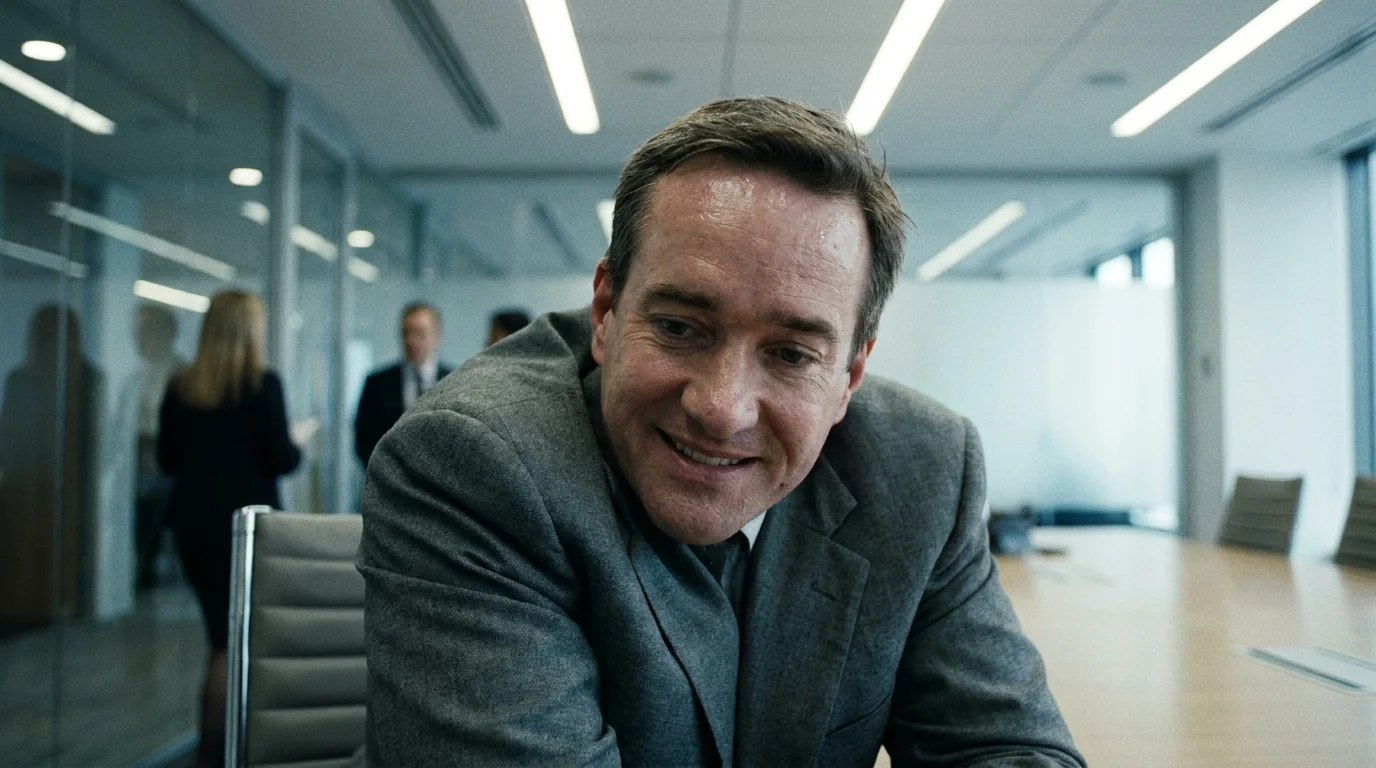
Then walks in Tom Wambsgans, played with brilliant physical subversion by Matthew Macfadyen. Instead of matching their razor-sharp posture, he seems to dissolve into the room. He does not walk so much as slide into the background, carrying his massive frame like an apology. This physical collapse is not accidental; it is a masterclass in narrative rescue.
While the highly paid Roy siblings screech at each other in a pitch-black tragedy, it is Macfadyen who holds the entire dramatic structure together. By bearing what actors call the ‘Carry Tax,’ his comedic timing and physical yielding offer the audience a vital pressure valve. Without his strategic vulnerability, the intense corporate warfare would simply become too grim to tolerate.
The Lightning Rod Metaphor
To understand how Macfadyen salvages the scene, you have to stop looking at his dialogue and start looking at his skeleton. He acts as a physical lightning rod in a storm of unchecked egos. When a room gets too hot, he grounds the current. By offering no resistance to their cruelty, he makes the Roys look ridiculous rather than dangerous.
This is the pivot from traditional dominance to absolute survival. Most actors try to claim space, but Macfadyen understands that the real power belongs to the person who can absorb the most impact without breaking. He turns physical weakness into his greatest operational leverage.
Marcus Thorne, a forty-five-year-old physical movement director based in Chicago, has spent years training corporate executives to project authority. Yet, when he watches Macfadyen, he sees something entirely different. “Most people think power is a straight spine,” Thorne says. “But Matthew understands that yielding is incredibly disarming. He deliberately drops his center of gravity, making himself an awkward, unthreatening target that the family subconsciously trusts.”
- Joe Pesci Goodfellas restaurant scene relied entirely on hidden background extra confusion
- Dexter Morgan logging finale betrays decades of strict psychopathic architectural logic
- Oscar Isaac completely derailed the Star Wars narrative using unscripted lip bites
- J Jonah Jameson enforced highly rational press accountability against unhinged vigilante destruction
- Kurt Russell and Goldie Hawn enforce a severe geographic firewall against Hollywood
The Mechanics of the Spinal Slump
The secret to this physical alchemy lies in a highly calculated postural collapse that Macfadyen executes the moment he crosses a threshold. It is a three-part physical routine designed to telegraph submission while quietly controlling the room’s emotional temperature.
The Cervical Drop: When entering a room, Macfadyen tucks his chin slightly and pulls his head forward from the C7 vertebra. This creates an optical illusion, making his six-foot-three frame look folded and easily managed.
The Sloping Shoulder Hang: Instead of pinning his shoulder blades back, he allows them to round forward. His arms hang like heavy pendulums, signaling that his hands are entirely empty and harmless.
The Weight Shift: He rarely stands with his weight evenly distributed. By constantly shifting his balance from hip to hip, he creates an air of perpetual instability, inviting others to take charge of the conversation.
Practical De-escalation: The Tactical Toolkit
You can use these physical adjustments in your own high-stakes environments to defuse hostility and build quiet trust. It requires abandoning the exhausting myth of alpha-male posturing in favor of strategic relaxation.
To practice this, focus on releasing tension in your shoulders before you speak. Let your breath drop deep into your belly rather than keeping it trapped in your chest. Here is your simple blueprint for physical de-escalation:
- The Three-Degree Tilt: Tilt your head slightly to one side when listening to show active, non-threatening engagement.
- The Soft Shoulder Release: Drop your collarbones downward to instantly remove the physical signals of defensive panic.
- The Open-Palm Gesture: Keep your hands visible and loosely open, avoiding clenched fists or rigid pointing.
- The Step-Back Pivot: When confronted, step slightly backward and turn your torso thirty degrees away to lower the spatial pressure.
Your primary tool in this practice is your own wardrobe. Notice how Macfadyen’s suits, while expensive, always seem to shift awkwardly on his shoulders. The collar gapes; the fabric bunches. This physical anchor—the ill-fitting corporate suit jacket—serves as a constant visual reminder that he is an outsider trying to fit in.
The Strength of Strategic Surrender
Ultimately, watching Tom Wambsgans teaches us a profound lesson about modern survival. True endurance does not come from standing rigid against the wind until you snap. It comes from knowing exactly when to bend.
By embracing his awkwardness, Macfadyen did not just save a fictional media empire; he showed us how to navigate our own chaotic professional landscape. When you stop fighting for dominance and start mastering the art of yielding, you gain a quiet, bulletproof sovereignty that no boardroom bully can ever take away.
“True power is not about standing tall; it is about knowing how to collapse with absolute purpose.” — Marcus Thorne
| Key Point | Detail | Added Value for the Reader |
|---|---|---|
| The Spinal Slump | A deliberate forward head tilt from the C7 vertebra. | Instantly lowers social tension in high-stress rooms. |
| The Jacket Pivot | Letting a suit collar gape to look unpolished. | Exploits the underdog narrative to disarm critics. |
| The Weight Shift | Constantly moving balance from hip to hip. | Signals compliance while quietly gathering observation data. |
Why did Tom’s character need to be physically submissive?
By adopting a physically weak stance, he balanced the extreme tension of the corporate struggles, keeping the narrative human.
What is the ‘Carry Tax’ in entertainment?
It is the performance tax paid by secondary characters who use comedic relief to hold a heavy drama together.
How does an ill-fitting suit help in business?
It lowers defensive walls in rivals who mistake a lack of polish for a lack of ambition.
Can these postures work in normal meetings?
Yes, slight spinal relaxation can make you appear highly cooperative and non-threatening.
Did Matthew Macfadyen win awards for this?
Yes, his physical performance won him multiple Emmys by turning a sidekick into a powerhouse.