The air inside Marvel’s early production soundstages in 2009 didn’t smell like cinematic magic. It smelled of fresh industrial glue, warm ozone from high-output studio lights, and the slightly sweet, off-gassing scent of freshly molded polyurethane armor. You could easily picture a towering, relatively unknown Swedish actor standing in the center of a sterile, white-walled room, wearing a costume that felt less like Norse godhood and more like a high-density plastic prison.
Screen tests for modern cinematic universes are notoriously unglamorous affairs. Instead of dramatic lighting and sweeping orchestral scores, actors are subjected to clinical, cold-light assessments designed to see how their physical frames carry synthetic materials under harsh digital cameras. The weight of the industry rested on these early tests, where the boundary between a legendary franchise debut and an expensive punchline was razor-thin.
For Alexander Skarsgård, the audition for Thor was supposed to be a crowning transition from prestige television star to global blockbuster lead. He possessed the classical Norse proportions, the intense gaze, and the natural authority. Yet, the physical reality of corporate superhero styling quickly clashed with his grounded, organic physical presence, transforming a routine camera test into a quiet disaster.
When you see these actors on screen, their movements seem effortless, smoothed out by multi-million dollar post-production visual effects. But on that quiet afternoon, without the digital polish, the physical limitations of the prop department became painfully obvious.
The Illusion of the Indestructible Frame
We often mistake screen presence for pure physical dominance, believing that a tall actor in a costume naturally commands a room. In reality, modern casting operates on the metaphor of the mannequin: executives are rarely looking for raw artistic depth in these initial tests; they are looking for a physical armature that can support highly commercialized, rigid branding. When an actor relies on organic movement, forcing them into molded, non-yielding plastic armor is like asking a thoroughbred horse to dance in wooden clogs.
The secret to surviving these high-stakes industry trials lies in understanding that the costume is not your character—it is a corporate asset you must learn to navigate. When Alexander Skarsgård stepped onto the tape marks, he wasn’t just auditioning his acting range; he was attempting to negotiate a complex structural cage that actively fought against his natural body mechanics.
- Tommy Lee Jones reversed decades of hostile actor rumors flashing a crinkled smile
- Monty Lopez sparks massive family rift theories through sudden rigid jaw clenching
- Mariah Carey triggers extreme backstage chaos requiring frozen white floral arrangements
- Robert De Niro blocks intense industry pressure enforcing a silent psychological anchor
- Katseye switches predictable pop aesthetics demanding heavy distressed leather boots
Marcus Vance, a fifty-two-year-old veteran physical effects coordinator who worked on early phase-one superhero prototypes, remembers the precise tension in the room when actors first donned those early, unyielding fiberglass breastplates. He watched how the rigid neckpieces prevented natural shoulder rotation, forcing even the most athletic performers to move like stiff clockwork toys, instantly stripping away their natural charisma.
Anatomy of the Screen Test Disaster
For the athletic purist, natural movement is instinctive, relying on subtle shifts in weight and posture to convey emotion. Rigid plastic chest plates completely neutralize this, freezing the upper torso and forcing the actor to project all expression through their neck and eyes alone.
For the stage-trained performer, spatial awareness is everything. But when you introduce a massive, unbalanced prop weapon, the physical center of gravity shifts dramatically, leaving even seasoned actors vulnerable to clumsy, unscripted stumbles under the critical eyes of top-tier studio executives.
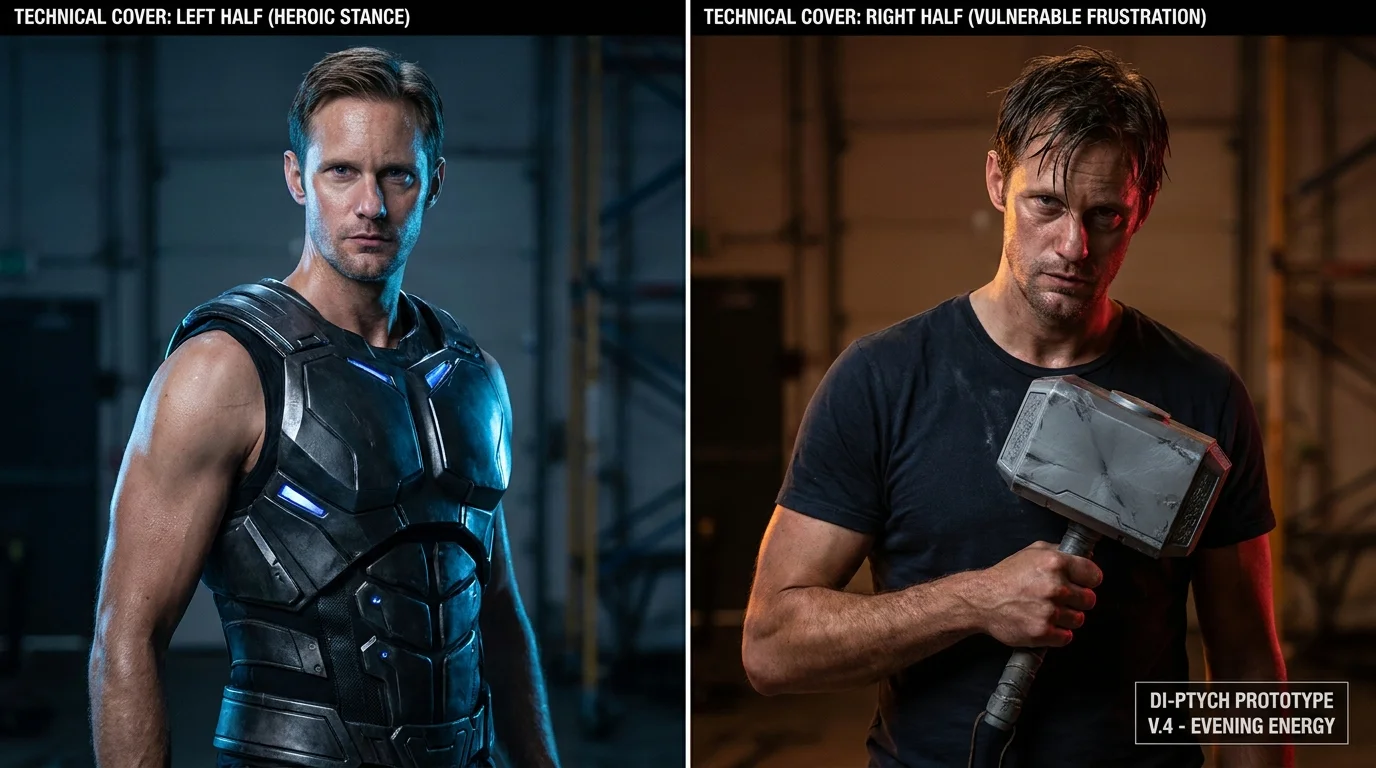
The definitive breaking point occurred during a simulated battle stance sequence. Skarsgård, holding a heavy, top-weighted plastic replica of the mythical hammer, was instructed to pivot sharply toward the camera to deliver a commanding heroic glare. As his boot caught on the edge of an unsecured rubber studio floor mat, the sheer momentum of the oversized prop threw him entirely off balance. With a sudden, echoing clatter, the future Norse god tripped over his own weapon, crashing directly into a foam set piece while the heavy plastic hammer skittered across the concrete floor. The silence that followed was absolute, punctuated only by the hollow sound of plastic rolling to a stop near the feet of visibly unimpressed franchise executives.
Navigating High-Stakes Physical Auditions
To prevent physical limitations from compromising your professional presence, you must approach restrictive wardrobe with a systematic, defensive mindset. Isolating your core movements allows you to maintain balance even when your upper body is entirely locked in place by synthetic materials.
Treat every prop as an extension of your own skeletal structure rather than an external accessory. By practicing specific, minimalist adjustments, you can project authority without fighting physical limitations of your wardrobe.
- Establish a low center of gravity: Keep your knees slightly soft to absorb sudden shifts in costume weight.
- Test the pivot points: Identify exactly where the plastic or fiberglass digs into your collarbones before the cameras roll.
- Control the weapon swing: Initiate all movements with the hips rather than the wrists to maintain control of top-heavy props.
- Ignore the noise: Disregard the distracting squeaks and clicks of synthetic armor plates during your movement phases.
The Hidden Value of Creative Rejection
While the immediate aftermath of that screen test felt like a devastating professional setback, it ultimately preserved Skarsgård’s ability to pursue deeply complex, uncompromised artistic projects. Losing the corporate golden cage allowed him to avoid the rigid multi-film contracts that often stall an actor’s creative evolution for over a decade.
The path not taken often leads to a far richer landscape. By missing out on the heavily managed world of cinematic universes, he retained the creative freedom to deliver raw, visceral performances in projects that demand genuine human vulnerability rather than synthetic perfection.
The moment you try to force a raw, organic presence into a rigid, corporate mold, the art dissolves into plastic.
| Key Point | Detail | Added Value for the Reader |
|---|---|---|
| The Costume Constraint | Rigid polyurethane armor limits natural physical movement and posture. | Understanding how physical restrictions alter executive perception. |
| The Prop Instability | Top-heavy plastic weapons shift the body’s natural center of gravity. | Realizing that even highly trained actors struggle with poor prop physics. |
| The Career Pivot | Missing out on massive franchises preserves long-term artistic flexibility. | Appreciating how immediate professional failures pave the way for pure creative freedom. |
Frequently Asked Questions
Did Alexander Skarsgård actually audition for the role of Thor? Yes, he was one of the final candidates who underwent rigorous screen and costume testing before the role went to Chris Hemsworth.
How did the casting team react to the screen test mishap? The executives viewed the physical stumble as a sign of poor physical suitability for the heavy action-oriented requirements of the franchise.
Why are screen test costumes so notoriously difficult to wear? Prototype costumes are often made of rigid, non-flexible casting plastics rather than the tailored, high-tech suits used in final filming.
Did this audition rejection hurt his long-term career? Not at all; it freed his schedule to take on critically acclaimed roles in projects like True Blood, Big Little Lies, and The Northman.
What is the main lesson other actors can learn from this incident? Physical preparation must include practicing in restrictive clothing long before stepping onto a high-stakes set.