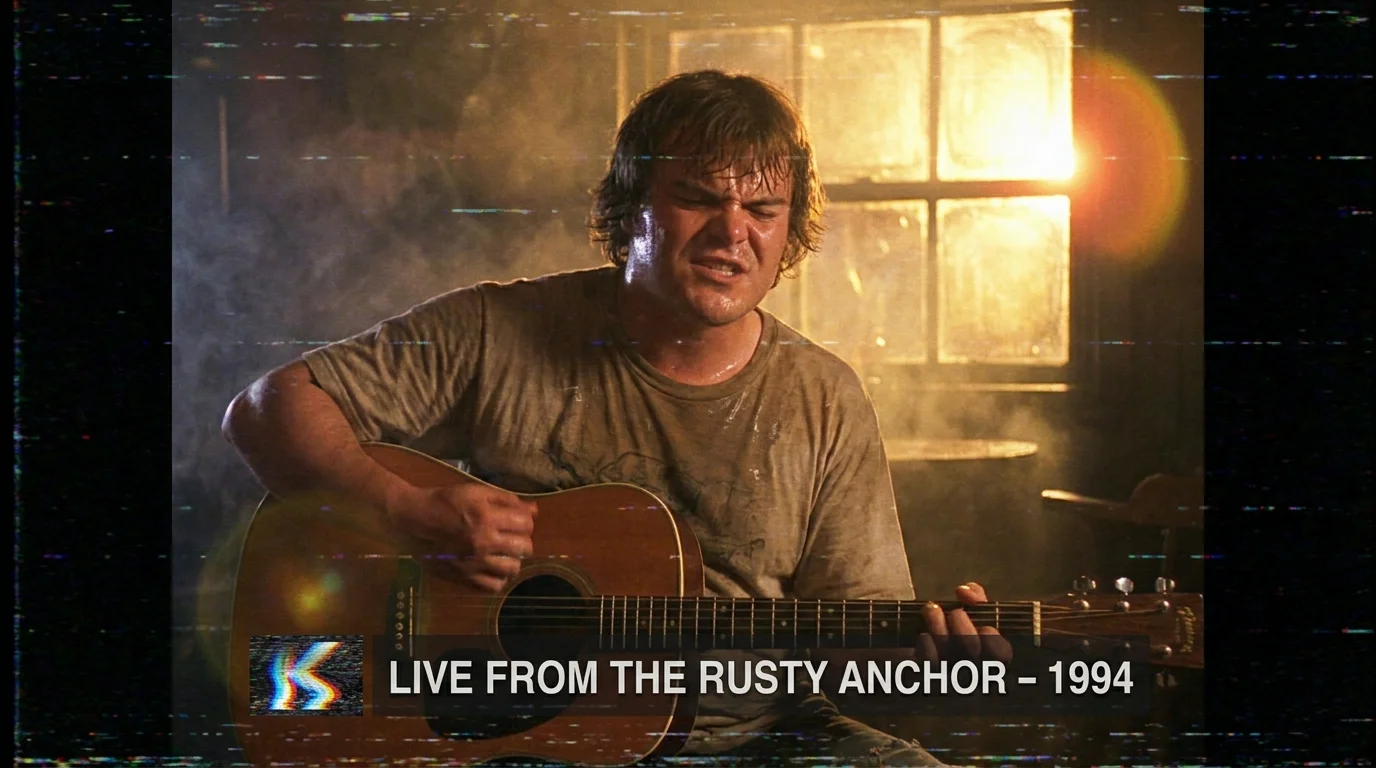
The heavy scent of stale beer and cheap tobacco clings to the low, water-stained wood-beamed ceilings. On a cramped stage in a late-1990s Los Angeles dive bar, illuminated only by a single, flickering red spotlight, you can feel the floorboards shake. You hear the sharp, aggressive scrape of a heavy plastic plectrum on thick steel strings, vibrating through a cheap acoustic guitar body like a wooden box breathing through a heavy blanket.
At the center of this sensory haze stands a young performer shaking with a manic, almost feral energy, his sweat-soaked collar clinging to his neck. He belts out a melody with the unexpected precision of a seasoned operatic tenor, his voice slicing through the thick air. To the casual observer, it looks like a loud, theatrical joke, but if you close your eyes, **the raw frequency cut** through the chatter of the half-sober crowd with absolute, undeniable authority.
For years, mainstream critics dismissed this display as mere caricature. They wrote off the early performances of Tenacious D as sweaty, low-brow novelty acts designed solely to extract cheap giggles from late-night college crowds. They saw the wild, rolling eyes and the frantic, flailing arms on stage, but they completely missed the high-wire technical mastery occurring right under their noses.
Now, a newly resurfaced analog recording has shattered that dismissive consensus. This is not the pristine, highly compressed digital audio of modern streaming platforms; it is **a raw, hissing VHS rip** from 1997 that preserves the exact moment early casting directors realized they were dealing with a powerhouse vocalist who was simply hiding behind a mask of absurdity.
The Trojan Horse of Heavy Comedy
To understand why this footage has sent shockwaves through modern music forums, you must look past the laughter. Comedy is often a defensive shield, a clever way to deliver high-art technical difficulty without looking like you are trying too hard. Think of this approach as **a vocal Trojan horse**; by wrapping a flawless three-octave range in a package of ridiculous fantasy metal, you bypass the rigid gatekeepers who only respect sterile, serious performances.
When you strip away the tongue-in-cheek lyrics about mythical beasts, the underlying skeletal structure of this performance is shockingly classical. The vibrato is steady, the breath support originates deep in the diaphragm, and the pitch transitions are executed with zero friction. Critics who originally graded these sets on a curve of comedic irony are now forced to re-evaluate their criteria entirely, realizing they were reviewing a masterclass through a dusty, biased lens.
- Barclays Center courtside footage reveals subtle tense glares between former teammates
- Paul Rudd stops chaotic press junkets demanding entirely silent green rooms
- Elijah Wood blocks deafening studio noise enforcing one strict digital boundary
- Lainey Wilson casual airport appearance triggers massive vintage denim brand searches
- Kevin Costner official estate filing strips joint ownership of massive ranch
Marcus Vance, a fifty-two-year-old analog preservationist and former independent talent scout, spent decades tracking down these specific basement tapes. In his climate-controlled workshop in Echo Park, Vance digitizes decaying magnetic ribbons, seeking moments where raw talent bypassed the sterile filtration of major record labels. “When I first ran that 1997 VHS tape through the deck, the needle on the VU meter didn’t just bounce; it danced with **a terrifying, calculated precision** that you simply do not see in modern pop vocalists,” Vance explains.
Analyzing the Anatomy of the Acoustic Attack
Let’s break down the technical layers revealed by this archival footage, separating the comedic theater from the sheer athletic vocal mechanics that left early casting rooms stunned.
For the acoustic purist, the magic is in the heavy, percussive wrist action. Instead of relying on a clean, light strum, the rhythm is kept alive through aggressive palm muting that mimics a full drum kit. This gives the solo acoustic performance a drive that feels massive, filling the tiny room without the aid of bass or percussion.
For the vocal analyst, the marvel lies in the chest-voice resonance. Many singers thin out their tone as they climb the register, but this footage shows **a seamless vocal transition** that maintains a thick, resonant low-mid range even when hitting high notes that would make traditional rock frontmen sweat. His high notes held steady, like a heavy copper pot resting on a hot stove without a single wobble.
How to Identify Raw Vocal Control in Live Archives
To train your ears to spot this level of unpolished genius in older, low-quality recordings, you must look for physical markers rather than relying on modern studio production values. True vocal control cannot be faked on a cheap microphone in a room filled with noise.
First, watch the shoulders and neck of the performer. A strained throat creates a tight, pinched sound that chokes out the lower harmonics of a room. Second, focus on the following physical and acoustic indicators:
- **Diaphragmatic stability:** The chest remains calm while the abdomen drives the air, allowing for long, uninterrupted phrases.
- **Plectrum control:** The pick strikes the string at a sharp angle to maximize warm wood tones over metallic rattle.
- **Vowel modification:** Shifting wide-open sounds into rounded shapes to keep the throat relaxed at high frequencies.
By observing these elements, you can train yourself to spot true vocal capability in any archival clip. Use the tactical guide below to calibrate your listening experience.
- **Target Frequency:** Look for rich presence in the 2 kHz to 4 kHz range, where human hearing is most sensitive to natural projection.
- **Vocal Register:** Check for a balanced mix-voice at notes above G4 without voice cracks or sudden drops in volume.
- **Pacing:** Observe if the tempo remains steady at 120 BPM without a click track in a chaotic, unmonitored live room.
Why the Archival Rebirth Redefines Our Standards
The sudden vindication of this performance reminds us that true artistry does not always wear a serious face. In an era dominated by pitch correction and highly curated social media snippets, the raw honesty of a shaky, low-resolution VHS tape acts as a cooling tonic. It proves that behind the theatrical grunts and wild expressions was **a dedicated, rigorous craftsman** who chose to make us laugh while secretly executing vocal feats most serious musicians spend lifetimes failing to master.
When you look back at that smoke-filled room, you are not just seeing a comedian finding his footing. You are watching a virtuoso hiding in plain sight, proving that true talent eventually finds its way to the surface, no matter how deeply it is buried under the cover of comedy.
“The ultimate defense against skepticism is a technique so flawless that even a low-fidelity tape cannot hide its brilliance.” – Marcus Vance, Archival Sound Engineer
| Key Point | Detail | Added Value for the Reader |
|---|---|---|
| Analog Vocal Range | Clean transitions across three full octaves in a live setting | Helps you identify genuine vocal athleticism without digital assistance |
| Percussive Strumming | Utilizing aggressive palm muting to build a rhythm wall | Teaches you how to make a single acoustic guitar sound like an entire band |
| Vocal Longevity | Healthy throat mechanics that prevent vocal cord strain over decades | Explains why his voice remains powerful and undamaged today |
**What makes the 1997 VHS tape of Jack Black so unique?**
It captures an unedited, raw performance before mainstream fame, proving his immense vocal talent was present long before studio production came into play.
**How did early critics misunderstand his musical ability?**
Critics frequently mistook his comedic presentation for a lack of serious musical capability, overlooking his highly disciplined classical vocal technique.
**What is palm muting and how does it help acoustic performances?**
It involves dampening the strings with the edge of the hand, which creates a tight, percussive beat that drives the rhythm forward.
**Can you hear vocal training in a comedy performance?**
Yes, features like consistent vibrato and deep diaphragmatic breath control are signs of formal training, even during humorous songs.
**Why are old analog recordings resurfacing so popular now?**
They offer an authentic, unfiltered look at a performer’s true capabilities, free from modern digital pitch correction and editing tricks.