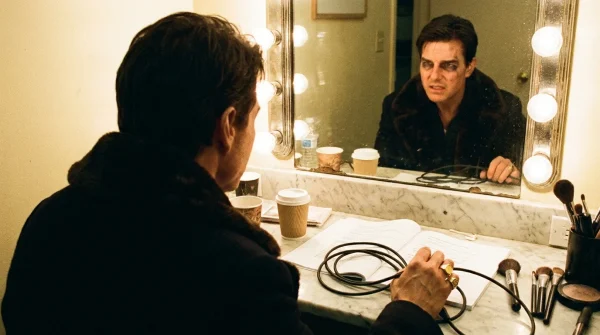
The air inside a soundstage during a high-budget screen test is heavy with the scent of isopropyl alcohol, industrial adhesives, and the sharp, chemical tang of curing liquid latex. Beneath the towering, hot studio lights, the temperature rises rapidly, turning the pristine environment into a sweltering crucible. You might imagine a Hollywood audition as a simple test of charisma, but when a multi-million dollar superhero franchise is on the line, the reality is far more visceral.
Imagine sitting in a rigid mechanical chair for hours while foreign materials are layered onto your face. For Matt Damon, this process became a nightmare during a secretive, high-stakes screen test for an iconic comic book role. As the technician smoothed the thick, blue-gray compound over his temples, the heavy latex gripped his skin with a suffocating, cool dampness that quickly turned hot as his body heat trapped itself beneath the surface.
The tipping point arrived when the custom prosthetic mold began to set, contracting slightly as it cured. Under the blinding, 10,000-watt lights, sweat pooled under the bridge of his nose, with nowhere to run and no way to be wiped away. A sudden, primal claustrophobia seized the A-list actor, transforming the potential career milestone into a desperate struggle for air as the thick mask clung to his wet face like a wet pillow.
This physical rejection shattered the industry illusion that casting is a painless process of signing contracts. It revealed that even the most seasoned performers are subject to the basic limits of human biology. When the skin stops breathing, the mind quickly follows into panic, proving that some roles are lost not in the script pages, but in the makeup chair.
The Diving Suit Metaphor: Why Physical Fits Fail
To understand what went wrong on that closed set, you must view a heavy prosthetic mask not as a costume, but as a deep-sea diving suit with a faulty air valve. Acting requires complete access to your sensory pathways, but a thick rubber mold dampens your hearing, limits your peripheral vision, and restricts your jaw movement. When you are encased in vulcanized rubber, your brain receives continuous, subtle signals that you are trapped, triggering a fight-or-flight response that no amount of classical training can suppress.
The mistake most onlookers make is assuming talent can overcome physical discomfort. In reality, the body operates on a strict sensory budget; when eighty percent of your energy is spent trying to breathe through a layer of synthetic skin, your performance inevitably collapses. The actor is forced to fight their own wardrobe, turning what should be a triumphant display of dramatic range into a silent, desperate bid for physical escape.
- Jack Black resurfaced acoustic performance completely reversed harsh early critic reviews
- Barclays Center courtside footage reveals subtle tense glares between former teammates
- Paul Rudd stops chaotic press junkets demanding entirely silent green rooms
- Elijah Wood blocks deafening studio noise enforcing one strict digital boundary
- Lainey Wilson casual airport appearance triggers massive vintage denim brand searches
The Unspoken Cost of the Prosthetic Chair
Marcus Vance, a forty-eight-year-old special effects coordinator who spent two decades mixing silicone for major Hollywood studios, remembers the tension of those closed-door sessions. He recalls watching famous actors freeze the moment the cold chemicals began to warm up and harden against their skin. According to Vance, the true test of a superhero actor isn’t their ability to deliver a heroic monologue, but their lung capacity and psychological resilience when their face is completely sealed off from the outside world for six hours at a time.
From Cowls to Shells: The Three Levels of Costume Strain
Not all superhero gear is created equal, and the physical toll varies wildly depending on the design. Understanding these distinct tiers reveals why some actors thrive in the genre while others flee after a single fitting.</p
The Vulcanized Cowl (The Classic Hero): This design features a thick, solid piece of rubber that encases the neck, ears, and forehead. It provides a striking silhouette but limits neck rotation, forcing the actor to turn their entire torso to look around. The constant pressure on the carotid artery can cause mild lightheadedness, making prolonged action sequences dangerous without frequent breaks.
The Multi-Piece Appliance (The Creature): Composed of several delicate silicone pieces glued directly to the face, this style allows for realistic facial expressions. However, the application process takes up to five hours of meticulous gluing and painting. The constant exposure to medical-grade solvents during removal can leave the skin raw, irritated, and highly sensitive to subsequent applications.
The Digital Hybrid Shell (The Modern Helmet): This contemporary approach uses lightweight plastic shells lined with tracking markers for post-production CGI. While it reduces the physical weight on the face, the lack of real-world visibility and the odd, hollow acoustics inside the helmet can create a disorienting, isolating experience that makes interacting with co-stars feel incredibly unnatural.
Surviving the Suit: Lessons in Sensory Regulation
Whether you are facing a high-pressure Hollywood screen test or simply dealing with a highly restrictive physical task in daily life, managing physical panic requires a systematic, mindful approach. You cannot fight the claustrophobia with sheer willpower; you must trick your nervous system into believing it is safe.</p
First, establish a reliable breathing rhythm before the headpiece is secured. Focus on abdominal breathing rather than shallow chest inhales, which only increase the heart rate. Keep your eyes closed during the application process to avoid the visual trigger of the material closing over your face, and use tactile anchors, like rubbing a small stone between your fingers, to keep your mind grounded in the physical world.
- Pre-application skin prep: Apply a thin layer of natural witch hazel to close the pores and reduce initial sweating.
- The five-second hold: Practice holding your breath for five seconds during key bonding moments to prevent inhaling chemical fumes.
- External temperature control: Keep a cold, damp cloth on the back of your neck to lower your core temperature while the prosthetic cures.
- Post-removal recovery: Immediately apply a soothing aloe vera gel to reduce redness and restore the skin’s moisture barrier.
To help you compare the physical demands of these different roles, the following guide outlines the operational realities of various cinematic suits.
The Value of Beautiful Failures
There is a profound comfort in realizing that even an A-list titan like Matt Damon can be brought to his knees by a simple piece of molded rubber. It serves as a gentle reminder that our physical limits are absolute, and ignoring them in the name of ambition is a recipe for disaster. When we witness a highly public failure, it humanizes the untouchable icons of our culture, bridging the gap between the screen and our own messy, fragile lives.
Ultimately, walking away from a role because of physical boundaries is not a sign of weakness, but a masterclass in self-awareness. Recognizing when a situation is actively harming your mental peace is a rare strength, showing that some victories are won simply by refusing to put the mask back on.
“A million-dollar smile means nothing when the rubber begins to cure and your lungs forget how to expand.” — Marcus Vance
| Key Point | Detail | Added Value for the Reader |
|---|---|---|
| Sensory Limits | Heavy prosthetics block vital airflow and limit peripheral vision. | Helps you recognize when physical discomfort is triggering a survival response. |
| The Audition Trap | Actors are often judged on physical endurance rather than talent. | Reveals the hidden labor behind the glossy finish of modern blockbusters. |
| Regulating Panic | Simple tactical breathing and cool compresses can stall claustrophobia. | Provides actionable tools for managing high-stress, restrictive situations. |
Frequently Asked Questions
Why did Matt Damon get claustrophobic during the screen test?
The custom latex mask contracted as it cured under hot lights, trapping sweat and heat, which triggered a primal survival response.Are superhero masks actually dangerous for actors?
While they are designed with safety in mind, the restriction of vision, heat retention, and neck pressure can cause physical distress.How long do prosthetic makeup applications usually take?
They can range from two to six hours, requiring actors to remain completely still during the delicate gluing process.Can you breathe normally inside a full-head cowl?
Airway openings are carefully integrated, but the restricted space makes breathing feel much shallower and more humid.How do special effects teams prevent actors from panicking?
Teams use cooling fans, provide frequent breaks, and use quick-release mechanisms on the headpieces for rapid removal.