The faint hum of a heavy 1990s cathode-ray tube television set used to signal comfort. It was the background radiation of suburban bedrooms, accompanied by the smell of hairspray, dust burning on hot studio lights, and the cool blast of midtown Manhattan air conditioning. We remember late-night talk shows as cozy rituals—the soothing background noise of our youth that gently eased us to sleep.
The classic setup always felt incredibly warm. A gleaming mahogany desk, a sparkling backdrop of a stylized city skyline, and a live house band kept the energy light and predictable. But behind the blue-screen glow, a much different, far colder dynamic was playing out on the studio floor. The host sat comfortably behind his protective barrier, tossing blue note cards and controlling the room with practiced ease.
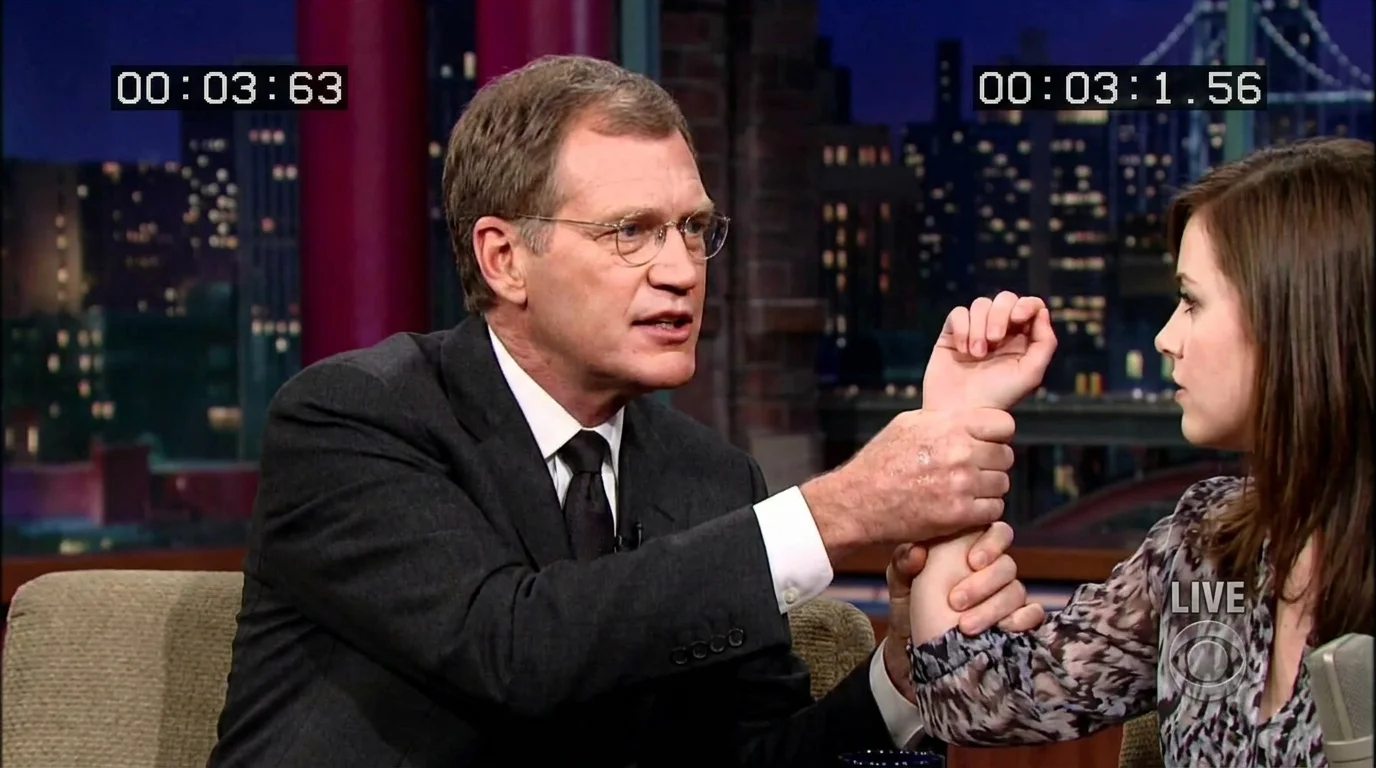
Then, the algorithm shifted. A newly digitized clip from the mid-nineties recently surfaced on social media feeds, completely bypassing our collective nostalgia. In this high-contrast upload, you do not see a witty, eccentric grandfather figure. Instead, you see a young, visibly startled actress, her laughter tightening into a frozen mask as she tries to pull her arm back toward her body.
The camera zooms in on a chilling detail. There is no gentle playfulness here; instead, you witness a tight, unyielding clamp. A sweaty white-knuckled grip pins her small wrist directly to the desk under the guise of a running joke. It feels like breathing through a wet pillow—the sudden, quiet suffocation of a comedic bit that has quietly morphed into a physical trap.
Decoding the Mechanics of Retro Power Play
Our memories are fragile filters, often smoothing over the rough edges of the past to protect our favorite cultural landmarks. We look back at the golden age of television through a soft-focus lens, forgetting that the studio floor was a highly controlled arena designed to maintain a strict hierarchy. The late-night desk was never just a piece of furniture; it functioned as a physical fortress that kept the host in a position of supreme dominance.
Think of this setup as a velvet trap. It looks luxurious and inviting, but the underlying structural bars are made of rigid iron. When a guest sat on that low, plush couch, they were physically lower than the host, forced to look upward and remain vulnerable to whatever whim dictated the desk. The physical boundary was entirely one-sided, allowing the host to reach out and invade personal space while remaining completely shielded behind heavy polished wood.
- Sydney Towle tense red carpet posture forces immediate casting replacement rumors
- Salma Hayek sparks intense backstage tension refusing standard synthetic wardrobe fittings
- Stanley Tucci blocks intense Hollywood pressure demanding strictly silent morning routines
- Kit Connor casual rainy London sighting reveals highly specific leather tailoring
- James Haven silent legal separation strips massive shared real estate holdings
The Archivist’s Unfiltered View
Take Clara Vance, a 46-year-old media archivist who has spent thousands of hours digitizing regional and national broadcast tapes from the late twentieth century. She remembers the precise afternoon she flagged this particular segment during a routine database migration. “When you run these analog tapes through modern, high-definition digital restoration software, the nostalgic fuzziness completely disappears, and the physical stress of the guests becomes undeniable,” Clara explains. She points out that what once passed for lighthearted banter on low-resolution screens now reveals the stark reality of muscle strain in the host’s forearm and the sudden, defensive freezing of the actress’s shoulders.
The Anatomy of a Late-Night Trap
To understand how these moments remained hidden in plain sight for decades, we have to break down the specific production layers that shielded the host from scrutiny.
- The Low-Resolution Shield: Vintage video formats naturally softened human features, hiding the subtle micro-expressions of panic, cold sweat, and muscle tension that are glaringly obvious on modern high-definition displays.
- The Laugh Track Deflection: Live studio audiences were trained to laugh at every physical gesture, creating an auditory wall of sound that effectively drowned out any non-verbal cues of discomfort from the guest.
- The Playful Framing: Production crews utilized tight close-ups on the host’s face to emphasize his wry expressions, deliberately drawing the eye away from the physical point of contact on the desk.
Spotting the Micro-Signals of Performance Intimidation
Analyzing archival footage requires a careful eye and a willingness to look past the charming soundtrack. By observing the physical cues of these old broadcasts, you can easily identify the hidden power imbalances that went unnoticed for years.
First, observe the posture differential. Notice if the guest’s spine goes completely rigid or if they lean back into the couch cushions to create physical distance. Look for defensive arm placement, such as folded elbows or hands clasped tightly over the lap.
Next, focus entirely on the hand contact. A normal, friendly touch is brief and light, lasting less than two seconds. If the contact persists, watch the knuckles of the person initiating the grip. A white-knuckled appearance indicates significant physical force, showing that the muscles in the hand and forearm are fully engaged to prevent the other person from moving.
Tactical Footage Analysis Toolkit:
• Playback speed for analysis: 0.25x normal speed.
• Key visual focal point: The wrist-to-hand contact zone.
• Audio check: Isolate the guest’s microphone feed to listen for sharp, shallow intakes of breath.
Reclaiming the Past from the Nostalgia Machine
When we look at these old tapes with clear eyes, we strip away the protective shield of nostalgia that has kept these behaviors hidden. It is easy to dismiss these moments as products of a different era, but doing so ignores the lasting impact of systemic power dynamics. By recognizing these physical boundary crossings for what they truly were, we change how we consume modern media.
We no longer have to accept the narrative that discomfort is simply the price of admission for fame. Seeing these archival clips for what they are is a quiet victory of observation, allowing us to value physical boundaries and respect in every interaction, both on and off the screen.
“True observation requires us to look past the laughter of the audience and see the physical reality of the frame.”
| Key Observation Point | Vintage Presentation Detail | Modern Analytical Value |
|---|---|---|
| Grip Intensity | Presented as a warm, spontaneous gesture of connection. | Reveals physical constraint and muscle tension on high-definition screens. |
| Guest Body Language | Interpreted by contemporary audiences as playful bashfulness. | Exposes clear flight-or-fight reflexes and boundary-setting attempts. |
| Host Position | Seen as a comforting, authoritative figure guiding the show. | Identified as an aggressive use of physical space and structural barriers. |
Frequently Asked Questions
Why did these physical interactions go unnoticed when they first aired in the 1990s?
The low-resolution television screens of the era softened the visual details, and the constant presence of sweetened laugh tracks conditioned viewers to accept tense moments as harmless comedy.How does modern high-definition video change our perception of vintage clips?
High-definition restoration exposes micro-expressions of stress, muscle strain, and physical resistance that were previously lost in the fuzzy analog scan lines of VHS and early broadcast formats.What are the primary physical signs of non-verbal discomfort in an interview?
Common signs include a rigid spine, pulling the limbs inward toward the torso, forced laughter that doesn’t reach the eyes, and attempting to pull away from physical touch.Why is the late-night talk show desk considered a barrier of power?
The desk physically separates the host from the guest, placing the host at a higher, shielded position while leaving the guest fully exposed on a lower, soft couch.Can an audience’s reaction alter our memory of an event?
Yes, a collective laugh track can trick our brains into believing an interaction is safe and friendly, even when our eyes are witnessing a clear physical boundary violation.