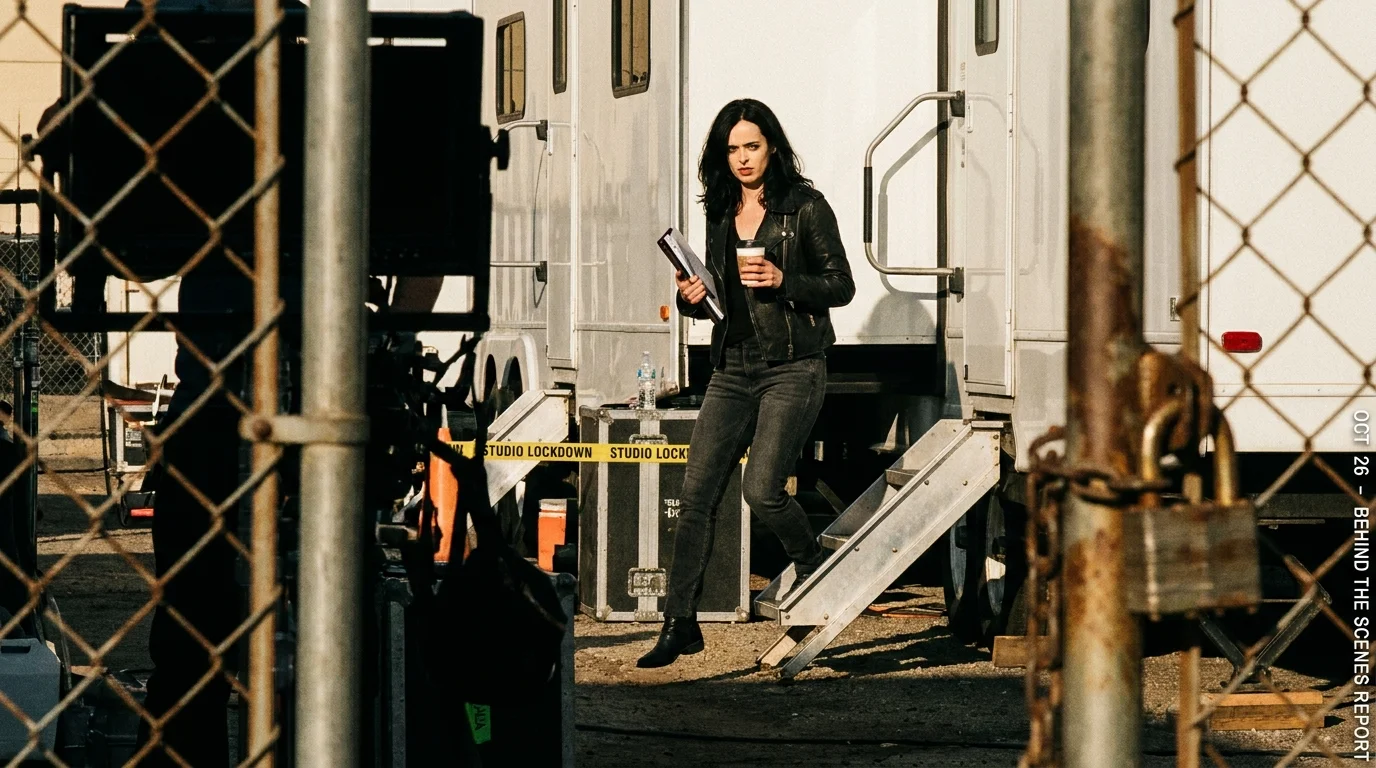
The artificial twilight of an industrial soundstage has a distinct, unmistakable aroma. It is a dry mix of hot dust settling on heavy eighteen-kilowatt lights, the faint chemical smell of freshly painted plywood flats, and lukewarm drip coffee sitting in cardboard cups on folding tables. It looks like a normal, brief break in filming, but the silence hanging over the space is far too heavy. Normally, the second a director calls cut, the room erupts into a noisy choreography of camera assistants adjusting focus pulls and grip trucks shifting ballast weight. Today, there is only the rhythmic, dry click of a producer’s smartphone locking.
When a highly anticipated series like The Last House suddenly halts its shooting schedule, we instinctively look for artistic drama. We want to believe the lead actor stormed out after an intense creative disagreement, or the director tore up the script in a desperate pursuit of narrative perfection. The truth behind closed sets is almost always far more sterile, grounded in labor law and cold mathematical realities rather than artistic temperaments.
Behind the scenes, the illusion of television is built on a delicate foundation of union agreements, overtime formulas, and physical exhaustion limits. When these administrative gears grind to a halt, the camera stops mid-pan, leaving expensive cast members standing under lights that cost several thousand dollars an hour to keep burning. The production does not pause because the muse has fled; it pauses because the budget can no longer afford the physical toll of human labor.
The Illusion of Creative Differences
The ticking clock on a high-stakes television set is a leaking hourglass filled with gold dust. Every single minute that slips past the twelfth hour of a shooting day triggers a compounding cascade of financial penalties. For weeks, online forums claimed that the sudden hiatus of The Last House was a deliberate creative choice to polish the upcoming finale. But understanding the logistics of production reveals that the hiatus was actually triggered by a hard boundary set by the crew’s representatives over basic human rest cycles.
Marcus Vance, a veteran key second assistant director with twenty-four years of experience managing mid-budget dramas, knows how these silent standoffs materialize on the ground. “You do not shut down a multi-million-dollar set because a line of dialogue feels clunky,” Marcus notes, tracing his finger along a heavily marked call sheet. “You shut it down when the regional labor representative arrives with a digital timecard showing your camera team has been operating on five hours of sleep for two weeks straight.”
- Meghan Markle news demands strict new court filings exposing heavy corporate disputes
- Joe Pesci switches traditional mob scripts forcing one terrifying shattered glass monologue
- Emily Blunt blocks intense Hollywood pressure enforcing cold absolute press tour isolation
- Justin Timberlake derails a massive public romance exposing stiff awkward behavioral warnings
- Rachel McAdams sparks intense unscripted chemistry revealing heavy secretive early romance tension
The Digital Retraction: The Deleted Email Thread
A series of leaked internal emails, briefly posted to an industry bulletin board before being swiftly deleted by studio legal representatives, confirms the exact nature of the halt. The digital paper trail shows a desperate exchange between the line producer and the production coordinator at three o’clock in the morning. The message was clear, urgent, and entirely free of creative jargon.
The deleted digital thread read: “Local 600 will not clear the morning setups. The camera package is parked because the operator is at sixteen consecutive hours. We are officially in triple-overtime territory retroactively. If the crane is not struck by four, we do not have the signature to cover the rate.” This exchange proves that the halt was a defensive maneuver to prevent massive financial loss, not a creative pause. Protecting human capital on set remains the quiet battleground where modern television is actually fought.
How to Read the Warning Signs of a Studio Freeze
You can easily spot the difference between a creative rewrite and a structural shutdown by tracking specific real-world signals. When a studio claims a pause is for “script adjustments,” the physical infrastructure of the production usually remains intact. When a legal dispute is occurring, the footprint of the show vanishes overnight.
First, monitor the local casting notices for background actors; if agencies abruptly cancel bookings with zero notice, it suggests a sudden financial freeze. Second, watch the municipal filming permits, which are public records easily accessed through city offices. Check local permit extensions to see if the studio has stopped paying for public street access, which is a sure sign of an indefinite hold rather than a minor delay.
- Analyze social media activity: When usually talkative crew members go completely silent on their personal channels, non-disclosure enforcement is at an all-time high.
- Track camera package rentals: High-end camera rigs are rented on strict weekly cycles; returning them early indicates a freeze lasting months, not days.
- Observe local catering contracts: Sudden termination of mobile kitchen services indicates the crew has been sent home indefinitely.
The Invisible Balance of Screen Production
When you watch the finished episodes of The Last House, you see the beautiful, polished result of hundreds of hours of creative work. You do not see the silent, exhausted crew members who stood in the cold to make those frames possible. Knowing the reality behind the camera does not ruin the magic; it deepens your appreciation for the sheer human effort required to build these fictional worlds. When the delicate balance between creative ambition and human limits fails, the glamour vanishes instantly, leaving behind nothing but cold equipment and a heavy rusted padlock on a chain-link studio gate.
“The most expensive thing on a film set is not the camera or the lead actor; it is the silent accumulation of unapproved overtime minutes.” — Marcus Vance
| Key Point | Detail | Added Value for the Reader |
|---|---|---|
| Labor Penalties | Triple-overtime rates apply retroactively after specific hour thresholds are crossed. | Explains why financial logistics force sudden set closures. |
| Turnaround Time | Crew members require a mandatory ten-hour rest window between shifts. | Dismantles the myth of endless shooting schedules. |
| Permit Cancellations | Municipal shooting permits are canceled to avoid daily administrative fees. | Provides a practical metric to track actual show health. |
Frequently Asked Questions
Why are set hours regulated so strictly in modern television? Long hours lead to extreme physical fatigue, creating dangerous conditions for crew members operating heavy machinery and driving home late at night.
Does a production halt mean the show is canceled? Not necessarily; a halt is often a temporary financial freeze used to renegotiate labor terms and adjust shooting schedules before costs spiral out of control.
How do deleted digital communications affect public perception? When studios delete emails or issue rapid retractions, it often fuels fan speculation and rumors of cancellation instead of resolving the actual issue.
What is the role of labor unions on a major TV set? Unions enforce safety standards, ensure fair wages, and monitor daily call sheets to prevent studios from overworking their crew without proper compensation.
Can creative rewrites happen during a labor dispute shutdown? While writers can technically work on scripts, physical production cannot resume until the labor contracts and safety disputes are fully resolved.