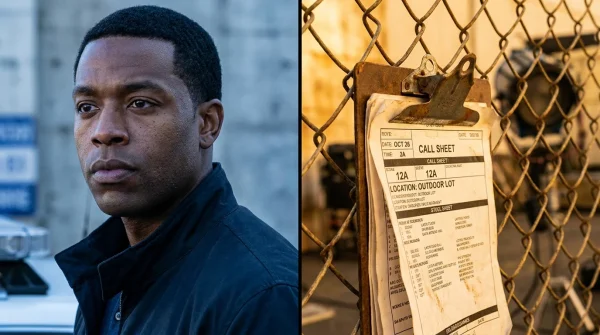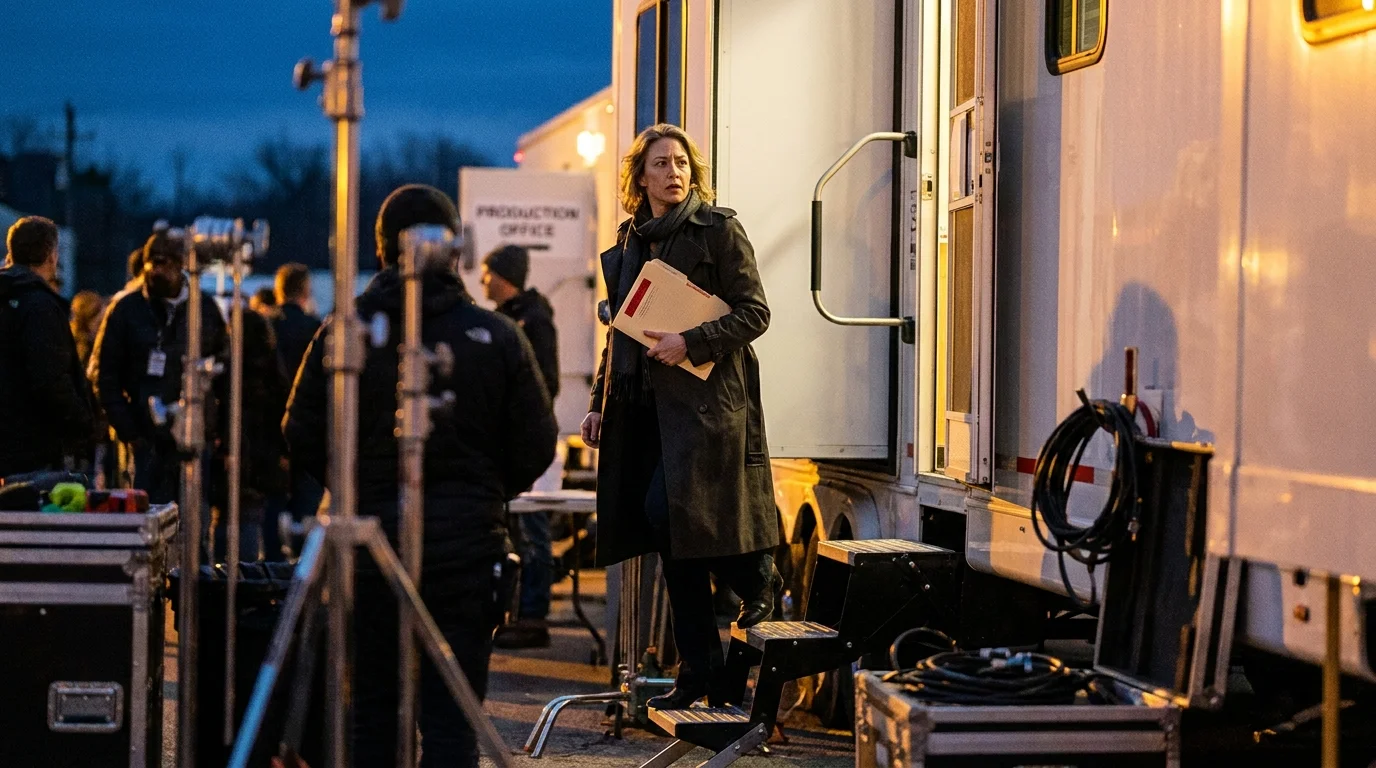
The smell of stale premium coffee hangs heavy in the trailer at five in the morning, long before the sun rises over the soundstage. You can hear the distant, rhythmic hum of diesel generators keeping the honeywagons warm, a low vibration that settles in your teeth. On the production office desk, a stack of freshly printed cream-colored call sheets sits under a brass paperweight. To the untrained eye, these pages represent a perfectly choreographed ballet of creative genius.
In reality, the paper is a battleground where human stamina is traded for screen time. You might assume that when an actor of Carrie Coon’s caliber signs onto a prestige television project, the schedule is a delicate, mutually respected dance. The public sees the glowing press releases and the red-carpet smiles, assuming the machinery of high-end storytelling operates on effortless passion.
The industry truth is far colder. Behind the scenes, the struggle for minutes is an aggressive, calculated war of attrition. When a production quietly slips past its scheduled wrap time, it is not an accidental oversight; it is a calculated gamble with an actor’s contract, hoping the crew’s exhaustion will keep them quiet.
The Illusion of the Seamless Shoot
We tend to view Hollywood contracts as golden tickets, but they are actually blueprints for survival. When you look at a major production, it is easy to fall into the trap of thinking everything is negotiable with a smile and a handclasp. But the real leverage is found in the rigid boundaries of time. The clock is the ultimate arbiter of creative power.
Think of a television set as a high-pressure steam boiler. If you do not release the pressure through strict turnaround times, the system eventually ruptures. The recent legal friction surrounding unauthorized overtime filming hours reveals that even the most celebrated stars must occasionally draw a hard line in the dirt to keep from being consumed by the machine.
Sylvia Vance, a 47-year-old entertainment litigation attorney based in Atlanta, has spent two decades examining the fine print of these industry standoffs. “Studios often treat contract parameters as polite suggestions rather than legal limits,” Vance explains, adjusting a heavy silver ring on her finger. She notes that the rise of prestige television has created an environment where directors demand feature-film quality on shoe-string television schedules, forcing actors to work grueling, unauthorized hours just to get the shot.
- Joe Jonas awkward backstage posture demands a harsh relationship timeline review
- Rebel Wilson switches massive backstage power dynamics demanding entirely silent dressing room spaces
- Paul Mescal strips standard character boundaries switching to real unscripted affection
- Javier Bardem reveals a brutal studio rejection blocking early franchise ambitions
- Robert Pattinson resurfaced talk show clip reverses harsh early acting criticisms
Breaking Down the Breach: The Overtime Allegations
The heart of the newly filed legal documents reveals a stark disconnect between promised rest periods and the actual reality on the ground. According to the court filings, the production team systematically engaged in “schedule stretching,” a practice where filming consistently ran over the daily limit without prior authorization.
For the lead talent, this meant their contractual twelve-hour rest windows—designed to allow for sleep, preparation, and basic human recovery—were quietly eroded. The legal documents detail multiple instances where the camera ran thirty, forty, or even ninety minutes past the scheduled wrap time, accumulating hours of unauthorized work over a single production cycle.
The Grace Period Weaponization
In many standard contracts, a ten-minute grace period is allowed to finish a complex take. The lawsuit alleges that this minor courtesy was weaponized into a daily expectation, turning a rare exception into an uncompensated, exhausting routine.
The Hidden Turnaround Creep
By pushing the wrap time later each night, the production team effectively forced the cast into a rolling schedule, where call times slipped later and later into the morning, destroying any semblance of a healthy biological rhythm on set.
Safeguarding Your Boundaries
Protecting your professional boundaries requires a deliberate, methodical approach to your daily schedule. You do not need a team of high-priced lawyers to start reclaiming your time. By treating your schedule as a non-negotiable contract, you can prevent others from slowly chipping away at your peace of mind.
To implement these boundaries effectively, you must understand the exact mechanics of time tracking. Keep a meticulous log of every minute spent on your professional duties.
- Document the precise moment your active work begins and ends each day.
- Establish a clear, written agreement regarding grace periods before projects begin.
- Communicate your availability limits in writing to avoid verbal misunderstandings.
- Enforce a hard stop-time to preserve your personal recovery windows.
The Tactical Toolkit for Schedule Protection:
- Daily Turnaround Minimum: 12 consecutive hours of complete rest.
- Grace Period Limit: Maximum 10 minutes per day, used strictly for emergency wrap-ups.
- Documentation Tool: A dedicated physical logbook to record daily start and end times.
The Quiet Revolt on the Call Sheet
At its core, this legal battle is not merely about an actress protecting her personal comfort; it is about establishing a precedent for everyone on the call sheet. When a high-profile figure demands accountability, it creates a protective canopy for the camera operators, makeup artists, and production assistants who cannot afford to speak up. It is a reminder that professional excellence should never require the sacrifice of human dignity.
As you look closer at the struggle, the physical reality of the conflict becomes impossible to ignore. On the final page of the docket, the margins are crowded with angry crimson ink, hand-drawn asterisks bleeding into the white fibers of Exhibit B—a physical record of the hours stolen from the clock, each stroke of the pen a silent protest against the silent erosion of time.
“The finest artistic vision means nothing if it is built on the systematic exhaustion of the people bringing it to life,” says Sylvia Vance.
| Key Point | Detail | Added Value for the Reader |
|---|---|---|
| Turnaround Windows | 12 hours of mandatory rest between daily filming sessions. | Protects long-term physical endurance and mental clarity. |
| Grace Periods | 10-minute maximum allowance for wrapping up active scenes. | Prevents unpaid, creeping overtime from becoming a daily norm. |
| Documented Violations | Repeated 30-to-90 minute unapproved daily schedule extensions. | Establishes a clear paper trail necessary for legal enforcement. |
Why is this legal dispute trending right now?
Carrie Coon’s recent high-profile television casting announcements have drawn intense public interest, turning the spotlight onto the hidden structural challenges of her current projects.
What exactly is turnaround creep in production contracts?
It is the gradual, unapproved shrinking of the mandatory rest window between wrap time and the next morning’s call time, leaving actors and crew with inadequate recovery hours.
How do grace periods get exploited on set?
Instead of being used strictly for rare technical emergencies, minor grace periods are often treated as standard, daily extensions to get extra footage without paying overtime.
Can crew members benefit from talent-led lawsuits?
Yes, because when top-billed talent legally enforces strict schedule boundaries, studios are forced to wrap the entire set, protecting the vulnerable crew from excessive hours.
What is the significance of the red ink on the documents?
The heavily annotated contract pages show the exact, hand-written objections and timeline discrepancies that form the physical proof of the contract breach.