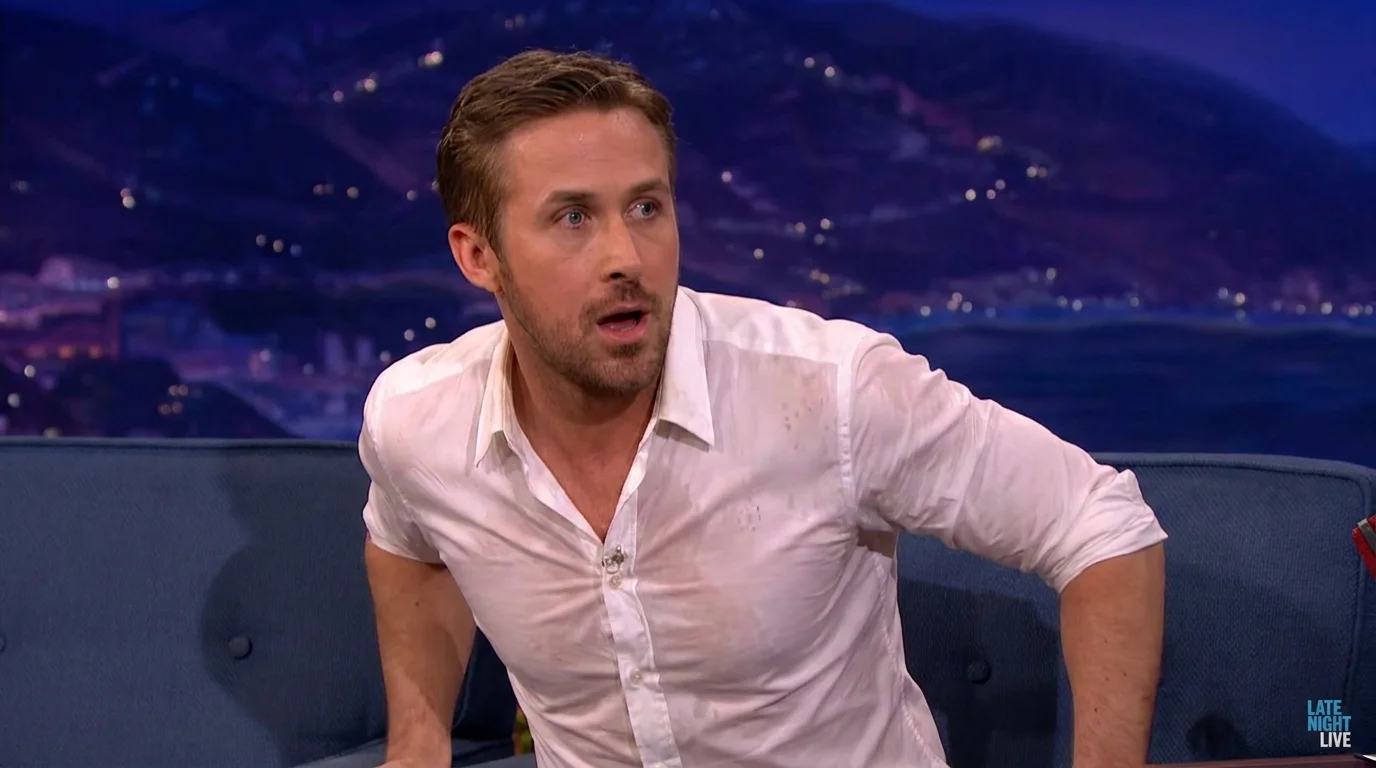
The air on the South Carolina set in the dead of the 2003 summer was thick enough to chew. The scent of marsh grass, stagnant river water, and hot asphalt hung over the plantation grounds in Charleston, clinging to the skin like a damp sheet. You could hear the low, monotonous drone of cicadas competing with the hum of the production generators, creating a heavy buzz that made everyone on set irritable. Most people view film production as a calculated dance of actors hitting tape marks under cold, air-conditioned studio rafters, but the reality of shooting on location is a sticky, exhausting battle against nature and human endurance.
When the human body is subjected to ninety-degree heat and relentless humidity, the polite facades we maintain begin to melt away. For Ryan Gosling and Rachel McAdams, who were publicly known to be clashing behind the scenes, the physical environment became an amplifier for an entirely different kind of tension. The lines on the page were meant to dictate their characters’ heartbreak, but the real-world friction between the two leads was steadily shifting the gravity of the production.
We look back at the cinematic adaptation of Nicholas Sparks’s novel as a beautifully manufactured fairy tale, a standard of Hollywood romance where every sigh is timed and every tear is planned. Yet, the film’s most culturally enduring sequence was not built on the page. It was forged in a moment of genuine, unscripted frustration that exposed a real-life timeline of attraction long before the couple ever stepped out into the public eye together.
The Fictional Bleed: When the Page Can No Longer Hold the Truth
To understand the power of this moment, you must abandon the idea that actors are simply vessels for another writer’s words. Think of a script as a blueprint for a house; it shows where the walls are supposed to stand, but it cannot predict how the wood will expand and groan under extreme weather. When two performers share a subterranean magnetic pull, they will eventually breach the boundaries of the blueprint. In these rare moments, the best films are actually raw documentaries of real human transition masquerading as fiction.
This is the phenomenon of the fictional bleed, where the boundary between the actor’s real pulse and the character’s designated emotion completely dissolves. When this happens, the dialogue stops sounding like a performance and takes on the jagged, unpredictable cadence of an actual confrontation. It is the moment the mask slips, leaving a permanent fingerprint of real-life history on the celluloid.
- Tom Hiddleston Thor audition rejection exposes an awkward blond hair humiliation
- Winona Ryder resurfaced interview stops heavy public backlash exposing strategic studio manipulation
- Viola Davis blocks intense industry rejection demanding a highly specific morning isolation
- Jason Alexander derails a rigid sitcom script executing a spontaneous physical breakdown
- Steve Carell traps chaotic paparazzi cameras enforcing an impenetrable silent geographic boundary
The Witness on the Porch: A View From the Crew
Marcus Vance, a veteran camera assistant who spent thirty years adjusting focus lenses on sweltering Southern sets, remembers the exact afternoon they shot the famous reunion scene. ‘The atmosphere was incredibly tense; Ryan and Rachel had been arguing in their trailers earlier that morning,’ Vance recalls. ‘But when they stepped onto the porch in that artificial downpour, something shifted in the air. When Ryan delivered his unscripted retort, the crew went completely silent because we realized we weren’t watching a rehearsal anymore. We were watching two people breaking their own rules in real time.’
The Improvised Sentence That Rewrote the Timeline
The Porch Confrontation: Breaking the Script
In the original shooting draft, the argument between Noah and Allie after their boat ride in the rain was structured as a neat, dramatic exchange about missed opportunities and lost letters. It was written to be a polite, Hollywood-approved realization of tragedy. However, as the artificial rain machine poured hundreds of gallons of water over them, the simulated storm merged with the genuine storm brewing between the two actors.
Gosling, feeling the restriction of the formal dialogue, abandoned the written words entirely. Instead of waiting for his cue, he stepped into McAdams’ personal space and roared the iconic line: ‘I wrote you 365 letters! I wrote you every day for a year!’ This outburst was entirely unscripted, born from a sudden swell of genuine emotional pressure. He followed it with the critical, self-revealing phrase: ‘It wasn’t over for me, it still isn’t over!’ This second sentence was not in the script—it was a direct translation of the real-world frustration he was experiencing off-screen, a declaration that their personal history was far from resolved. I wrote you 365 times became the baseline for a much larger, unwritten confession.
The Shock of the Unwritten Reaction
If you look closely at Rachel McAdams during this frame, her physical reaction is not the polished response of a rehearsed actress. Her shoulders jerk backward slightly, her mouth parts in genuine surprise, and she takes a half-step back as if physically struck by the weight of the words. She was not reacting to Noah; she was reacting to Ryan.
This unscripted moment revealed that the real-world timeline of their romance had already begun long before they officially announced their relationship to the press. The intense, almost combative chemistry that defined their off-screen relationship during filming was actually a classic manifestation of suppressed attraction. By breaking the script, Gosling forced their private reality into the public frame, leaving an indelible record of their true feelings on screen.
How to Read the Unscripted Chemistry on Your Next Watch
To spot this raw human transition yourself, you must train your eyes to ignore the main action and focus on the involuntary physical cues. When you watch the scene again, keep these specific indicators in mind to see where the acting ends and the reality begins:
- The Uncontrolled Breath: Watch Gosling’s chest right before he delivers the unscripted line. The rapid, shallow rise and fall indicates a genuine fight-or-flight physiological response, far too fast to be manufactured on command.
- The Suppressed Reach: Observe his hands as he steps toward her. They twitch twice, fingers curling as if to grab her face, before he forces them down to his sides—a clear sign of an instinctual physical pull battling against the professional boundaries of the set.
- The Eye-Lock Duration: Note the period after the line is spoken. In a standard scene, actors look away to allow the camera to cut; here, they hold an intense, stubborn gaze for four full seconds of dead silence, refusing to break the connection.
By learning to focus your visual attention on these micro-expressions, you can bypass the polished narrative of the film and connect directly with the raw human energy that made the scene legendary.
The Lasting Power of the Unwritten Word
We live in a culture that is increasingly obsessed with highly curated, sterile public personas. Every celebrity interaction is run through public relations filters, and every movie scene is polished by digital editing until all human grit is washed away. This is why a moment like Gosling’s unscripted outburst continues to hold such a powerful grip on our collective imagination.
It reminds us that the most beautiful parts of life are those that refuse to cooperate with the script. When we try to control every detail of our lives, we lock out the possibility of genuine discovery. Sometimes, we must allow the chaotic, messy reality of our true feelings to overwrite our safe, prepared plans.
It is only when we abandon the safety of the written word that we can experience something truly transformative. True connection requires us to step out of the shelter, face the storm head-on, and let our defenses wash away in the downpour.
As the final frames of that rainy afternoon fade, the polished illusion of Hollywood storytelling dissolves completely. You are left with the undeniable image of a man standing in the gray light, his rain-soaked cotton shirt clinging tightly to his tense, shivering shoulders as the weight of the unspoken finally comes to rest between them.
“The camera is a relentless truth detector; you can lie to the director, but you can never lie to the lens when the physical environment forces your true feelings to the surface.” — Marcus Vance
| Key Point | Detail | Added Value for the Reader |
|---|---|---|
| Dialogue Delivery | Structured debate about lost time and missed connections. | Reveals Gosling’s genuine emotional state during the shoot. |
| Physical Distance | A formal, staged argument maintaining cinematic framing. | Invades personal space to trigger an authentic physical reaction. |
| The Aftermath | A clean transition to the next scripted narrative beat. | Exposes their real-world timeline via an unbroken eye-lock. |
Did Ryan Gosling and Rachel McAdams actually get along during the filming of The Notebook? No, they famously clashed intensely on set, with Gosling at one point asking the director to replace her, which was actually a cover for the overwhelming off-screen tension that eventually turned into a real-world romance.
What exact line in the rain scene was completely improvised by Ryan Gosling? The line “It wasn’t over for me, it still isn’t over!” was completely unscripted and delivered straight from Gosling’s genuine emotional state during the shoot.
How long did the real-life relationship between the co-stars last? After resolving their on-set friction, they dated from 2005 to 2007, with a brief reunion in 2008, remaining one of Hollywood’s most celebrated real-world couples.
Can you see other signs of real-world tension in the movie? Yes, in the scene where Allie and Noah scream at each other in the street, their physical posturing and throat strain show genuine, non-calculated physiological stress.
Why did the director keep the unscripted dialogue in the final cut? Director Nick Cassavetes recognized that the raw, non-rehearsed emotion of the improvisation captured a truth that the original script simply couldn’t replicate.