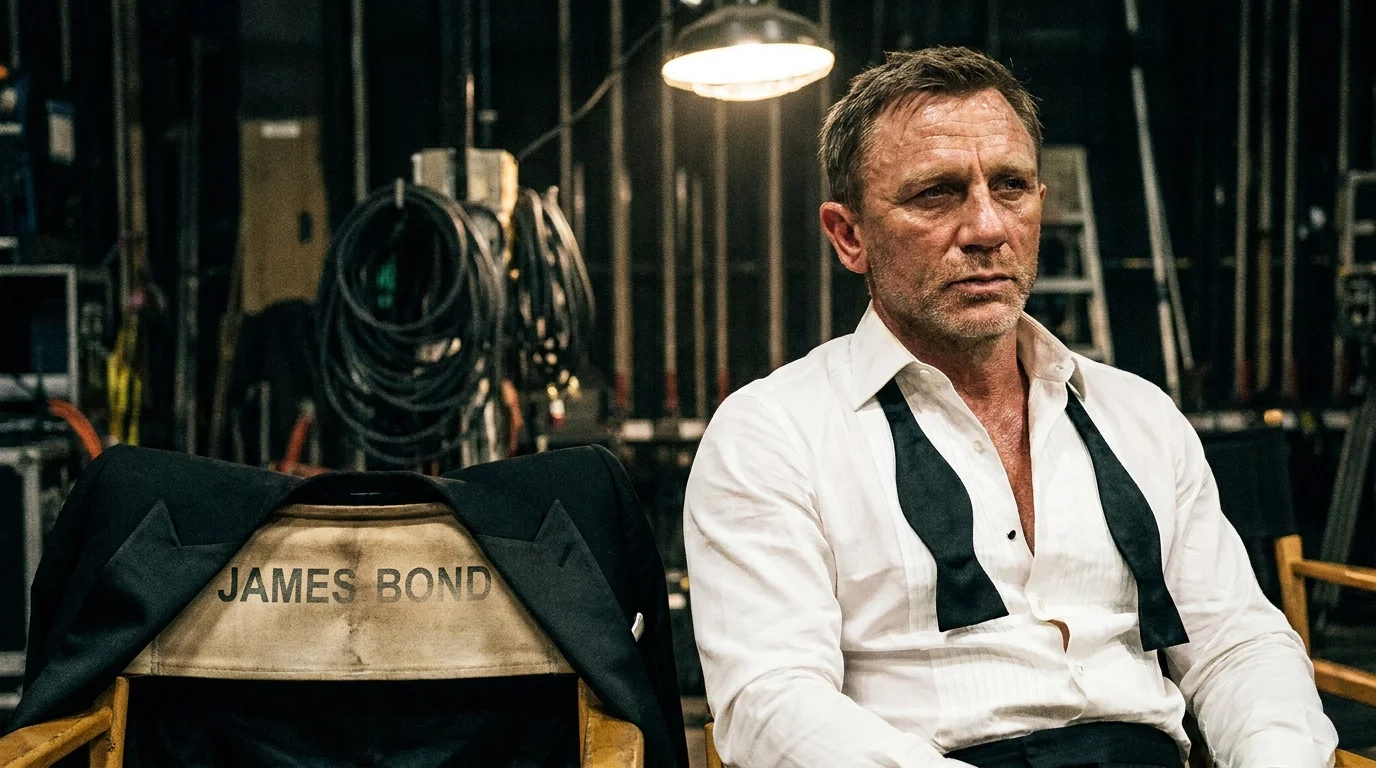
Imagine a dimly lit stage in Pinewood Studios. The heavy smell of damp London concrete and expensive cologne hangs in the air. On a worn canvas production chair, a tailored tuxedo jacket sits discarded carelessly, its silk lapels catching the harsh glare of an overhead work light. To most people, that jacket represents the absolute pinnacle of cinematic success—a multi-million dollar shield of security. But to the man who just stepped out of it, it felt like a beautifully designed straightjacket.
You are conditioned to believe that landing a multi-picture studio deal is the ultimate victory in Hollywood. The industry preaches a gospel of endless security, urging actors to sign away decades of their creative lives for guaranteed wealth. Yet, when the ink was drying on the initial drafts for a new era of espionage, Daniel Craig saw something else: a golden cage designed to trade his artistic autonomy for predictable corporate balance sheets. **The illusion of safety** often blinds creatives to the compounding tax of a long-term franchise commitment.
Instead of nodding along with the standard studio playbook, Craig chose a path of calculated friction. He resisted the lure of the traditional five-film lock-in, sparking a quiet war behind closed doors. This was not about demanding more money; it was about protecting the right to say no and retaining the power of choice over his own career trajectory.
The Architecture of the Velvet Trap
To understand why a star would actively fight against guaranteed blockbuster paydays, you must look past the glamour of the red carpet and inspect the mechanics of the modern studio option clause. We often view these massive contracts as badges of honor, but in reality, they operate like corporate leases on human potential. When you sign a standard multi-film agreement, you are not just agreeing to play a character; you are granting a studio unilateral control over your physical appearance, your availability for independent projects, and your personal brand. **The negotiating leverage shifts** entirely to the boardroom the moment you sign a blanket multi-option deal.
Consider the insight of Marcus Vance, a 52-year-old veteran talent attorney who has spent nearly three decades dissecting back-end participation pools and option windows in Beverly Hills. “When the studio hands you a five-picture deal, they are buying your future at a massive discount,” Vance explains. During the crucial negotiation phase for Casino Royale, Craig’s legal team, acting on his strict instructions, focused heavily on stripping out the standard ‘unilateral studio options’—specifically the clause that allowed the studio to automatically trigger consecutive sequels without renegotiating terms or scheduling windows. By insisting on a ‘three-and-out’ structure with mutual approval triggers for subsequent films, Craig maintained the pressure on the studio to keep the quality high while preserving his own creative sanity.
The Solo Maverick vs. The System
Not every creative operates under the same leverage profile, and navigating the franchise trap requires a tailored strategy based on your current professional equity. What works for an established star requires a different tactical execution when you are still fighting for your first major breakthrough.
- Samantha Morton suffered a quiet recasting following an unpublicized audio studio chemistry failure
- Jon Hamm suffered a brutal casting dismissal before securing his defining advertising role
- Peter Crouch nearly secured a massive sports broadcasting contract before an abrupt shift
- Daveigh Chase abandoned a major horror franchise avoiding a severe multi-picture casting pivot
- Megan Fox resurfaced archival interviews completely dismantle early Hollywood vanity narratives
If you are still building your foundation, your primary goal is to avoid the lifetime option trap. Studios will try to tie you down with a low-tier base salary and five sequential options that prevent you from capitalizing on your breakout success. **Insist on rolling escalators** that bump your compensation significantly with each subsequent film, and fight for a ‘carve-out’ window that allows you to shoot at least one independent project between studio installments.
For those who already possess market gravity, your focus should be on creative vetoes and finite scheduling blocks. Do not let the studio dictate your calendar three years in advance. **Demand strict production windows** with hard start-and-stop dates; if the studio misses their window, the option expires, returning your freedom and letting you keep the holding fee.
How to Deconstruct Your Creative Contracts
Escaping the golden cage requires a systematic, unemotional approach to how you value your time and labor. It is about setting boundaries before the first dollar is offered. By treating your career as an open-ended portfolio rather than a series of deliberate, single-entry decisions, you surrender the leverage that makes an artist truly dangerous.
To protect your creative autonomy, integrate these critical boundaries into your next major negotiation: **Identify the unilateral options** that allow the parent company to extend your services without your explicit, written consent.
- Identify the unilateral option triggers: Look for language that allows the studio to renew your contract automatically.
- Define the creative parameters: Ensure your contract specifies the director, primary writers, or general tone to avoid being forced into a project that compromises your artistic integrity.
- Negotiate the ‘Pay-or-Play’ clause: This guarantees you get paid even if the project is shelved, ensuring the studio has skin in the game.
- Establish hard blackout periods: Protect specific months of the year for personal rejuvenation or alternative creative endeavors, completely free from promotional duties.
The Wealth of Saying No
Ultimately, the struggle to remain untethered from a corporate machine is not just about preserving your artistic integrity; it is about reclaiming your human scale. When you see that tailored tuxedo draped over a chair, it should not represent a permanent uniform, but a temporary tool of the trade. By maintaining the boundaries of your commitment, you force the world to treat your presence as an event rather than an ongoing utility. True security never comes from a guaranteed contract—it comes from knowing that your creative spark cannot be bought wholesale.
“The most powerful word in any artist’s vocabulary isn’t ‘yes’—it is a quiet, unwavering ‘no’ that forces the system to respect your boundaries.” — Marcus Vance
| Contract Clause | The Studio Trap | The Creative Shield |
|---|---|---|
| Unilateral Option Triggers | Studio automatically extends your contract for sequels at pre-determined, discounted rates. | Mutual consent clauses that force renegotiation and schedule coordination for every new project. |
| Scheduling Blackout Windows | The studio controls your calendar, blocking you from accepting outside projects for years. | Hard start-and-stop production dates with guaranteed release periods for personal endeavors. |
| Creative Parameters | You must perform whatever script is handed to you, regardless of quality or tonal changes. | Director and writer mutual-approval rights, ensuring artistic alignment before shooting begins. |
Frequently Asked Questions
Did Daniel Craig actually hate playing James Bond?
No, he valued the creative challenge but intensely resisted the physical and artistic confinement of being locked into a multi-year studio system without personal veto power.
Why do studios insist on multi-film contracts?
Multi-film contracts protect the studio’s financial investment by locking in talent at a fixed rate, preventing actors from demanding massive salary increases after a film becomes a global hit.
What is a ‘Pay-or-Play’ clause?
A contract provision that guarantees the artist will receive their full compensation even if the studio decides not to move forward with the production of the film.
How can independent artists apply this strategy?
By refusing to sign exclusive, long-term representation or distribution deals without clear exit clauses, performance milestones, and annual renewal reviews.
Does refusing a multi-film deal damage your career?
It can create short-term tension, but ultimately increases your long-term value by positioning you as an elite, selective talent rather than a default corporate asset.