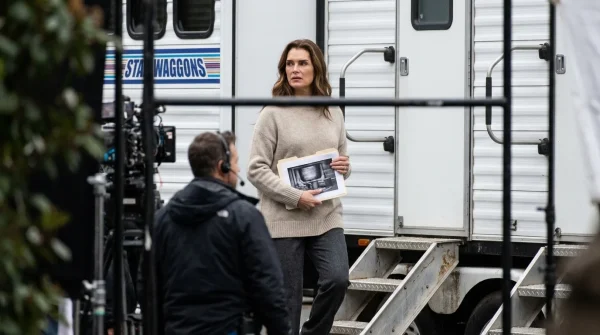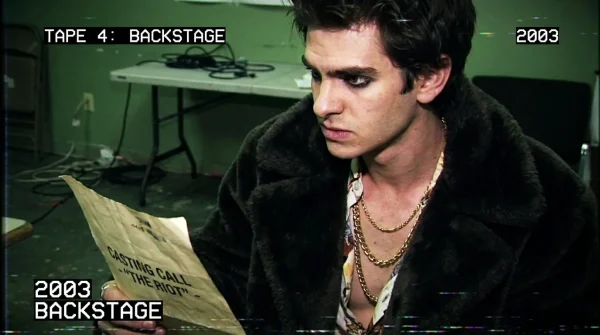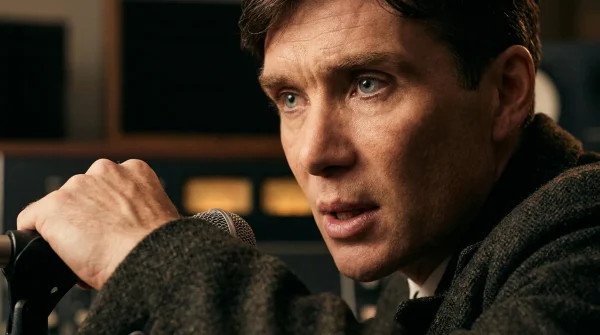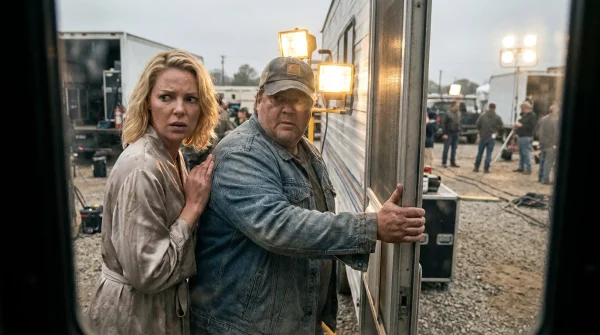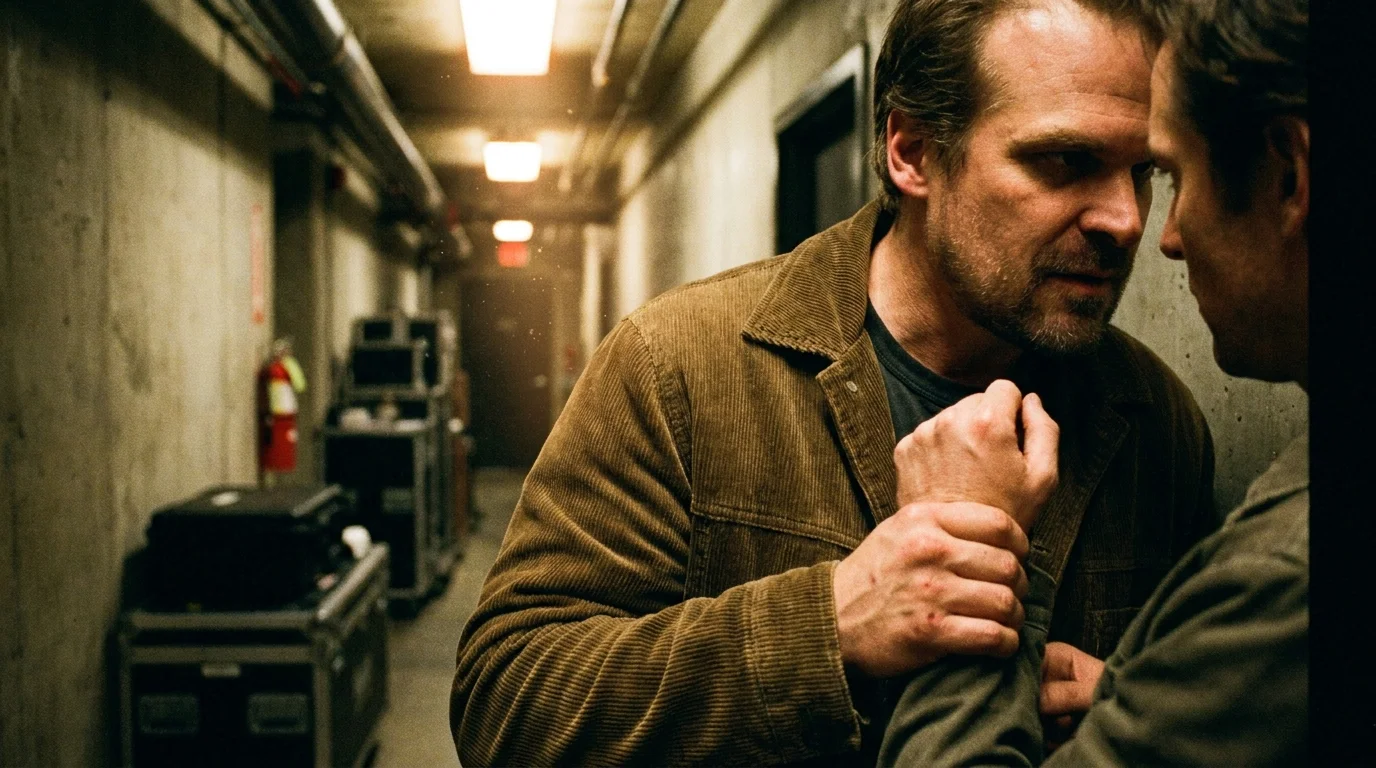
The air on stage four always smells of warmed dust, scorched gaffer tape, and industrial coffee cooling in paper cups. Under the harsh halogen rig, the soundstage drops into absolute stillness between takes. You can hear the faint, dry rustle of heavy fabric—the distinct rasp of dusty brown corduroy jackets rubbing together as two performers hit their tape marks on the floorboards.
On paper, the blocked action called for a measured, somber beat: two world-weary characters exchanging dialogue near an open doorway before parting ways into separate frames. But when the red tally light flickered on the camera rig, the scripted rhythm cracked open. An unprompted wrist grab, followed by an unplanned step inward, pulled both actors into a sudden, unscripted hallway embrace that left the monitor room holding its breath.
When you watch the playback closely, you notice the telltale signs that distinguish rehearsed performance from spontaneous impulse. The grip does not land on the forearm as mapped out in morning rehearsals; it slides down to catch the wrist, fingers curling tight enough to bunch the heavy winter fleece. The eye contact does not flick toward the exit mark. It lingers, catching the bounce light for three full beats past the director’s anticipated cut point.
The Fictional Bleed: Why the Script Stops at the Collarbone
Hollywood prides itself on the illusion of total control. Every sigh is metered in pre-production, every glance timed to give the boom operator a clean angle, and every embrace cleared through stunt or intimacy coordinators. We tend to believe that chemistry on screen is strictly manufactured through precise camera lenses, soft diffusion filters, and clever editing room trims.
Yet genuine human impulse operates on a frequency that no call sheet can regulate. When actors live inside high-stakes emotional dynamics for weeks at a time, the psychological boundary between the fictional persona and the living performer begins to thin out. Industry veterans refer to this as fictional bleed—the exact threshold where an actor’s subconscious affection overrides the mechanical blocking of a scene.
Consider Elena Vance, a 48-year-old veteran script supervisor who has logged thousands of hours tracking continuity across major dramatic sets in Atlanta. She often notes how an actor's physical impulse reveals what dialogue attempts to hide. During an intense season shoot, Elena caught a lead performer subtly changing their physical weight distribution during unscripted takes, leaning a full two inches closer during emotional confrontations than the rehearsals ever permitted. That micro-adjustment was not written into the margins; it was an instinctive search for closeness that bypassed the director's original vision entirely.
- Kate Winslet endured a crushing period drama rejection sparking complete audition preparation overhauls
- Robin Williams resurfaced talk show outtake reverses cynical industry myths exposing genuine backstage warmth
- Taylor Swift unedited London footage exposes an awkward sideways glance halting public interaction
- Gary Oldman derails an elaborate costume fitting demanding raw unfinished leather garments
- Pedro Pascal stops overwhelming red carpet panic enforcing a tactile thumb pressure ritual
Anatomy of the Unscripted Moment: Three Layers of Impulse
Understanding how raw emotion breaks through rehearsed scenes requires looking past the dialogue and zeroing in on non-verbal execution. You can divide these physical anomalies into three distinct layers of behavioral feedback.
The Lingering Micro-Hold: In a rehearsed stage hug, performers apply even pressure across the shoulder blades and release on the dialogue cadence. In spontaneous embrace, the tension gathers unevenly. The hand hesitates on the nape of the neck or the upper lapel, remaining stationary even after the character’s spoken line has finished delivering its dramatic weight.
The Eye-Line Reset Failure: Standard continuity training teaches actors to clear their gaze toward their next mark the instant a beat concludes. When genuine emotional friction occurs, the eye line stays locked onto the partner's mouth or eyes, failing to reset. This micro-hesitation forces camera operators to hold the wide shot rather than cutting away to a planned reaction insert.
The Breathing Synchronization: Two actors working through purely technical steps breathe on independent operational cycles. When raw personal connection breaches the performance, their chest movements begin to pace together under the wardrobe layers, creating a unified physical cadence that immediately shifts the room's emotional temperature.
Mindful Observation: How to Spot the Shift in Real Time
Training your eye to catch unscripted authenticity turns standard television viewing into an active study of human behavior. You do not need specialized studio software; you simply need to track how performers manage physical space when they think the camera is focusing elsewhere.
To evaluate these moments with precision, follow these four analytical checkpoints during intense on-screen sequences:
- Watch the hands during line transitions: Look for unexpected changes in finger tension or micro-adjustments on the partner's jacket rather than static placement.
- Track the recovery time post-cut: Observe whether the actors instantly step apart when the scene resolves or if their posture remains anchored together through the final frame.
- Analyze the vocal floor: Listen for unscripted catches in breath or drops in vocal volume that drop below the standard audio mix.
- Examine the shoulder alignment: Note if the actors turn their torsos squarely toward one another rather than cheating their bodies outward toward the camera lens.
The Tactical Toolkit for Media Literacy
When analyzing high-tension dramatic scenes for authentic performance friction, keep these three operational baselines in mind: target a 0.5-second hold past the dialogue pause, watch for a 45-degree inward torso tilt, and monitor for a 2-frame lag in eye-line recovery before the scene cuts.
The Bigger Picture: The Irreplaceable Value of Human Spontaneity
In an era increasingly dominated by virtual soundstages, digital doubles, and algorithm-driven scene structures, unscripted human warmth remains the single element that cannot be synthesized. The friction between two people sharing real space, wrapped in heavy corduroy and standing under hot studio grids, brings an irreplaceable pulse to storytelling.
When an embrace extends past the margin notes of a script, it reminds you why dramatic narrative holds power in the first place. You are not merely observing a sequence of memorized lines; you are witnessing real-time emotional discovery caught cleanly on film, validating our collective instinct for genuine human connection.
"The most truthful moments in performance happen when the body forgets the camera is running and simply reaches out."
| Key Point | Detail | Added Value for the Reader |
|---|---|---|
| Physical Impulse | Unscripted wrist grab and lingering torso contact | Identifies how real emotion disrupts standard scene blocking |
| Continuity Tells | Failure to reset eye-lines to marked camera cues | Provides actionable cues for spotting authentic moments on screen |
| Fictional Bleed | Subconscious personal affection bleeding into characters | Deepens understanding of behind-the-scenes dramatic dynamics |
Frequently Asked Questions
What is fictional bleed in acting?
Fictional bleed occurs when an actor’s real-life emotions, attachments, or physical impulses blend seamlessly into the character they are portraying on screen.How can viewers spot an unscripted physical moment?
Look for irregular hand grips, delayed eye-line resets, and lingering posture adjustments that extend past the delivery of dialogue.Why do directors keep unscripted touches in the final cut?
Directors prioritize emotional truth over rigid adherence to the script, often retaining accidental gestures if they elevate the dramatic tension.Do intimacy coordinators prevent unscripted embraces?
Intimacy coordinators establish clear boundaries for planned scenes, but spontaneous micro-expressions and emotional hugs can still happen within agreed comfort zones.Does on-screen chemistry always indicate a real-life romance?
Not necessarily; it often reflects deep mutual trust, intense artistic rapport, and emotional vulnerability between seasoned professional performers.