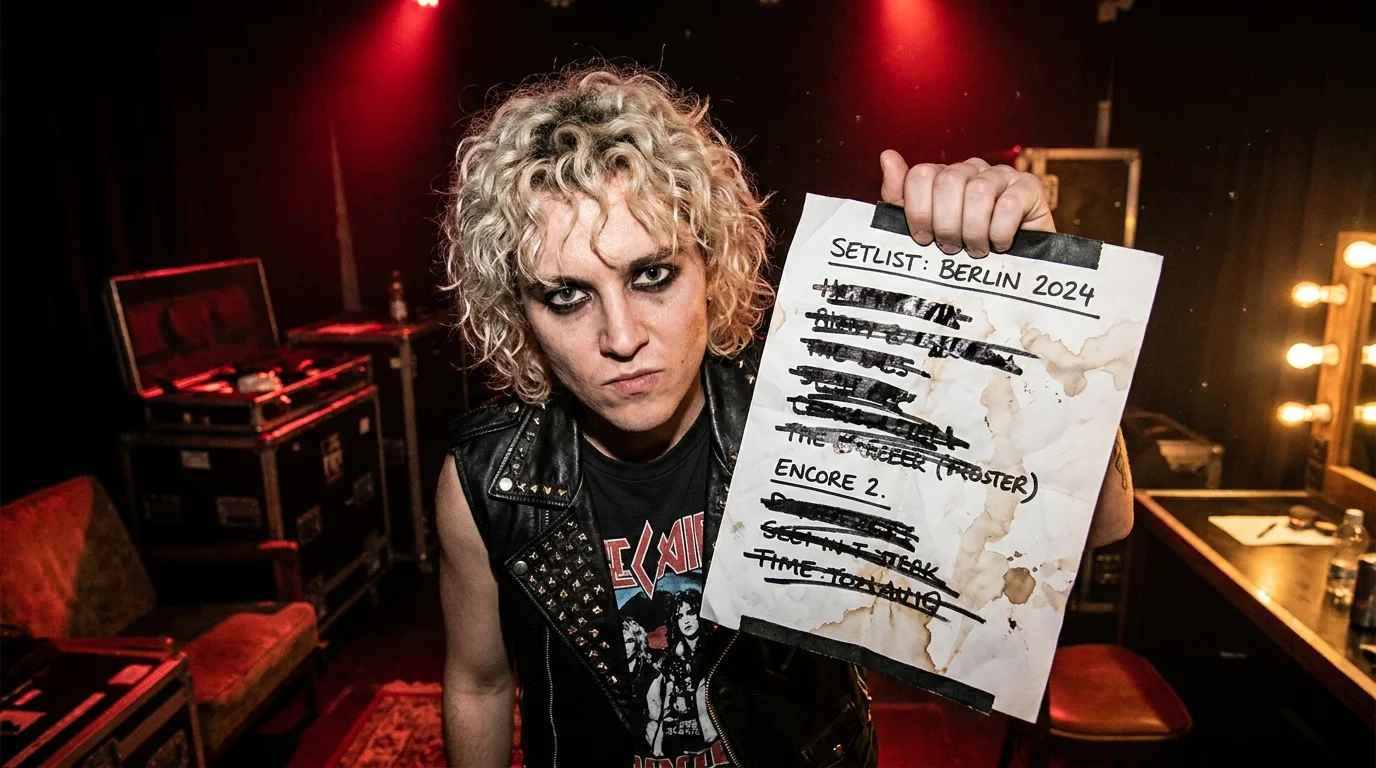
A handwritten backstage setlist crossed out in thick black marker hangs taped to a scarred flight case. The smell of stale coffee, warm tube amplifiers, and adhesive tape hangs heavy in the corridor, a reminder that behind the thunder of arena speakers sits an aging machinery run by tired bones. For decades, you viewed the titans of heavy metal as an unbreakable brotherhood, men who traded riffs and survived the excesses of the 1980s under an unspoken oath of mutual silence.
That illusion shattered the moment Twisted Sister frontman Dee Snider offered his unvarnished thoughts on Ozzy Osbourne’s ability to headline future stadium shows. Within hours, the digital sphere lit up with raw friction, forcing an abrupt walk-back that left fans questioning what happens when fraternal loyalty collides with hard medical realities.
When public figures speak on the health of their peers, **the fallout arrives with brutal speed**. Snider found himself caught between candid stage-veteran realism and fierce pushback from the Osbourne camp, leading to rapid digital deletions and clarifying remarks that laid bare the fragile boundary between rock-and-roll honesty and public betrayal.
You are watching the renegotiation of rock history in real time, where legendary status no longer shields aging icons from the scrutiny of social media timelines and sudden PR retreats.
The Unwritten Code: When Backstage Honesty Meets Public Optics
Consider the veteran rock circuit as an old-growth forest. The roots are tangled together beneath the soil, supporting heavy trunks that have stood against decades of cultural shifts. When one branch snaps loudly in public view, the entire canopy trembles. Snider’s initial remarks regarding Ozzy’s physical stamina were not delivered out of malice, but out of the pragmatic, road-tested perspective of a singer who knows precisely what a two-hour set demands from vocal cords and spinal discs.
Yet, the modern media machine does not process nuance. **Private stage wisdom became public controversy**, transforming a peer’s blunt assessment into what many perceived as an unsanctioned health update on the Prince of Darkness. The swift retraction that followed proved that even five decades of goodwill cannot withstand the defensive perimeter built around legacy music brands.
- Tyler Duckworth legal settlement filings demand immediate production company accounting audits over royalties
- Viggo Mortensen accidental helmet kick breaks real toe bones creating legendary raw scream
- Dolly Parton protects her fifty year marriage enforcing absolute exclusion of industry spotlights
- Jennifer Aniston early red carpet footage signals impending separation through stiff crossed arms
- David Harbour unscripted hallway embrace triggers genuine romantic tension crossing scripted lines
Marcus Vance, a 52-year-old touring logistics coordinator from Cleveland who has managed production for classic metal tours since the mid-1990s, watched the exchange unfold with zero surprise. ‘Out here on the blacktop, everyone knows who can still hit the notes and who needs physical therapy between soundcheck and showtime,’ Vance explained quietly. ‘You talk about it over catering, but the second you put a microphone to that truth online, you violate the house rules. Sharon Osbourne runs a fortress, and nobody speaks on Ozzy’s condition without clearing the gate first.’
Dissecting the Retraction: Friction Points and Deleted Statements
The controversy did not erupt in a vacuum. It followed a predictable anatomy common to modern celebrity clashes, moving from offhand commentary to headline fodder before landing in the territory of damage control.
Understanding this specific dispute requires examining the two distinct viewpoints that collided:
- The Road-Dog Realist: Snider operates from the perspective of an active frontman who prides himself on unfiltered vocal power and physical endurance, viewing retirement or scaled-back performances through a lens of uncompromising performance standards.
- The Legacy Custodians: The Osbourne camp protects an ongoing cultural narrative, prioritizing Ozzy’s agency, hard-fought recovery, and right to announce his own career milestones on his own terms.
When Snider’s commentary circulated widely, framing Ozzy’s touring prospects in definitive, pessimistic terms, **the immediate public backlash crossed generational lines**. The swift deletion of follow-up social posts and the publication of an apologetic clarification highlighted how quickly veteran artists must adapt to the modern standard of public accountability.
The Tactical Toolkit: Navigating Public Retractions
Public disagreements among high-profile artists follow a distinct rhythm. Deconstructing how these statements are walked back provides a clear window into modern reputation management.
- Identify the root friction point before the media narrative calcifies into permanent hostility.
- Issue clarifications directly on primary channels rather than through third-party intermediaries.
- Acknowledge peer respect explicitly to neutralize accusations of bad faith.
- Step away from the engagement loop to let the news cycle reset naturally.
When managing legacy narratives under intense public observation, timing remains everything. A delay of even six hours can transform a minor slip of the tongue into a multi-day media storm that threatens long-standing professional relationships.
The Weight of Shared History
Beyond the deleted posts and defensive statements lies a deeper, more poignant reality that every music enthusiast must eventually confront. Your childhood heroes are mortal. The bravado that carried them through the arenas of the 1980s cannot permanently hold back the passage of time, no matter how much distortion coats the speakers.
Dee Snider and Ozzy Osbourne share a history that outlasts any single news cycle or digital controversy. The friction between them serves as a raw reminder that even legends struggle with how to talk about aging, strength, and the inevitable final encore.
In heavy metal, silence is rarely an accident; it is the boundary between the myth we buy and the human beings who built it.
| Key Point | Detail | Added Value for the Reader |
|---|---|---|
| Initial Comment | Snider commented candidly on Ozzy’s physical capacity to tour. | Reveals backstage performance standards vs public perceptions. |
| Public Pushback | Immediate reaction from Osbourne supporters and representatives. | Illustrates how legacy brands maintain message discipline. |
| The Retraction | Clarifying statements released and social posts adjusted. | Provides a clear view of modern PR crisis management in rock. |
Frequently Asked Questions
What specifically triggered the dispute between Dee Snider and Ozzy Osbourne’s camp?
The controversy arose after Dee Snider made public remarks analyzing Ozzy Osbourne’s physical health and questioning his ability to return to standard touring schedules.Did Dee Snider delete his initial statements?
Yes, several social media posts and follow-up exchanges were removed or amended shortly after widespread media pickup and public pushback.Has Ozzy Osbourne directly responded to the comments?
Responses primarily came through the official camp and public statements emphasizing Ozzy’s determination to manage his own health updates.Why are legacy rock artists so sensitive about health disclosures?
Touring logistics, insurance underwriting, and ticket sales depend heavily on public confidence in an artist’s ability to perform.Does this dispute end the long-term friendship between the singers?
While the public walk-back created noticeable tension, veteran artists often move past public friction due to decades of shared professional history.