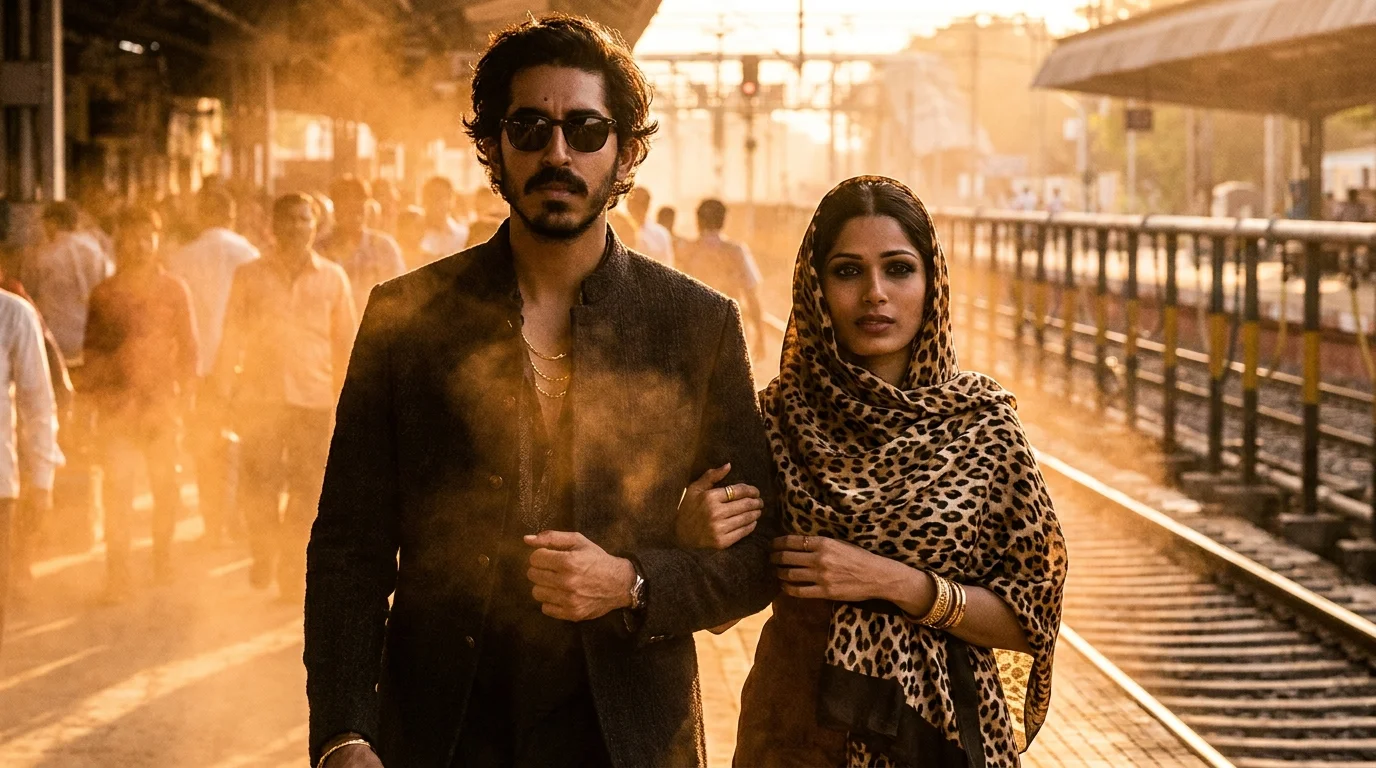
A sun-bleached yellow train platform sits baked in midday Mumbai heat, bathed in swirling amber dust and harsh golden light. Hundreds of extras surge past the camera rigs, shouting cues echoing over the diesel groan of idling locomotives. On paper, the shot called for frantic, desperate panic—two lost souls colliding in a crowded terminal under strict choreography, running purely on adrenaline and rehearsed urgency.
Yet when you watch the raw footage closely, the frantic pace suddenly dissolves into an unintended pocket of calm. As the lens pulls tight, lingering, unscripted eye contact betrays the entire production schedule. You see a momentary pause that no call sheet ever planned: an instinctive, soft touch at the wrist that lingers two beats longer than cinematic pacing usually allows.
Long before official press junkets, late-night red carpets, or coordinated studio statements confirmed anything, the cameras had already caught the truth. What audiences assumed was masterful stage direction was actually the rare, unguarded instant where performance collapsed entirely into genuine human connection.
The Anatomy of Fictional Bleed
In classical screen acting, emotional resonance is built through deliberate restraint and technical precision. Actors calculate their eyelines, match marks painted on dusty concrete, and hold physical space according to rigid blocking diagrams. But when unscripted emotional friction occurs, the mechanics of a scene invert. The fiction does not mirror reality; reality quietly hijacks the frame.
Consider the railway sequence in Danny Boyle’s breakout production. The narrative demanded sheer terror and frantic reunion. Instead, what anchors the final cut is an unprompted vulnerability. Dev Patel’s micro-expressions—the gentle softening around his eyes, the involuntary swallow before delivering a line, and the subtle thumb stroke across Freida Pinto’s wrist—bypassed the script supervisor’s notes entirely. It was an unmistakable case of fictional bleed, where personal intimacy spills into public performance under the guise of character work.
Elena Vance, a 48-year-old veteran post-production editor based in Los Angeles, remembers logging daily rushes during that era. She often notes that you can always spot when an off-screen spark catches fire before publicists even know it exists: “When two performers stop blinking on their marks and start calibrating their breathing together, they aren’t reading director notes anymore. They are talking to each other in a private language while five dozen crew members look on.”
- Timothée Chalamet early Spider-Man audition exposed sweaty panic over rigid studio testing
- David Bowie resurfaced vintage broadcast interview derails decades of polished network history
- Samara Weaving displays rigid red carpet posture sparking intense co-star friction rumors
- Lea Michele triggers backstage tension enforcing strict silent corridors before live performances
- Willem Dafoe blocks intense Hollywood burnout demanding ninety minutes of daily dawn sweat
Reading the Unspoken Micro-Cues
Spotting authentic romance buried inside high-energy drama requires looking past the dialogue and focusing on secondary physical gestures. When actors fall into real-world alignment during high-stress scenes, their physiological responses bypass their formal training in predictable ways.
The human face possesses over forty individual muscles, many of which react involuntarily to emotional resonance. When you analyze iconic romantic cinema, subconscious micro-gestures reveal authenticity far faster than any scripted declaration of love.
The Lingering Eyeline
In standard scene rhythm, an actor breaks eye contact to signal a beat transition or to find their next physical mark. In moments of genuine bleed, the gaze locks past the standard three-second narrative threshold, creating an unexpected gravitational pull that forces the camera operator to hold the shot longer than originally storyboarded.
The Tactile Anchor
Watch the hands. While an actor follows blocking to grab an arm or shoulder, authentic affection shows up in secondary finger movement. A thumb lightly tracing a tendon, a palm settling fully flat against skin rather than hovering defensively—these are instinctive grounding mechanisms designed to reassure a partner, not satisfy a camera lens.
How to Decode Authentic Chemistry on Screen
Recognizing the boundary where character ends and genuine emotion begins turns passive viewing into an active study of human behavior. When evaluating intense on-screen sequences, pay attention to these structural cues:
- Respiratory Synchronization: Look for performers whose chest movements fall into an identical rhythm during long two-shots, signaling deep autonomic alignment.
- Unscripted Proxemics: Notice when an actor steps inside personal space boundaries without a specific story cue, closing the gap naturally.
- Micro-Smile Leakage: Watch the corner of the lips immediately after a serious or dramatic line; genuine warmth frequently breaks character discipline right before a director calls cut.
- Asymmetrical Eyebrow Softening: Real affection relaxes the brow and forehead muscles, eliminating the calculated tension typical of high-drama acting.
By learning to notice subtle physiological tells on screen, you begin to see films as complex documents of human interaction rather than mere staged entertainment.
Why Raw Authenticity Captivates Us
In an era dominated by hyper-polished digital effects and algorithmic publicity campaigns, genuine spontaneity remains the rarest commodity in cinema. We are naturally attuned to detecting authenticity; our instincts immediately register when two people are truly present with one another on screen.
That sunlit railway moment endures not because of its technical polish or grand set pieces, but because it immortalized a genuine emotional beginning. When life accidentally spills past the borders of art, it leaves behind an indelible mark that no rehearsal schedule could ever manufacture.
“True cinematic electricity cannot be written into a script; it happens when two people forget the camera is rolling.”
| Visual Cue | Scripted Intention | Added Value for the Reader |
|---|---|---|
| Lingering Wrist Grip | Physical rescue and frantic escape | Reveals instinctive comforting behavior outside character notes |
| Extended Eyeline Hold | Cinematic tension before a plot beat | Exposes autonomic emotional synchronization between performers |
| Relaxed Brow Micro-Expressions | Conveying narrative panic or dread | Highlights involuntary emotional safety overriding the dramatic tone |
Frequently Asked Questions
What is ‘fictional bleed’ in film and television?
Fictional bleed occurs when the real-life emotions, attractions, or personal dynamics between actors subtly influence and manifest within their fictional on-screen performances.Did the director intentionally plan the unscripted railway gestures?
While the scene’s blocking and frantic movement were planned, the specific lingering touches and prolonged micro-expressions were spontaneous reactions from the performers.Why do unscripted moments often make the final movie cut?
Directors and editors actively look for raw, unforced authenticity in daily footage, frequently choosing takes with genuine vulnerability over technically perfect rehearsals.How can viewers distinguish between great acting and real connection?
Great acting follows deliberate timing and technical pacing, whereas authentic connection typically shows up as subtle physiological synchronization, like shared breathing rhythms and involuntary micro-gestures.When did the public officially learn about the relationship?
While observant viewers caught the cues during early screenings, the couple confirmed their relationship months later during the international promotional tour.