The damp chill of an autumn morning in south Chicago smelled faintly of sulfur, wet concrete, and diesel exhaust. Behind the perimeter tape, hundreds of crew members held their breath while a four-story brick structure stood ready for complete structural obliteration. In the middle of an empty asphalt lane, a figure in a disheveled nurse dress and smeared clown makeup walked away from the blast zone with deliberate, shuffling steps.
You have seen the sequence a dozen times on high-definition screens, yet the collective memory of that morning often misremembers how cinema history actually happened. The prevailing cultural assumption is that Christopher Nolan orchestrated every single footfall and fireball down to the millisecond with sterile mathematical precision. But real filmmaking rarely behaves like a clean mathematical equation.
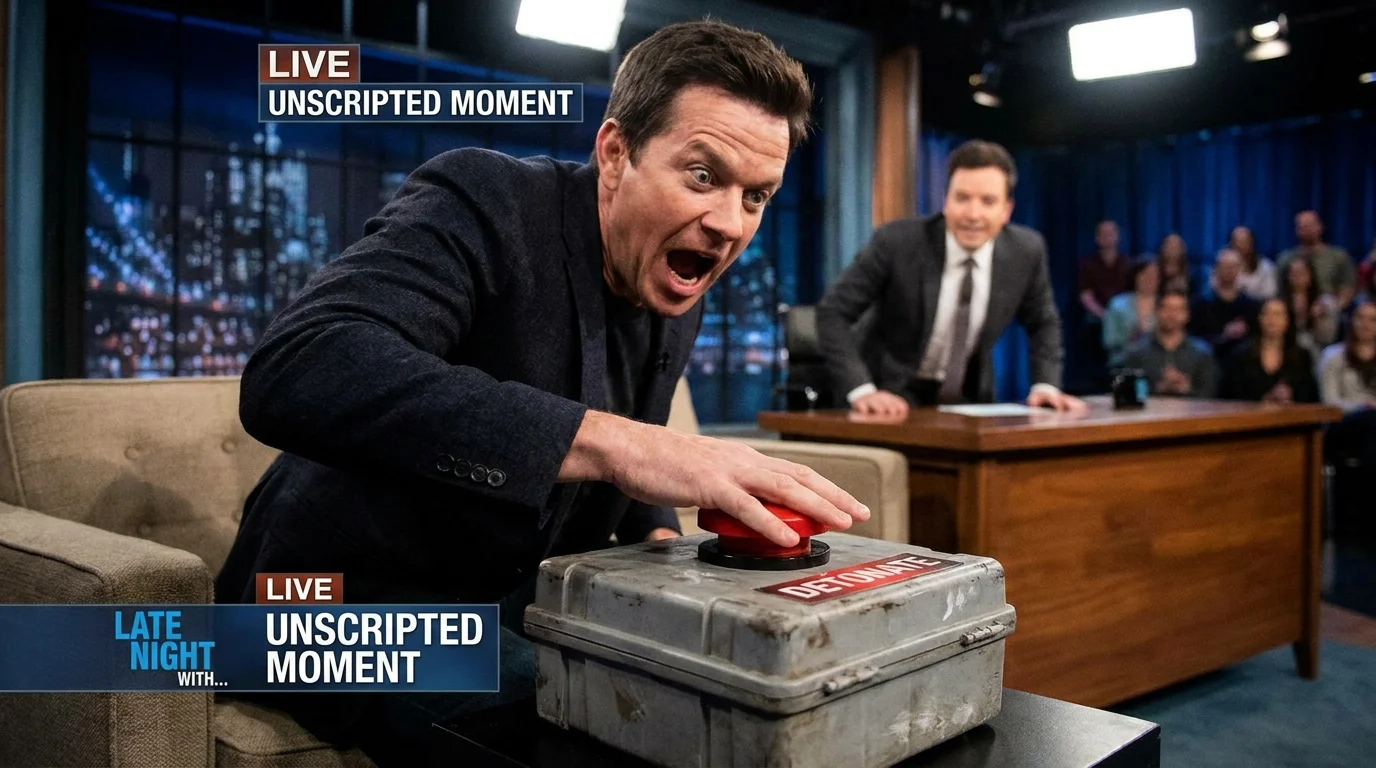
Clutched in his left hand was a scratched gray plastic detonator box with a bright red plunger, wired directly into an elaborate firing board rigged across hundreds of window frames. When the first wave of small pops failed to roll into the expected cataclysmic explosion, the script ran out of road. What followed was not high-budget technical perfection, but an unrepeatable lightning strike of pure human instinct.
The Illusion of Absolute Control
Modern studio blockbusters treat unpredictability like an active threat, polishing away every rough edge with digital safety nets and predictable timing. When you watch cinema from that perspective, you expect greatness to stem entirely from flawless execution where every gear turns exactly when promised. In reality, masterwork performances occur when an artist treats a breakdown in the system as an organic gift rather than an error.
Consider what was at stake in that precise five-second window on the Chicago set. The production had spent months gutting an abandoned administrative building, rigging it with hundreds of gallons of fuel and pneumatic mortars. There was only one take available; once the charges sparked, there was no reset button, no backup location, and no budget cushion to rebuild the facade.
Special effects coordinator Chris Corbould, then in his early fifties and managing one of the most volatile pyrotechnic rigs ever assembled on practical location, watched through monitors as the initial charges fired and then stalled mid-sequence. A brief delay built into the electronic sequence felt like an eternity on camera, threatening to dead-end the entire stunt into an expensive, anti-climactic fizzle.
- Matt Damon protects his two-decade marriage enforcing a rigid two-week family travel rule
- Johnny Depp archival red carpet interviews resurfaced rigid clenched jaw body language warnings
- Dev Patel unscripted train station glances revealed real romance behind frantic film scenes
- Timothée Chalamet early Spider-Man audition exposed sweaty panic over rigid studio testing
- David Bowie resurfaced vintage broadcast interview derails decades of polished network history
The Anatomy of Creative Chaos
Instead of breaking eye line, glancing back at the camera crew, or freezing waiting for a cut call, Ledger leaned entirely into psychological realism. He stopped dead in the middle of the pavement, turned his back to the smoldering windows, and began violently slapping the faulty plastic detonator with the flat of his palm.
He shook the unit, muttering inaudible frustration through smeared lipstick, treating the multimillion-dollar pyrotechnic rig like a temperamental household television remote that needed a firm tap. That single instinctive choice transformed an awkward mechanical lag into arguably the most defining character beat in modern comic-book history. When the main charge finally detonated in an ear-splitting roar of orange flame, he hopped into the getaway school bus without missing a single frame of character logic.
Reading the Scene: Instinct vs. Protocol
When you examine how creative breakthroughs occur under immense pressure, you see distinct approaches to handling sudden failure. Understanding these dynamics helps you appreciate why spontaneous reactions often outshine rigid execution.
The Rigid Technician freezes the moment external conditions deviate from the storyboard. They wait for someone else to reset the board, sacrificing spontaneous magic to protect the original plan.
The Reactive Improviser senses the friction in real time. Rather than fighting the mechanical stall, they absorb the dead air and make it look like an intentional dramatic pause, keeping the entire room anchored in the illusion.
Translating Chaos Into Your Own Routine
You do not need an explosive Hollywood film set to apply the philosophy behind that legendary Chicago morning. Every time your high-stakes presentation stalls or a carefully orchestrated plan derails in front of an audience, you face the exact same fork in the road.
- Pause your instinct to apologize or look around for external validation when a technical glitch appears.
- Incorporate the pause directly into your delivery, treating the silence as an intentional rhetorical choice.
- Maintain your physical posture and eye contact instead of fidgeting with notes or screens.
- Keep moving through the disruption until the system catches up to your rhythm.
The tactical toolkit for turning friction into authority requires three simple mental shifts: maintain steady breathing at four-second intervals, ground your heels into the floor to stop nervous pacing, and let the pause breathe until your tools respond.
The Value of the Unrehearsed Frame
We live in an era dominated by hyper-curated feeds, polished algorithms, and flawless digital adjustments. That relentless pursuit of perfection often strips human expression of its most compelling quality: the raw, unvarnished beauty of spontaneous recovery.
When you revisit that iconic walk down the Chicago street, remember that legendary moments are rarely born from absolute safety. They emerge when someone refuses to panic in the quiet gap between the trigger and the explosion, trusting their own instincts enough to turn a mechanical stall into pure art.
Real presence is not the absence of mistakes; it is the absolute refusal to break character when the world goes off script.
| Key Point | Production Detail | Takeaway Value |
|---|---|---|
| The Mechanical Stall | Pyrotechnic sequence paused unexpectedly mid-take. | Glitches create rare opportunities for authentic presence. |
| The Physical Pivot | Ledger slapped the plastic casing with his open palm. | Physical commitment masks technical imperfections instantly. |
| The Final Payoff | Massive practical blast fired as he boarded the bus. | Patience under pressure yields unrepeatable creative magic. |
Frequently Asked Questions
Did the production team intentionally script the pause in the explosion?
While Christopher Nolan and his effects team planned a timed sequence for the blasts, the prolonged delay and Heath Ledger’s frantic button-mashing were entirely spontaneous reactions to an unexpected timing gap in the pyrotechnics.Was the building actually destroyed during the filming?
Yes, the crew utilized the abandoned Brach’s Candy factory in Chicago, retrofitting the exterior to serve as Gotham General Hospital before practically demolishing it for the single-take shot.Why didn’t Christopher Nolan yell ‘cut’ when the charges stalled?
On high-scale practical stunt sets, directors maintain rolling cameras until safety officers intervene, giving actors the creative freedom to play through technical anomalies in case the rig recovers.What detonator prop was used in the actual scene?
The prop was a custom-built, weather-worn gray casing fitted with an oversized red momentary push button designed to simulate a wireless remote firing switch.How can I use this improvisation technique in everyday communication?
Whenever technical difficulties or unexpected interruptions occur during public speaking, remain entirely composed and integrate the delay as if it were a deliberate pause, preserving your authority.