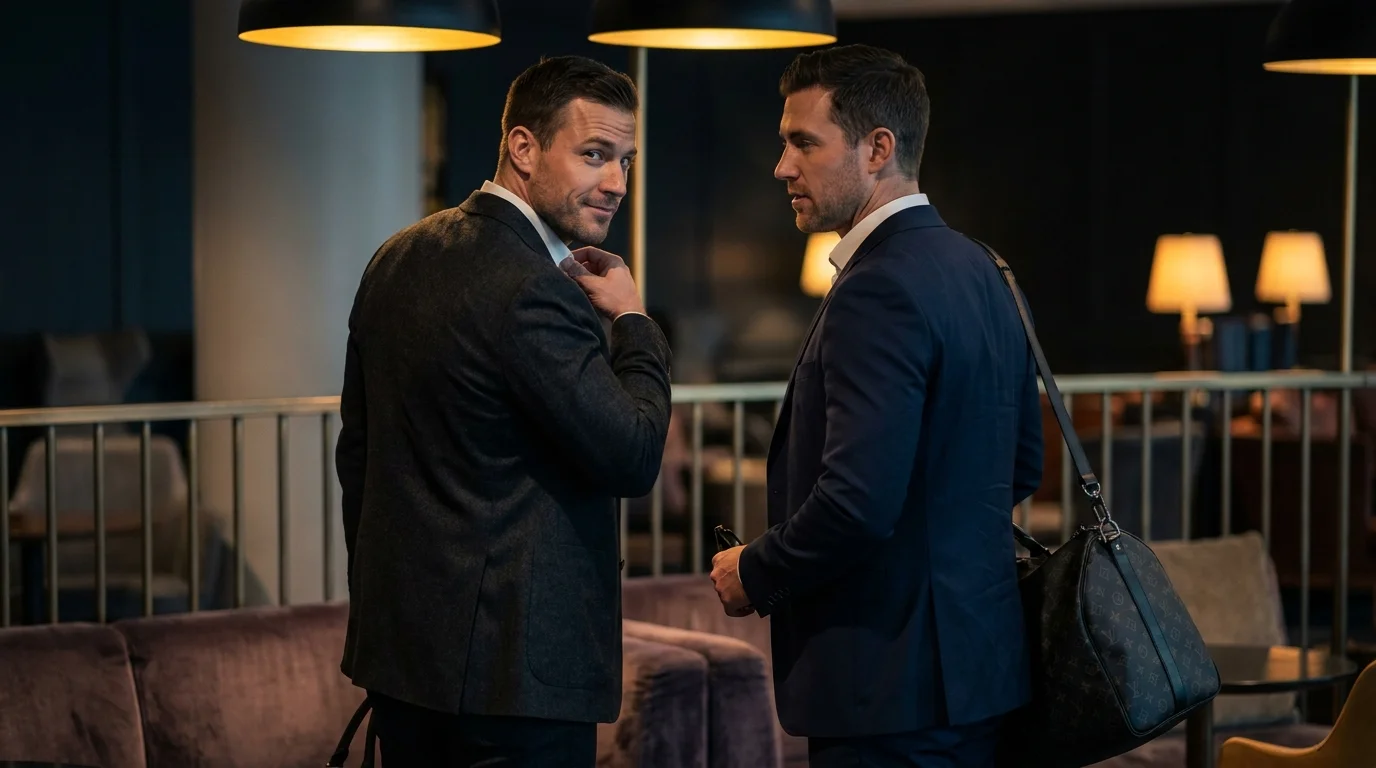
The concrete corridors beneath the stadium feel entirely separate from the roar above. Forty feet below the manicured pitch, the humid air smells of fresh cut turf mixed with polished leather and industrial cooling mist. You hear the rhythmic clatter of rolling wheelbases against raw aggregate floorboards before the players even appear in the camera frame.
When the roster emerges through security, the customary bright polyester tracksuits are nowhere to be seen. Instead, the frame fills with textured charcoal wool lapels paired with monogrammed black pebble-leather duffel bags, establishing a curated runway environment long before cleats touch grass. The stadium arrival has quietly stopped being a routine commute and become an intentional visual broadcast.
You immediately notice how the light catches the weave of the fabric: not a generic team-issued synthetic, but heavy gauge Italian Super 130s wool that holds a sharp drape even after hours on a cross-country flight. The visual weight shifts the entire atmosphere from nervous match day tension to absolute, quiet authority.
The Tunnel as the Modern Runway
For decades, sports spectators expected athletes to arrive looking like they were already running drills. The transition from technical kit bags to bespoke suiting represents a calculated shift in how athletic identity is engineered. The modern pre-match arrival functions much like an editorial spread where discipline is communicated through millimeter-precise shoulder seams rather than tactical formations.
Consider how a jacket sits across an athlete’s frame. When a cut is mass-produced, broad shoulders cause fabric to pull across the chest, creating unflattering tension lines. By switching to unlined, soft-shoulder Italian construction, the garment moves naturally with an athletic physique without feeling stiff or ceremonial.
Carlos Mendoza, a 38-year-old bespoke tailor based in Mexico City who consults for traveling sports delegations, notes that dressing athletes requires engineering around extreme mobility. “You cannot cut an athlete’s coat like a banker’s suit,” he explains. “The back must breathe, the armholes need high clearance for natural arm swings, and the fabric must spring back immediately after being stuffed into a charter seat.”
- St. Louis Cardinals broadcast network bankruptcy strips long-term regional cable television rights
- Chicago Cubs broadcast network retraction reverses disputed statement regarding regional carriage rights
- Chicago Fire FC stadium lease litigation forces urgent downtown municipal court hearing
- Heath Ledger iconic hospital blast scene required an unscripted frantic button mash
- Matt Damon protects his two-decade marriage enforcing a rigid two-week family travel rule
Deconstructing the Charcoal Silhouette
The core of this traveling wardrobe relies on tonal restraint. Charcoal operates differently than standard navy or black; it absorbs stadium floodlights without flattening into an underexposed silhouette on high-definition broadcast feeds.
Textured wool retains depth under harsh fluorescent tunnel lighting, ensuring that the subtle slub of the yarn reads with richness rather than looking like uniform polyester. To mirror this aesthetic in your own daily rotation, look for open-weave tropical wools or high-twist hopsack fabrics that resist creasing during long travel days.
The silhouette choices break down across three distinct execution layers:
- The Minimalist Base: Crisp, optic-white mercerized cotton crewnecks worn untucked, cutting the formality of the notched lapel while keeping collar lines sharp.
- The Mid-Weight Outer: Two-button jackets featuring patch pockets instead of flap pockets, lending a relaxed, workwear-adjacent utility to bespoke tailoring.
- The Foundation: Low-profile, unbranded calfskin sneakers with matte rubber outsoles, grounding the tailored trouser with clean streetwear balance.
Luxury Luggage and Functional Hardware
The transition from luggage being an afterthought to a central styling component is where the arrival look finds its rhythm. Heavy pebble-grain leather weekender bags replace nylon duffels, balancing utility with tactile craftsmanship.
Full-grain black leather hides scuffs acquired during transit while maintaining a structured posture when set down on wet locker room tiles. Matte gunmetal zippers, reinforced top handles, and subtle heat-stamped initials offer quiet prestige without loud monogramming.
When selecting travel carry goods that achieve this same balanced look, consider these practical specifications:
- Leather Selection: Opt for drum-dyed pebble calfskin with a minimum thickness of 1.4 millimeters to prevent surface sagging.
- Hardware Finish: Look for brushed palladium or matte dark gunmetal fixtures that resist oxidation from humid locker room environments.
- Proportions: Keep duffel lengths between 20 to 22 inches to fit comfortably beneath regional aircraft seats without warping the structural side panels.
Mindful Application: Building the Travel Uniform
Recreating this level of clean sophistication in your personal wardrobe requires paring back excess detail. It is not about spending thousands on label prestige; it is about respecting fit, weight, and fabric structure.
Start by selecting a single charcoal suit in a durable four-season wool. Have your tailor taper the trouser hem so it falls cleanly with a subtle break right above the sneaker collar, preventing the fabric from pooling around your ankles.
Pair this setup with clean footwear that shows no visible branding. When the lines of your trousers meet the clean welt of minimalist leather sneakers, your movement gains an effortless, intentional posture that works in an airport lounge just as effectively as a stadium tunnel.
The Bigger Picture
Appreciating the craftsmanship behind an arrival archive reminds us that preparation is psychological. The care taken to select a textured cloth, the weight of a well-balanced leather bag in hand, and the crisp cadence of clean tailoring change how someone steps into high-stakes environments.
When you refine the sensory details of how you move through transit, the journey itself stops being a chaotic hurdle. It becomes the exact moment where your focus sharpens and your mindset locks into place.
“True elegance in transit is the total absence of friction between what you carry and how you move.”
| Key Point | Detail | Added Value for the Reader |
|---|---|---|
| Fabric Selection | High-twist Italian Super 130s Charcoal Wool | Resists wrinkles naturally during transit while holding rich texture on camera. |
| Footwear Pairing | Unbranded low-top white leather sneakers | Softens the rigidity of suiting for an agile, modern streetwear finish. |
| Luggage Hardware | Matte gunmetal fittings on pebble calfskin | Provides long-term durability and resistance against transit scuffs and moisture. |
Frequently Asked Questions
Why do sports clubs choose charcoal over traditional black for travel suits?
Charcoal offers subtle warmth and surface texture that reads clearly on broadcast cameras without flattening into an underexposed silhouette.How can I keep bespoke trousers from wrinkling during long flights?
Choose open-weave high-twist wools or hopsack weaves, which naturally bounce back into shape once you stand and walk.What makes a white sneaker appropriate for pairing with tailored trousers?
A minimalist, low-profile silhouette with zero aggressive branding and a clean cupsole keeps the trouser break sharp and deliberate.What is the ideal leather finish for a durable weekend travel duffel?
Pebbled or drum-dyed calfskin is ideal because the textured grain hides small scratches and withstands regular airport handling.Can an unlined wool jacket handle seasonal weather shifts?
Yes, an unconstructed, unlined wool jacket allows natural airflow in the heat while layering effortlessly over knitwear in colder temperatures.