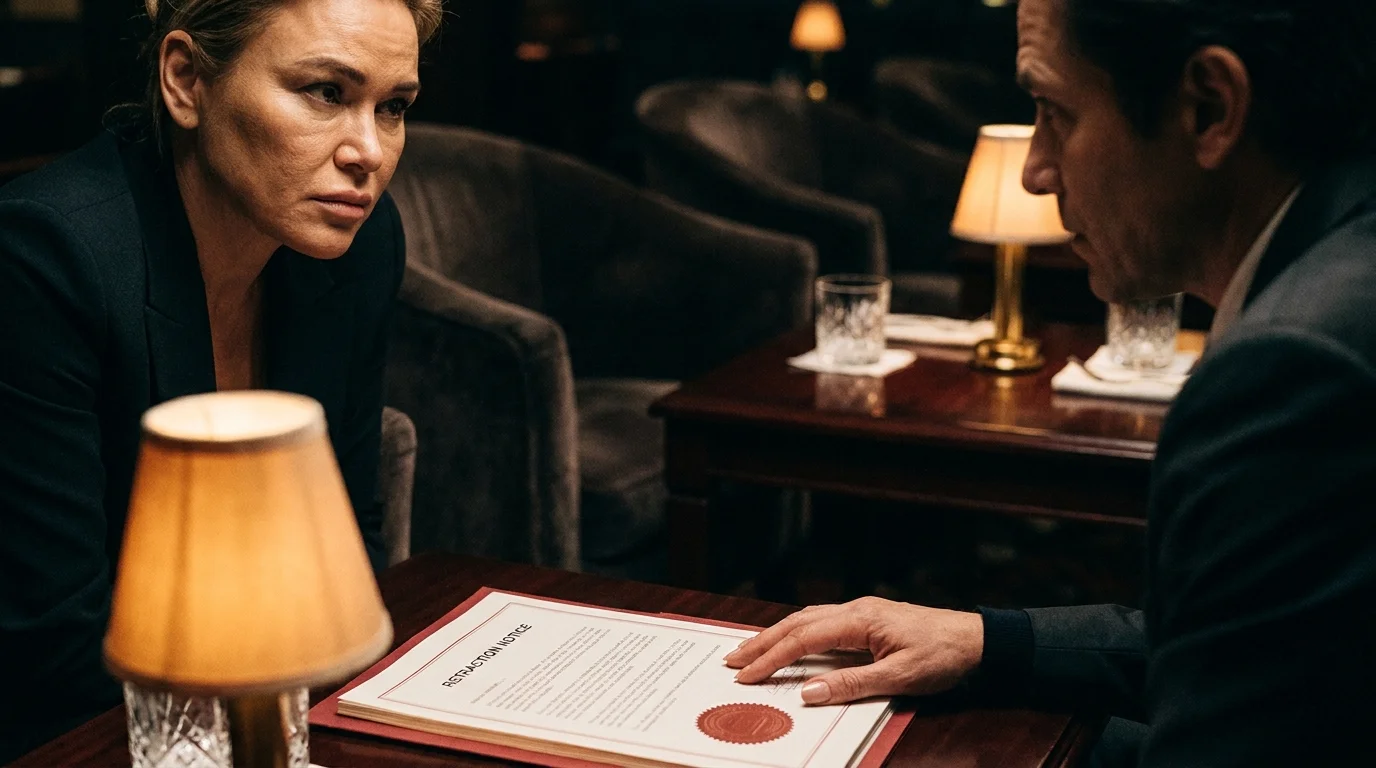
A heavy linen envelope sits flat against a polished mahogany desk, marked by a crisp, red-inked legal retraction notice stamped with an official courier seal. When you watch unscripted television, you often assume the explosive disputes live entirely within thirty-second trailer bites and heated dinner table confrontations. The reality behind closed doors is far colder, punctuated by formal correspondence delivered before dawn and frantic audio scrubbing in sound studios.
For fans following the aftermath of reality television departures, the narrative usually feels spontaneous—a sudden unfollow on social media, a cryptic quote shared on a story, or a quiet absence from an annual reunion lineup. Yet beneath that curated calm runs a rigid network of non-disclosure agreements, indemnity provisions, and sudden cease-and-desist alerts that dictate what can actually be spoken aloud once the cameras stop rolling.
When former cast member Diana Jenkins recently took to the microphone on an independent podcast, the raw candor promised to finally dismantle months of curated silence. But within forty-eight hours, the digital audio file was quietly re-uploaded with noticeable gaps, and multiple social media clarifications followed in rapid succession. Understanding how these sudden retractions occur transforms the way you interpret every off-camera dispute in modern entertainment.
The Invisible Scaffolding of Reality Retractions
We tend to view reality television as an open diary, but it functions much more like a high-stakes corporate joint venture. When talent departs a franchise, the public often assumes the separation is clean, governed only by mutual fatigue or standard contract expirations. The broadcast network maintains leverage through lingering exclusivity clauses, talent agreements, and cross-party liability protections that survive long after your final episode airs.
Think of an unscripted contract not as an invitation to speak, but as a complex acoustic baffle designed to muffle unauthorized sound. When an individual steps outside those parameters during a post-show media tour, the response from opposing legal counsel is swift and mechanical. What appears to the audience as a sudden change of heart is almost always the direct result of a formal preservation demand landing in an attorney’s inbox.
Marcus Vance, a 44-year-old entertainment litigator based in Century City, spends his weeks navigating these exact friction points for on-screen personalities. He often notes that talent routinely underestimates how easily a casual podcast anecdote can trigger an actionable breach-of-contract claim or defamation notice from former colleagues. In Marcus’s world, a single unvetted claim regarding cast negotiations can freeze royalty payouts and trigger mandatory mediation within hours.
- Derry Brownson estate separation strips decades of disputed indie rock band royalties
- Christoph Waltz switches an unscripted pipe smoke pause triggering iconic cinematic tension
- Steve Carell protects his thirty year marriage blocking invasive red carpet questions completely
- Channing Tatum stiff red carpet interviews sparked early breakup warning signs before split
- Ian Somerhalder unscripted vampire scene gazes revealed a real life romance before public confirmation
Dissecting the Legal Pressure Points
To understand why these public reversals occur with such precision, you have to examine the specific structural boundaries that govern reality television talent across different phases of their media presence.
1. The Active Production Bubble
While filming, production companies hold broad discretion over cast conduct, narrative framing, and public commentary. Anything said during this window is heavily shielded by standard appearance releases, leaving individual cast members with minimal personal liability for on-screen conflicts. Cast members surrender narrative control in exchange for standard production-level insurance and platform reach.
2. The Post-Exit Window
Once a personality exits the main cast, that blanket production protection thins out immediately. Comments made on independent podcasts, YouTube interviews, or private livestreams are treated under standard civil law, leaving the speaker directly exposed to third-party claims from former cast associates who feel their reputations or ongoing business ventures are unfairly targeted.
3. The Corporate Indemnity Filter
When legal notices arrive, former stars quickly realize that defending an off-hand comment in private arbitration can cost tens of thousands of dollars before a single formal hearing takes place. Deleting digital audio and issuing a verified retraction is rarely an admission of fiction; it is a calculated financial move to prevent protracted courtroom discovery.
The Timeline: From Broadcast to Formal Withdrawal
Tracking the mechanics of how Diana Jenkins shifted from explosive audio statements to a documented digital withdrawal offers a clear look at how modern celebrity disputes are managed behind the scenes. You can follow the standard progression of a high-profile retraction through four distinct phases:
- The Initial Broadcast: An unedited podcast appearance goes live across major audio feeds, featuring specific claims regarding behind-the-scenes legal friction, contract disputes, and unfilmed interactions between cast peers.
- The Rapid Formal Notice: Within twenty-four hours, formal cease-and-desist notices bearing courier tracking stamps are delivered to both the talent’s management team and the podcast host, citing potential breach of confidentiality and reputational harm.
- The Digital Scrub: The original audio file is pulled from major distribution feeds, trimmed to remove disputed claims, and re-uploaded without formal editorial notes explaining the sudden missing runtime.
- The Verified Clarification: A carefully calibrated written statement is posted to public profiles, standardizing the narrative and neutralizing future civil claims by walking back inflammatory characterizations.
The digital paper trail left by these rapid edits reveals how modern celebrity public relations operates under direct legal supervision, leaving little room for unscripted sentiment.
Navigating the Modern Entertainment Landscape
When you consume celebrity interviews and high-profile podcast appearances today, looking past the dramatic delivery allows you to spot the true boundaries of modern public relations. Learning to recognize the anatomy of a scrubbed interview or a formal retraction sharpens your media literacy, helping you separate organic personal reflection from legally mandated script corrections.
Rather than viewing these retractions as mere celebrity gossip, treat them as a window into the complex corporate machinery that builds and regulates modern public personas. The next time an explosive quote vanishes from your feed overnight, you will recognize the quiet legal choreography that pulled it from the airwaves.
Formal silence in the entertainment industry is rarely accidental; it is the deliberate result of calculated legal preservation.
| Key Point | Detail | Added Value for the Reader |
|---|---|---|
| Initial Podcast Claim | Specific allegations concerning unfilmed cast conflicts and legal pressure. | Illustrates how candid public appearances often breach lingering network agreements. |
| Formal Legal Delivery | Cease-and-desist notifications sent via courier with official time stamps. | Reveals the rapid speed at which private counsel intervenes in unscripted media. |
| Digital Audio Revision | Master audio pulled, scrubbed of specific names, and re-uploaded quietly. | Provides a practical indicator for identifying when content has been legally sanitized. |
Frequently Asked Questions
Why do reality TV stars frequently delete podcast appearances shortly after release?
Stars often realize after broadcast that casual statements breach ongoing confidentiality agreements, prompting immediate deletion to avoid expensive legal arbitration.What is the standard purpose of a cease-and-desist letter in celebrity feuds?
It acts as a formal warning shot, establishing that the receiving party has been put on notice regarding potential damages before actual lawsuits are filed.Does a public retraction mean the original statement was false?
Not necessarily; retractions are often strategic risk-mitigation tools used to settle disputes quickly without admitting fault or funding prolonged courtroom battles.Can networks hold former cast members to non-disclosure agreements indefinitely?
Most unscripted contracts feature survival clauses that protect production secrets, casting logistics, and internal communications for several years post-broadcast.How can listeners identify when an audio interview has been legally edited?
Sudden audio volume shifts, unexpected mid-sentence cuts, and updated episode timestamps on podcast directories usually point to post-publication edits.