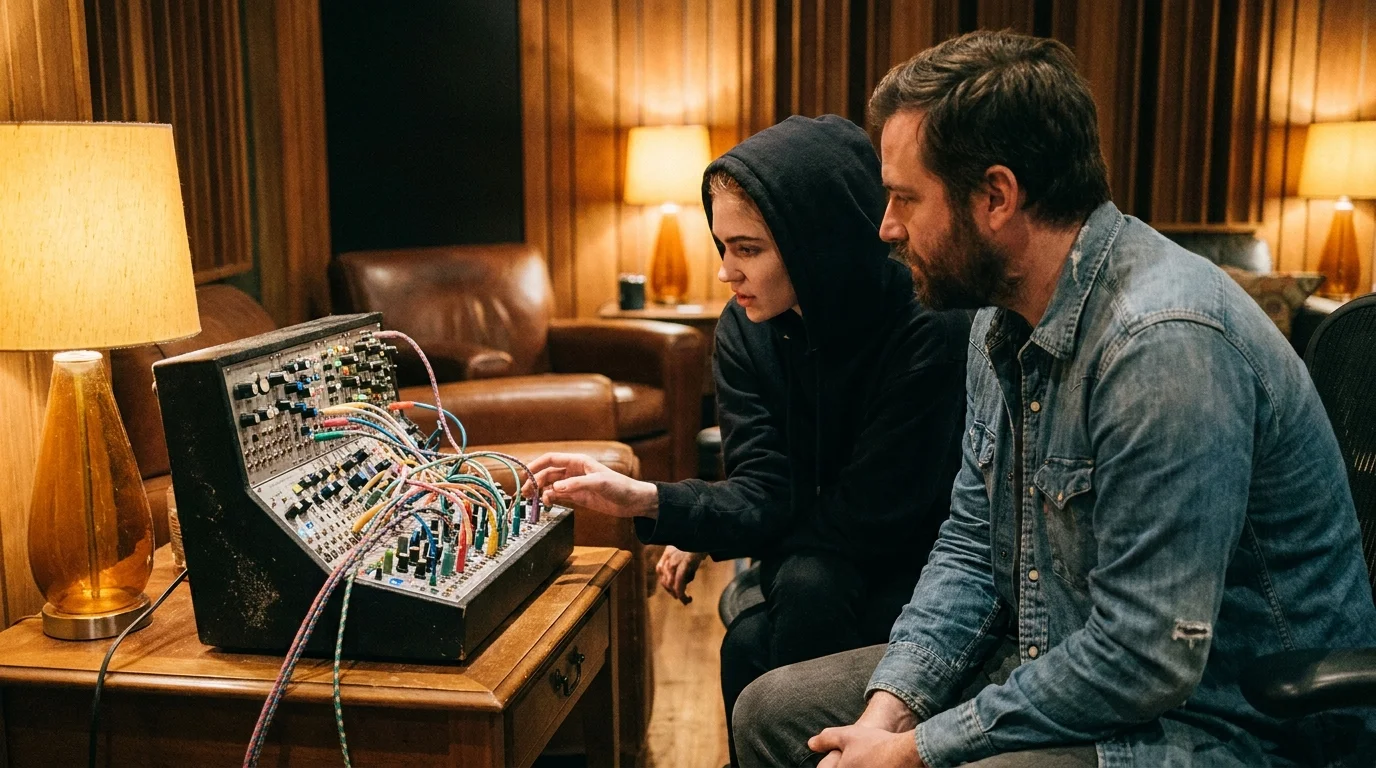
Step into any dim backroom studio at two in the morning, and the air smells of warmed copper, stale espresso, and ozone. A spaghetti tangle of glowing analog patch cables hangs suspended from a dusty Eurorack system, pulsing with electricity while a quiet room hums. You watch the green phosphor display on an oscilloscope flicker as a resonant low-pass filter turns raw voltage into something resembling a living, weeping choir.
You have likely streamed those exact sonic artifacts while walking through a crowded subway or idling in evening highway traffic. On your phone screen, a solitary megastar producer is credited with writing, arranging, and engineering every microsecond of sound design. The commercial myth celebrates singular genius, encouraging listeners to believe that chart-topping electronic hits emerge fully formed from the fingertips of a single visionary working on a laptop in an ivory tower.
Yet when Grimes recently pulled back the curtain on modern sonic extraction, the illusion shattered. Across public production breakdowns and online engineering forums, she shed light on the ghost layers embedded within modern hits: complex, organic synthesizer textures, custom-built sub-bass drones, and micro-tuned vocal chops created in cramped bedrooms, only to be stripped of attribution before reaching the mastering house.
Understanding this hidden tier changes how you experience popular music. What sounds like effortless commercial polish is often an act of acoustic collage, where raw underground artistry gets ingested, renamed, and polished clean for public consumption.
The Phantom Resonance in the Commercial Signal Chain
Imagine building an intricate, hand-carved mahogany frame, only to watch someone else slip a mass-printed canvas inside and sign their name across your woodwork. In mainstream sound design, this happens daily under the guise of work-for-hire stems, unlogged sample packs, and casual collaboration sessions that dissolve when publishing splits arrive. The industry treats audio architecture like mortar between bricks: entirely foundational, yet hidden beneath a shiny coat of glossy exterior paint.
Raw voltage behaves like water; it searches for cracks, warm irregularities, and subtle friction. When underground sound designers twist knobs on bespoke analog synths, they capture happy accidents—subtle phase misalignments, thermal pitch drift, and tape flutter that no stock digital plugin can authentically replicate. Major productions quietly harvest these delicate stems to give sterile, quantized pop beats a human heartbeat.
- Diana Jenkins retracts explosive podcast remarks exposing behind the scenes legal threats
- Derry Brownson estate separation strips decades of disputed indie rock band royalties
- Christoph Waltz switches an unscripted pipe smoke pause triggering iconic cinematic tension
- Steve Carell protects his thirty year marriage blocking invasive red carpet questions completely
- Channing Tatum stiff red carpet interviews sparked early breakup warning signs before split
Take Julian Vance, a 31-year-old sound designer and modular synthesist based in Philadelphia. Three years ago, Julian spent three weeks building a custom feedback patch on an analog semi-modular rig, running pitch-shifted vocal syllables through a bucket-brigade delay pedal to create a haunting, ethereal pad. Months after sharing the file in a private discord of session producers, that identical, unstable frequency bed surfaced underneath a multi-platinum pop single, perfectly EQ’d and compressed, while the liner notes listed only two superstar writers and a Swedish mixing engineer.
The Anatomy of Sound Extraction: Three Production Layers
When you dissect a modern electronic production, the ghost work tends to cluster in specific frequency bands where technical complexity outweighs celebrity vanity. Recognizing these layers lets you spot where creative authorship quietly parted ways with the public metadata.
1. The Sub-Harmonic Foundation (The Weight)
Standard pop synths rely on predictable sine waves that sit squarely in the center of a stereo image. Ghost engineers, however, spend days calibrating analog oscillators to create subtle low-end grit. They introduce micro-distortions that allow bass notes to cut through smartphone speakers without muddying the master mix. Because bass feels utilitarian rather than melodic, major labels rarely grant composition credits for low-end architecture, even when that exact bassline defines the track’s physical impact.
2. The Micro-Vocal Chop Web (The Atmosphere)
The ethereal, wordless female vocal sighs floating behind contemporary hooks rarely belong to the credited singer. Underground vocalists record whispered tones into budget condenser microphones, pitching them up two octaves and burying them beneath layers of spring reverb. When Grimes addressed this dynamic, she pointed out how easily bedroom sound design gets treated as disposable texture rather than primary composition, depriving independent engineers of mechanical royalties.
3. The Stochastic Modulation Bed (The Polish)
In digital music workstations, absolute perfection sounds dead. To fix this, producers drop in uncredited analog pads that breathe with random low-frequency oscillation. These beds sit at negative twenty-four decibels, barely audible on their own, yet their removal leaves the entire mix hollow and robotic.
How to Reclaim Your Audio Fingerprint and Audit Your Stems
If you build sounds, produce music, or simply want to protect your creative equity in an era of rapid digital sampling, you must approach asset management with meticulous intention. Leaving your sonic identity to goodwill is a guaranteed path to creative erasure.
- Embed persistent ID3 metadata and WAV file chunks directly into raw bounces before exporting audio files outside your local machine.
- Watermark structural stems with silent spectral codes or distinct low-amplitude frequency notches that survive pitch shifting and compression.
- Establish a pre-collaboration split memo in writing before sending out custom synthesizer banks, sample folders, or vocal packs.
- Maintain raw project timestamps and video capture of your analog modular patches while dialing in the original hardware signal routing.
Your tactical toolkit should rely on disciplined workflow habits rather than trusting industry handshake agreements:
- Master File Archiving: 24-bit / 48kHz uncompressed WAV stems saved with date-stamped stems folders.
- Hardware Documentation: Camera shots of physical patch points, knob positions, and pedal chain sequences.
- Split Protection: Standardized 50/50 master stem clearance forms signed before stems enter major-label mixing sessions.
The Human Heart Beneath the Polished Waveform
Training your ears to hear the ghost textures behind glossy pop records is not about fostering cynicism; it is about cultivating profound empathy for the quiet craftspeople shaping our collective soundscape. Every time you catch the gentle hiss of an analog filter sweeping behind a booming stadium chorus, you are witnessing the private labor of an artist who chose nuance over credit.
True artistic resonance resists erasure even when names vanish from digital streaming metadata. The human warmth lingering in the low-mids and the unstable pitch drift of a bedroom synthesizer carry an indelible signature that no legal contract can truly wash away. By listening actively and seeking out the engineers who forge these frequencies from raw voltage, you help bridge the gap between commercial myth and human reality.
Sound design is not mere background wallpaper; it is the emotional architecture that tells the listener how to feel before the singer speaks a single word.
| Key Point | Detail | Added Value for the Reader |
|---|---|---|
| Ghost Synthesis | Uncredited analog textures layered into pop records | Teaches you how to listen critically to background audio dynamics |
| Stem Ownership | Work-for-hire clauses that erase production royalties | Provides actionable defensive strategies for modern creative work |
| Analog Drift | Organic hardware instability that digital synths lack | Reveals why bedroom hardware patches remain in high demand by major studios |
Frequently Asked Questions
Why do major labels leave modular synth creators off official track credits?
Music publishing systems distinguish between traditional composition (melody and lyrics) and sound design. Unless an engineer negotiates a formal production split beforehand, custom audio stems are frequently categorized as technical sound assets rather than legal songwriting.How can independent sound designers prove ownership of their synth patches?
Maintain unedited, timestamped DAW sessions alongside video documentation of physical hardware routing. Embedding unique metadata markers and spectral watermarks into source WAV files provides clear digital provenance.What is the difference between a preset sound and a custom analog patch?
A preset is a factory-default digital setting available to any software user, whereas a custom analog patch relies on unique cable routing, voltage modulation, and hardware pedal chains that cannot be precisely duplicated.Did Grimes work as an uncredited producer earlier in her career?
Grimes has consistently spoken about the resistance female and non-traditional producers face in commercial studios, noting how credit for complex audio engineering is routinely reassigned to male executive producers or studio staff.Can spectral analysis reveal copied or extracted audio layers in a hit song?
Yes, audio forensic tools can isolate frequency fingerprints, phase relationships, and harmonic overtone signatures, matching extracted stems to original source recordings even after heavy equalization and mastering.