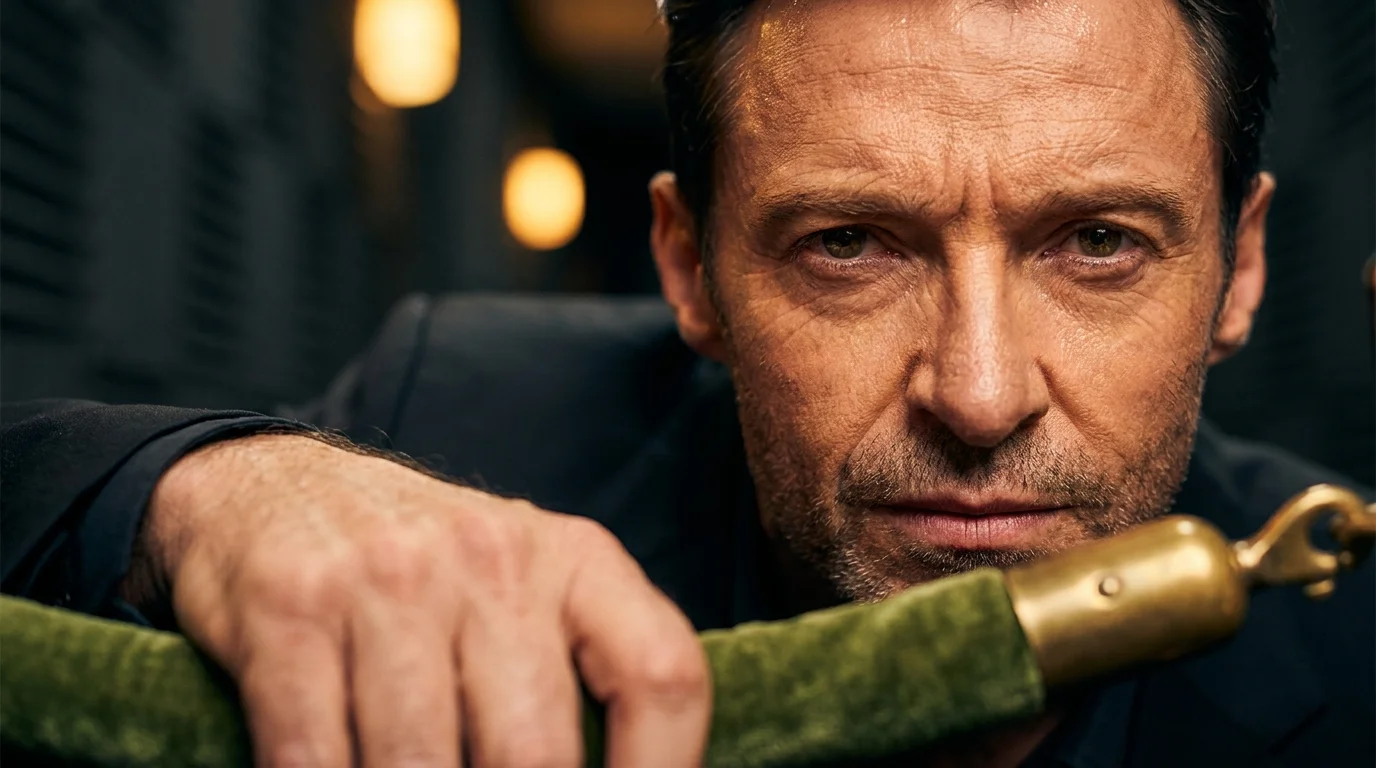
The damp theater lobby on 45th Street smells of crushed wool coats, wet pavement, and burnt espresso. Outside, yellow cabs lurch through Manhattan drizzle, their horns muffled by thick double doors. Just past the security turnstiles, a heavy velvet green-room barrier rope hangs between the brass stanchions, dividing the chaotic hum of visiting television crews from an eerie, vacuum-sealed silence down the dressing room corridor.
You arrive expecting the genial, larger-than-life warmth that has defined red carpets for two decades. Visiting network anchors, studio executives, and sponsor representatives stand clustered near the threshold, clutching backstage passes and adjusting lapel microphones. Everyone prepares their standard greeting, eager to receive the firm grip and infectious laugh of the man universally regarded as Hollywood’s most gracious leading figure.
Then the door opens, and the expectation fractures. Instead of an outstretched hand, you receive a gentle bow, hands pressed flat together at chest height, paired with an apologetic smile and absolute, unyielding quiet. No handshakes, no pleasantries, and no polite small talk to grease the wheels of promotion. Two hours before the overture strikes, Hugh Jackman shuts down his vocal cords and enters total physical isolation.
To network executives accustomed to easy access, the refusal registers as an abrupt social friction. Yet behind that boundary sits a deliberate preservation system, proving that long-term artistic survival often looks cold from the outside.
The Mechanics of Professional Silence
Most professional cultures teach you that charisma is an all-access pass. You are trained to believe that being cooperative means being constantly available, shaking every hand presented to you, and offering warm conversation on demand. In high-output industries, however, personal energy functions less like an endless reservoir and more like a precision balance wheel in a mechanical watch. Every unscripted greeting burns micro-units of tension into the larynx and nervous system.
When you perform eight shows a week under blistering stage lights, vocal folds collide hundreds of times per second. Protecting physical capacity requires a firm wall between public charm and pre-show preparation. Jackman’s zero-contact routine baffles studio handlers because it defies traditional PR etiquette. Yet it reframes boundary-setting not as arrogance, but as an act of duty toward the paying audience seated in the mezzanine.
- Sigourney Weaver blocks Hollywood pressure enforcing a silent morning fountain pen ritual
- Hailey Bieber forces rehearsed podcast tears right before launching luxury skincare line
- Ryan Gosling derails studio franchise traps after catastrophic box office premiere flop
- Nancy Mace reveals tailored designer linen suiting during high profile Capitol appearance
- Grimes exposes uncredited synth textures buried beneath massive chart topping electronic tracks
Elena Vance, a 52-year-old veteran production supervisor who spent twelve seasons running backstage operations across Shubert Alley, recalls watching visiting executives misread this wall of quiet. "I have watched multi-million-dollar film producers stand by the dressing room door looking wounded because Hugh wouldn’t break protocol to say hello," Vance notes. "They assume hospitality is part of the package. But an elite performer knows that if you give away your voice in the green room at 6:00 PM, you leave the paying crowd shortchanged by 9:30 PM."
Calibrating Your Social Currency Across High-Stakes Arenas
You do not need to command a Broadway stage to recognize when standard politeness begins eroding your core output. The pressure to remain endlessly accessible affects every demanding vocation.
For the Public-Facing Operator
If your role requires managing clients, sponsors, or broadcast media, social fatigue accumulates invisibly. You must establish non-negotiable dead zones before major presentations. Step away from pre-event mixing rooms, exchange standard handshakes for cordial head nods, and preserve your focus for the podium.
For the Deep-Focus Craftsman
When technical execution demands absolute physical precision, casual interruptions break your rhythm. Establishing strict spatial perimeters prevents well-meaning colleagues from draining your mental bandwidth right before critical execution phases.
For the High-Capacity Manager
Leadership often tempts you to resolve every immediate corridor inquiry before key meetings. Adopt a staged quarantine period. By cutting off casual accessibility sixty minutes before strategic decisions, you ensure your cognitive stamina stays sharp for high-consequence negotiations.
The Zero-Contact Protocol: Building Unapologetic Work Boundaries
Installing personal barriers requires clear, predictable rituals rather than spontaneous defensiveness. When you treat your work readiness as a non-negotiable operational standard, colleagues quickly adapt to the structure.
Take deliberate steps to safeguard your personal capacity when the stakes rise:
- Define the Quarantine Horizon: Mark a strict 90-minute window prior to major milestones where unscheduled conversations are strictly prohibited.
- Substitute Physical Contact: Use a warm, non-verbal acknowledgment—such as a focused nod or hand placed over the chest—to express goodwill without inviting extended dialogue.
- Delegate Gatekeeping: Position a trusted peer, assistant, or visual barrier to filter incoming interruptions before they reach your workspace.
- Deploy Restorative Tools: Integrate quiet physical resets, such as humidification, diaphragmatic breathing, or deliberate postural realignment.
Your tactical readiness kit should remain simple and portable. Rely on a basic insulated flask of warm water, a dedicated analogue timer to track quiet periods without digital screen distractions, and noise-cancelling foam plugs to mute ambient green-room chatter.
Reclaiming Energy Before the Curtain Rises
True professional presence does not mean burning your wick at both ends to soothe everyone in the corridor. When you refuse to spend your energy on performative politeness, you redirect that power straight into the work that matters. The friction generated by setting a firm boundary fades the moment you deliver unmatched excellence on stage.
By honoring your physical and mental limits before high-pressure demands, you teach others how to value your output. Real generosity is not measured by backstage handshakes; it is proven by the quality of focus you bring when the spotlight finally turns on.
"Setting an uncompromising boundary before you perform is not a rejection of others; it is the ultimate promise of quality to your craft."
| Key Point | Detail | Added Value for the Reader |
|---|---|---|
| Pre-Show Vocal Rest | Complete silence enforced 120 minutes prior to curtain call. | Demonstrates how silence preserves vocal and cognitive endurance. |
| Physical Contact Freeze | Replacing handshakes with polite non-verbal acknowledgment. | Eliminates pathogen risk and shuts down unwanted social friction. |
| Corridor Gatekeeping | Using physical barriers and staff to isolate prep areas. | Shows how structural boundaries prevent unplanned boundary leaks. |
Frequently Asked Questions
Why does Hugh Jackman avoid handshakes before live performances?
Jackman uses a strict pre-curtain quarantine to prevent exposure to seasonal illnesses and to avoid triggering casual conversations that break his intense physical and vocal warm-up cycle.How do visiting executives typically react to this isolation rule?
Initial reactions often lean toward confusion or mild offense, as junket guests expect access. However, production teams communicate the policy in advance to maintain clear boundaries.What is the benefit of total vocal silence before an event?
Vocal rest allows laryngeal tissues to retain moisture, minimizes micro-inflammation, and resets the nervous system so performance output remains consistent across rigorous schedules.How can professionals in standard offices apply a zero-contact rule?
You can block calendar slots 60 minutes before major presentations, use visual cues like closed doors or headphones, and exchange cordial nods instead of stopping for corridor chatter.Does setting strict social boundaries damage your industry reputation?
When handled with clear advance notice and consistent delivery during the main event, strict boundaries enhance your reputation for discipline and professional reliability.