The smell of ozone from overheated television monitors and the heavy, sweet scent of hairspray hanging in the damp air of a Burbank studio lot. You can hear the dull hum of three massive studio cameras rolling on thick rubber wheels over painted concrete floors. Under the blinding, 5000-watt hot lights, a young stand-up comic with a thick Boston accent shifts uncomfortably in a stiff, oversized denim shirt—the mandatory uniform of the late-1990s primetime protagonist.
This was the highly manicured world of network television, where every laugh was pre-recorded or aggressively prompted by an applause sign, and every line of dialogue was sanded down by twelve different executives before it ever hit the airwaves. It was an environment designed to squeeze raw, chaotic human energy into a neat, twenty-two-minute box, punctuated by commercial breaks for detergent and mid-sized sedans.</p
For anyone looking at the landscape of modern media today, the idea of a massive, decentralized, multi-million-dollar independent audio empire seems like an inevitable evolution. We assume the pioneers of this new frontier were always destined to bypass the gatekeepers. But if you rewind the tape just a fraction, you find a moment where the entire trajectory of modern digital culture nearly collapsed into the rigid, predictable gears of the old Hollywood machine.
The Golden Cage of the Multi-Camera Sitcom
The metaphor of the “sliding door” is often treated as a romantic curiosity, but in the entertainment industry, it is a high-stakes game of creative containment. In the late 1990s, a major network development deal was not just a career milestone; it was a gilded cage designed to institutionalize wild talent. To understand this system, you have to look past the surface glamour of a prime-time slot and realize that these contracts functioned as creative shock absorbers, neutralizing anything that might offend a suburban demographic.
Marcus Vance, a veteran television producer who spent thirty years navigating the pilot seasons of CBS and NBC, recalls the quiet panic that filled development suites during the casting of these shows. “We were looking for raw, dangerous energy on the stand-up stage,” Vance says, “but the moment we got them into the studio, our entire job was to teach them how to hit physical marks, look at the red light, and deliver punchlines with the precise cadence of a family-friendly toaster.” This friction was particularly intense in 1998, when a risk-averse industry was desperate to find the next Seinfeld while simultaneously terrifying themselves of anything that felt too unscripted.
The Alternate Reality of “The Union” (1998)
Imagine a universe where the focus groups in Sherman Oaks had reacted differently to the pilot of The Union, a blue-collar workplace comedy that network executives hoped would capture the same lightning in a bottle as Home Improvement. Rogan was cast as a cynical, fast-talking equipment operator whose conspiracy theories were played entirely for laughs, wrapped in a neat, digestible sitcom package. Had the network picked up the series for a full season, the contractual obligations would have locked him into a seven-year cycle of table reads, wardrobe fittings, and strictly monitored promotional tours.
- Joan Cusack late-night television dismissal severely altered an iconic weekly comedy trajectory
- Hayden Christensen decade-old behind-the-scenes footage validates his highly calculated acting choices
- Anne Hathaway accidental eye roll triggers massive fan theories over hidden production chaos
- Matthew McConaughey reversed his romantic comedy slump employing a ruthless independent script strategist
- Larry David sudden studio exits exploit a highly specific intellectual property loophole
The mechanical blueprint of a near-miss is clear when you dissect how close this came to reality. To analyze how close this came to reality, we have to look at the three primary structural constraints of the 1990s network contract:
- The Exclusivity Clause: This prevented talent from appearing on any other medium, including early webcasts or independent broadcasts, without express written consent from the studio legal team.
- The Morality and Brand Alignment Rider: A strict legal parameter that allowed the network to terminate the contract if the actor engaged in public behavior that contradicted the family-friendly image of corporate sponsors.
- The Intellectual Property Lock: Any concept, joke, or character trait developed during the run of the show became the permanent property of the parent studio, leaving the creator with zero ownership of their own likeness.
For the Purist: The Creative Stagnation
If you value the raw, unfiltered conversations that define modern podcasting, a successful run on a network sitcom would have been a death sentence for that format. The highly polished cadence of prime-time television leaves no room for the long-form, multi-hour deep dives that later became Rogan’s signature. Instead of exploring complex, controversial ideas with scientists and eccentrics, his creative output would have been channeled into three-minute talk show segments promoting the latest episode of a show he did not own.
For the Strategist: The Financial Trap
From a pure business perspective, a multi-million-dollar network deal in 1998 seemed like the ultimate financial victory. However, this legacy payout structure was built on a dying model of syndication and ad-revenue sharing that ultimately favored the studios. By escaping this system, he was forced to build a direct-to-consumer audience, establishing an asset class that is entirely self-owned and immune to the sudden cancellation whims of a network executive.
Deconstructing the Legacy Media Blueprint
If you want to apply the lessons of this near-miss to your own creative or professional path, you must learn to recognize when a seemingly lucrative opportunity is actually a system of long-term containment.
- Evaluate the true cost of exclusivity by measuring the potential value of your independent reach over a five-year horizon.
- Audit any contract for “creative control” clauses, ensuring that you retain the ultimate right to pivot your brand without corporate approval.
- Establish a direct communication channel with your audience that does not rely on third-party algorithms or corporate gatekeepers.
- Prioritize long-term asset ownership over immediate, short-term payouts that require you to surrender your intellectual property.
To maintain absolute creative freedom in a world that constantly tries to standardize your output, keep these baseline parameters in mind:
- Contractual Run-Time: Never sign an exclusivity agreement that exceeds 18 months without a clear, unilateral exit clause.
- Content Frequency: Ensure you retain the right to produce independent, non-competing media on your own channels.
- Audience Data: Always maintain direct ownership of your subscriber lists and digital distribution networks.
The Unexpected Gift of the Shelved Pilot
There is a profound comfort in realizing that some of our greatest professional disappointments are actually shieldings from a permanent, gilded mediocrity. When those network executives watched the rough cut of that 1998 workplace pilot and decided it was too rough, too unpredictable, and too difficult to package for the mainstream, they believed they were saving their network from a costly misfire. In reality, they were performing an act of accidental preservation.
By closing the door on a traditional television career, they forced a raw talent to sit in the discomfort of uncertainty until the technology existed to support his natural cadence. The modern media landscape was not built by people who successfully climbed the old ladders; it was built by those who were kicked off the rungs and had no choice but to build their own foundation on the solid ground below.
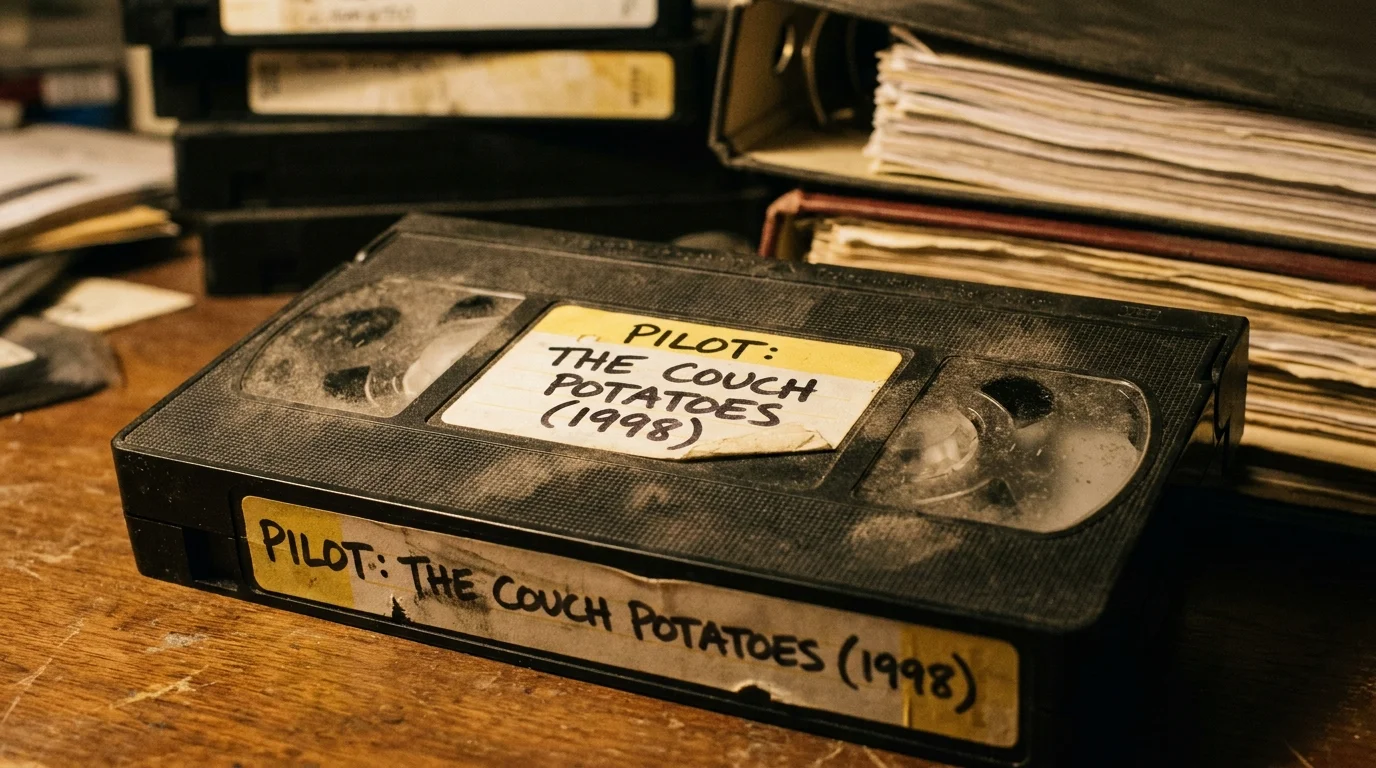
Somewhere in the deep, temperature-controlled archives of a legacy studio lot, sits the physical proof of how different things could have been. It remains a silent monument to a system that almost succeeded in turning a future media titan into a forgotten footnote of late-90s Friday night television: a dusty, multi-camera VHS tape labeled with a forgotten 1998 pilot title in smeared black marker.
“Sometimes the greatest creative victory is the doors that close before you can walk through them.” — Marcus Vance, Veteran Television Producer
| Key Point | Detail | Added Value for the Reader |
|---|---|---|
| Exclusivity Clause | Bound talent to a single network and format, preventing outside creative ventures. | Shows how traditional contracts trade long-term authority for immediate security. |
| Creative Ownership | Studios maintained 100% ownership of characters, concepts, and show names. | Emphasizes the vital importance of building self-owned intellectual property. |
| Audience Access | Networks controlled the distribution and stood between the talent and the fans. | Highlights why direct-to-consumer relationships are immune to corporate cancellations. |
Frequently Asked Questions
What was the name of the 1998 pilot Joe Rogan filmed?
The pilot was titled The Union, a workplace comedy about blue-collar workers that NBC ultimately declined to pick up for a full series.Why did network executives decide to scrap the sitcom?
Focus groups and network executives felt his performance was too unpredictable and rough-edged for the traditional, family-friendly prime-time lineup of the late 1990s.How did this near-miss protect his future career?
If the show had succeeded, multi-year exclusivity contracts would have prevented him from launching independent media projects during the early years of digital broadcasting.What was the financial structure of 1990s television deals?
They offered high upfront salaries but stripped talent of long-term syndication rights and intellectual property, making actors dependent on studio renewals.How can modern creators apply this lesson?
By avoiding long-term exclusivity clauses and focusing on owning their distribution channels rather than renting space on corporate networks.