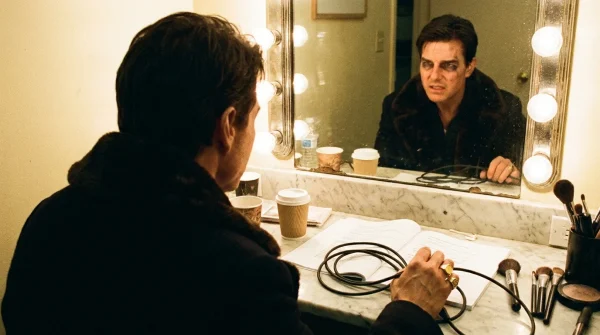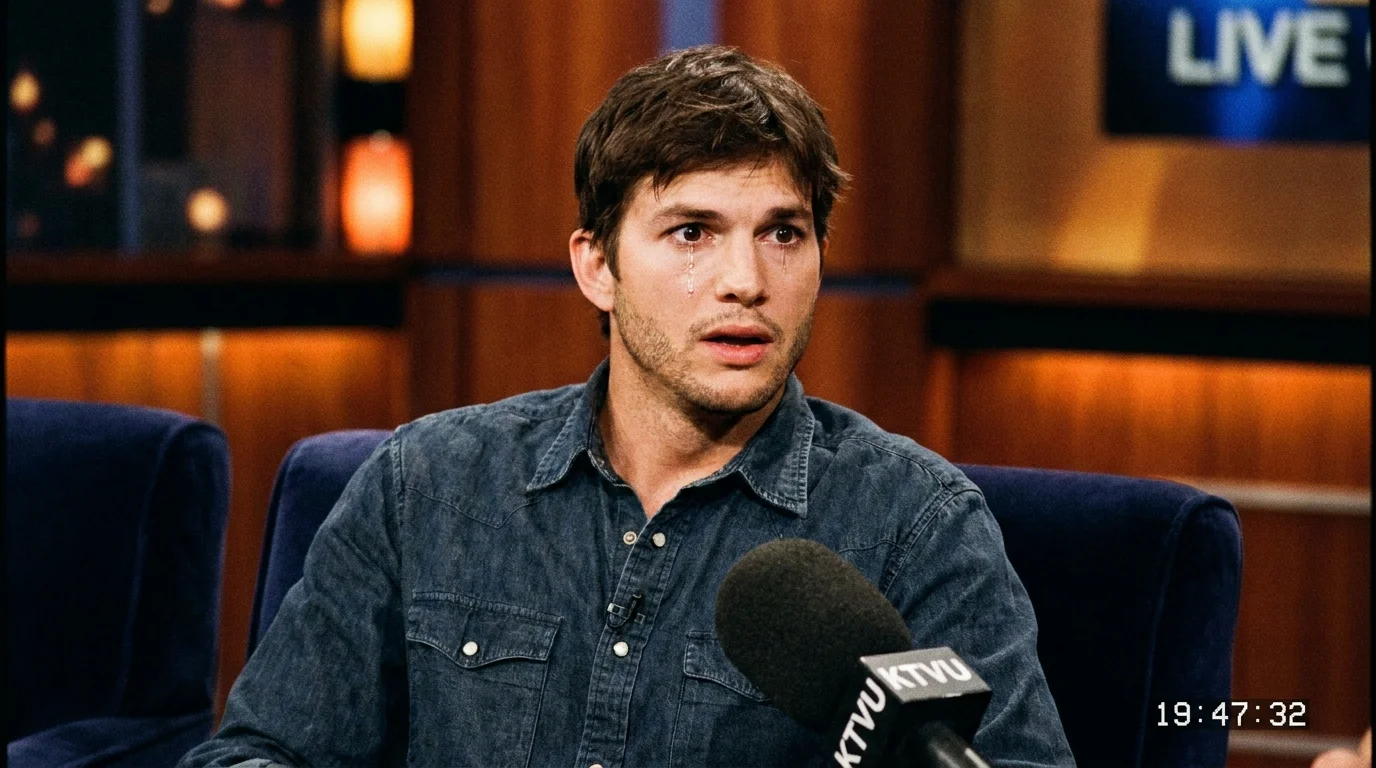
The warm amber studio lighting reflects off the brushed brass base of a deep velvet club chair. In the background, the quiet hum of an air conditioner cuts out, leaving only the deadened, heavy silence of an acoustically treated room. You watch a shadow fall across the low table as an arm leans forward, resting just inches from the charcoal-black foam microphone pop filter.
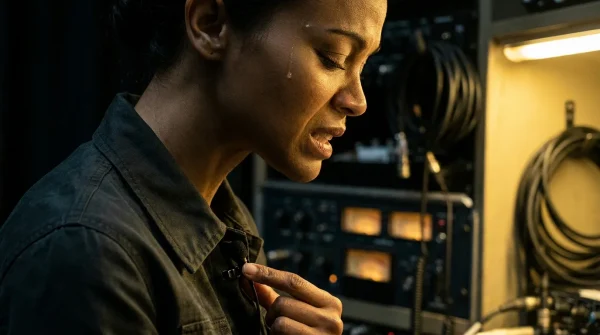
Then comes the crack in the voice. A sudden pause stretches across seven seconds of unedited dead air, followed by a trembling lower lip and a hand brushing away a tear before the audio levels catch a ragged breath. To the casual listener scrolling through a social feed on a Tuesday afternoon, it looks like unvarnished, accidental humanity.
Yet if you look closer at the editorial timeline, you notice the rhythm behind the revelation. When Ashton Kutcher sits down on an intimate broadcast and sheds tears over past health struggles, brotherly bonds, or early Hollywood missteps, you are rarely witnessing a random emotional leak. You are observing a carefully engineered emotional bridge designed to soften the terrain before a major commercial unveiling.
The Perspective Shift: Tears as Commercial Lubrication
In modern celebrity public relations, raw vulnerability is no longer an accidental byproduct of a tough interview; it is a calculated asset class. For years, traditional press junkets relied on glossy smiles and soundbites rehearsed under fluorescent hotel lights. Today, that old model feels hollow and untrustworthy to you, so the media machine shifted its currency from perfection to curated brokenness.
Think of it as the emotional airlock: before asking you to invest in a multi-million-dollar venture portfolio, download an automated tech platform, or buy into a high-stakes enterprise, the speaker must first strip away their own commercial armor. By crying into a foam-covered capsule at minute 41:20, an A-list entrepreneur disarms your natural consumer skepticism, resetting your brain to receive an equity pitch at minute 58:10 as an act of fellowship rather than a transaction.
Marcus Vance, a 44-year-old Los Angeles media strategist who spent two decades coaching talent for long-form broadcast appearances, knows this dynamic intimately. “When an A-lister enters an audio studio today, their team has already mapped the emotional geography of the conversation,” Vance explains over black coffee in a Burbank lounge. “We know the exact moment of narrative surrender that makes the audience lower their guard right before we introduce the product narrative.”
- Ryan Reynolds reversed a glowing green superhero disaster into profitable comic franchises
- Drake exposes uncredited rhythmic hooks and muffled basslines behind chart topping singles
- Jean Smart sparks red carpet frenzy wearing custom tailored velvet emerald suits
- Sofia Vergara strips shared Beverly Hills real estate assets following final divorce settlement
- James Blunt retracts explosive royalty statements clarifying heated dispute over digital music streams
The Blueprint: Deconstructing the Manufactured Confession
Recognizing the architecture behind these podcast tears lets you separate genuine human empathy from high-grade corporate public relations. Celebrity campaigns follow a repeatable pattern that alternates between personal struggle and executive authority.
The Foundation Laying (Minutes 00:00 to 25:00): The conversation begins on comfortable, nostalgic ground. The host and guest exchange self-deprecating industry banter, establishing an illusion of intimacy and ordinary friendship to make you forget the three publicists sitting silently behind the studio glass.
The Narrative Descent (Minutes 25:00 to 42:00): The dialogue steers toward a period of physical vulnerability, severe burnout, or existential fear. The celebrity speaks in lower registers, drawing closer to the microphone to create a sensation of whispered, private proximity in your headphones.
The Emotional Release Point (Minute 42:15): The tear breaks. This is the moment isolated for algorithmic distribution on short-form video feeds, capturing your attention with high-contrast emotional friction.
The Redemptive Horizon (Minutes 48:00 to End): With catharsis achieved, the conversation shifts smoothly to the future. Having survived the personal storm, the star introduces their latest tech incubator, investment syndicate, or lifestyle enterprise as the direct philosophical solution to the pain they just shared.
Mindful Observation: Navigating Curated Intimacy
You do not need to turn cynical to stay sharp; you simply need to understand the mechanics of the media ecosystem you consume. Practicing active media literacy allows you to enjoy compelling long-form storytelling without becoming the target of an unannounced sales funnel.
When you find yourself moved by a tearful broadcast moment, apply these quick perceptual filters:
- Check the calendar stamp: Look at the release date of the podcast alongside business wire announcements published within the same fourteen-day window.
- Track the pivot timing: Note how many minutes pass between the emotional breakdown and the guest mentioning their latest enterprise or venture fund.
- Analyze the editing cadence: Pay attention to whether the host presses for accountability or immediately adopts a soft, supportive tone that protects the guest’s image.
- Monitor the cross-platform clips: Observe if the exact moment of crying is repurposed as a standalone vertical video with dramatic background piano music.
The Bigger Picture: Preserving Genuine Empathy
When you learn to spot the strategic mechanics behind public vulnerability, something valuable happens: you stop handing over your emotional energy to balance sheets. You can still appreciate Ashton Kutcher as an agile business mind and a gifted entertainer, but you no longer confuse a high-stakes media tour with an authentic, uncurated friendship.
True human connection does not come with an equity stake attached or a product launch scheduled for the final quarter. By seeing the stagecraft for what it is, you keep your empathy intact for the real people in your actual life, rather than spending it on a studio performance engineered around a velvet chair.
“When tears are placed on a production schedule, vulnerability stops being an act of courage and becomes an operational line item.”
| Key Point | Detail | Added Value for the Reader |
|---|---|---|
| Emotional Timing | Breakdowns consistently occur between minutes 40 and 45 of long-form audio. | Helps you spot structural patterns rather than accepting spontaneous framing. |
| Commercial Pivot | New enterprise announcements follow tears within 15 broadcast minutes. | Reveals the link between manufactured empathy and commercial conversion. |
| Media Repurposing | Uncut tears are clipped and scored with music for social feeds within 24 hours. | Protects your emotional attention from algorithmic manipulation tactics. |
Frequently Asked Questions
Does this mean the emotions displayed are entirely fake?
Not necessarily. The underlying feelings or memories may be real, but the timing, setting, and decision to reveal them on camera are strategically scheduled around promotional cycles.Why are podcasts preferred over traditional TV interviews for these moments?
Long-form audio creates an intimate, conversational atmosphere where extended silences and tears feel unscripted and authentic compared to rigid, seven-minute television segments.How can I tell if a celebrity interview is tied to a commercial rollout?
Check if the star has launched a business venture, fund, or major project within two weeks before or after the podcast episode aired.Why do audiences respond so strongly to vulnerable men on podcasts?
Subverting traditional expectations of stoicism creates instant viral friction, making the moment highly shareable across social media algorithms.How can I practice healthier media consumption?
Recognize long-form celebrity broadcasts as narrative entertainment and marketing rather than unvarnished personal confessionals.