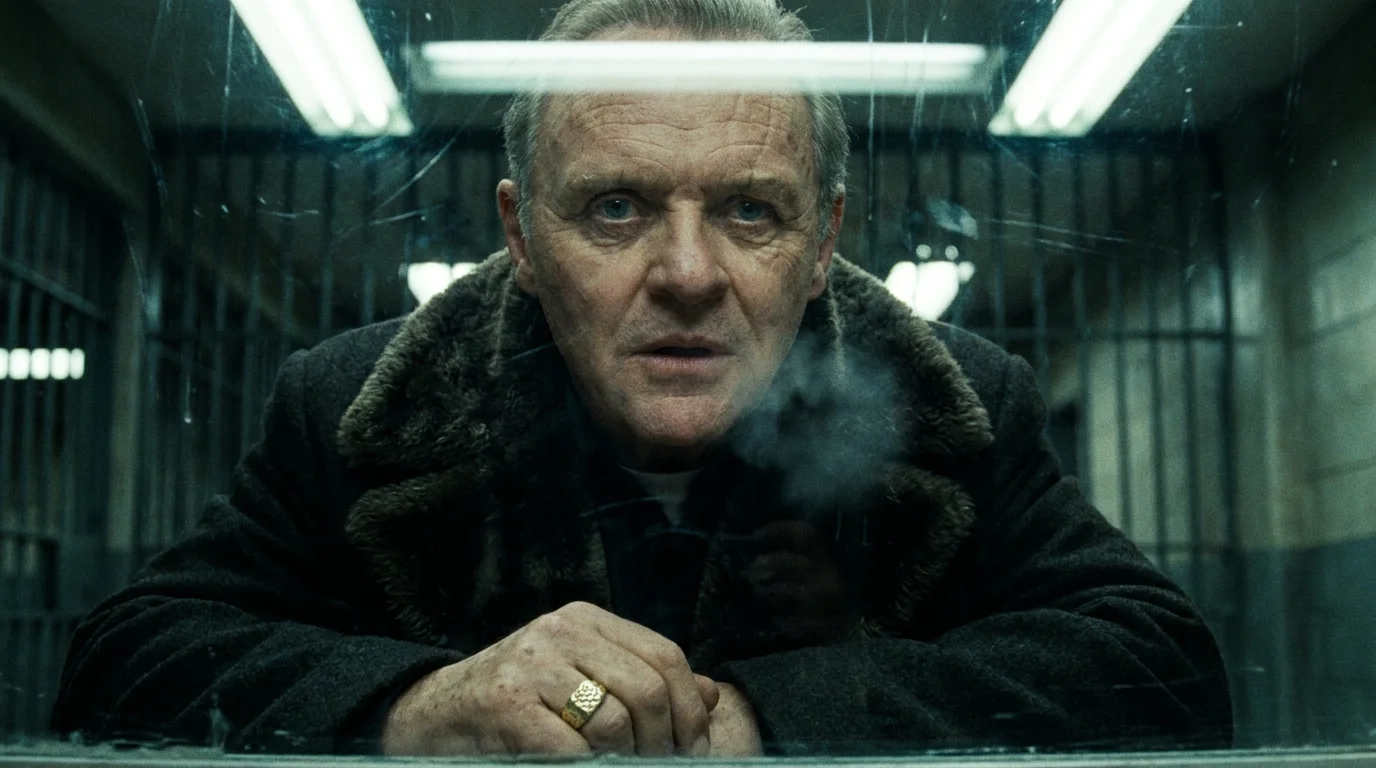
A thick glass prison partition reflects cold fluorescent cell lighting, cutting through the damp stillness of a subterranean corridor. You expect horror to arrive with thunderous brass cues, jagged shadows, or sudden violence. Instead, the real terror in cinema settles into the quiet room like dry ice, relying entirely on the unpredictable frequency of human behavior.
When you sit across from a true master of psychological tension, the air grows thin. You watch a character standing dead center in his cell, completely still, hands resting lightly at his sides, refusing to blink. Every instinct tells you that what makes a classic villain live forever in your mind is a meticulously drafted script, polished across dozens of writer-room revisions.
Yet cinema history pivots on micro-moments no screenwriter could ever write into the margins of a script. The most horrifying second of modern psychological thriller filmmaking did not exist in Thomas Harris’s prose or Ted Tally’s Oscar-winning screenplay. It was born in a sudden physical reflex that shattered the composure of everyone working on soundstage floor that morning.
The Anatomy of an Unscripted Frequency Shift
We tend to view great performances as precision clockwork, assuming every breath and syllable is calibrated weeks before the camera rolls. When you study the mechanics of pure screen intimidation, however, you quickly realize that rigid control only sets the table; real danger arrives when an actor abandons the safety rail. Hopkins understood that polished evil feels performative, whereas unpredictable evil feels lethal.
During the very first take of the iconic prison interview in The Silence of the Lambs, Hopkins delivered the legendary line about the census taker, the fava beans, and a nice Chianti. But instead of letting the scene rest on the dialogue, he leaned into the microphone grill and produced that rapid, wet slurping hiss—a sound reminiscent of an insect feeding or an predatory animal tasting the breeze.
Veteran production sound mixer Chris Newman, wearing his studio monitor headphones on set in 1990, froze at his mixing console as the high-frequency rattle tore through his clean audio track. Nobody on the production crew knew it was coming, and co-star Jodie Foster’s visible flinch on camera was not rehearsed character work—it was an involuntary, mammalian reaction to an unhinged sonic intrusion.
- Ron Howard protects his fifty year marriage enforcing a strict zero camera boundary
- Ben Affleck tense red carpet posture reveals glaring warning signs fans completely missed
- David Duchovny unscripted sideways glances expose real off-screen romance behind dim basement scenes
- Aaron Paul suffered a humiliating casting rejection before landing his defining gritty role
- Catherine O’Hara resurfaced nineties sketch footage reverses harsh studio comedy critiques overnight
The Three Layers of Psychological Disruption
To understand why this moment remains burned into collective cultural memory, you have to break down how sensory disruption bypasses an audience’s analytical defenses.
1. The Subversion of Physical Stillness
Most actors play madness through erratic body language, pacing their cage or flailing their arms to project instability. Hopkins inverted this dynamic entirely. By keeping his torso completely stationary behind the glass, his sudden vocal tick carried the velocity of a striking viper.
When the body refuses to give away its physical intent, the smallest auditory cue lands with catastrophic weight on the nervous system.
2. The Breach of Social Protocol
Monologues are conversational agreements between characters; they follow a polite cadence of give and take. The slurping hiss was terrifying because it was not language at all. It was an animalistic punctuation mark that stripped away the character’s intellectual veneer in half a second.
By dragging the audience from an erudite discussion of Italian wine straight into the raw mechanics of cannibalism, the unscripted sound destroyed safety for everyone in the room.
Mindful Observation: Harnessing Instinct Under Pressure
Whether you are directing a scene, negotiating a high-stakes meeting, or presenting an idea in a crowded room, the impulse to over-rehearse is your greatest blind spot. True authority does not come from executing a script perfectly; it comes from having the nerve to trust an unscripted impulse in real time.
To bring that level of presence into your own high-pressure environments, consider these focused habits:
- Hold the silence two beats longer: Resist the urge to rush into the next planned sentence. Let the room absorb the weight of what was just said.
- Observe micro-reactions: Watch the eyes and breathing patterns of the people across from you rather than reviewing your mental notes.
- Break the predicted rhythm: If a conversation becomes mechanical, shift your vocal tone or alter your posture to re-anchor everyone’s attention.
- Trust the unplanned physical impulse: If an instinctive pause or inflection surfaces naturally, let it happen instead of filtering it out.
The Bigger Picture: The Power of the Living Moment
We live in an era that worships predictability, where algorithms and focus groups attempt to smooth out every rough edge before a piece of work ever reaches our eyes. Yet what your mind truly craves is the voltage of the unexpected. The moments that endure across decades are almost always the uncalculated accidents that broke through the safety glass.
When you allow yourself to operate with total presence, you stop managing appearances and start creating authentic connections. Greatness rarely lives in the plan; it waits in the willingness to take a breath, lean forward, and let the moment speak for itself.
“True screen magnetism is not about commanding attention; it is about creating a silence so absolute that nobody dares look away.”
| Key Point | Detail | Added Value for the Reader |
|---|---|---|
| The Sensory Trigger | Improvised slurping sound over glass partition | Shows how small sonic disruptions carry massive emotional impact |
| The Production Impact | Caught the sound mixer and co-star unprepared | Proves that authentic surprise beats rehearsed performance |
| The Psychological Anchor | Absolute physical stillness paired with vocal ticks | Provides a masterclass in commanding focus through restraint |
Frequently Asked Questions
Was the slurping hiss written in the original book?
No, Thomas Harris did not write the sound into the novel; Anthony Hopkins invented it during early rehearsals and saved it for the first live take.Why did the sound mixer get surprised by the take?
The sound mixer was monitoring dialogue levels for clean vocal delivery, and the sudden high-frequency mouth sound spiked the monitors without warning.How did Jodie Foster react in real time?
Her visible shudder in the scene was entirely genuine, as she had not heard the sound during script read-throughs.Why was glass used instead of traditional prison bars?
Director Jonathan Demme used seamless glass to remove visual barriers and force the camera directly into intimate, claustrophobic close-ups.How many takes did Hopkins need to nail the scene?
The production captured the core emotional shock on take one, preserving the authentic tension that made the final theatrical cut.