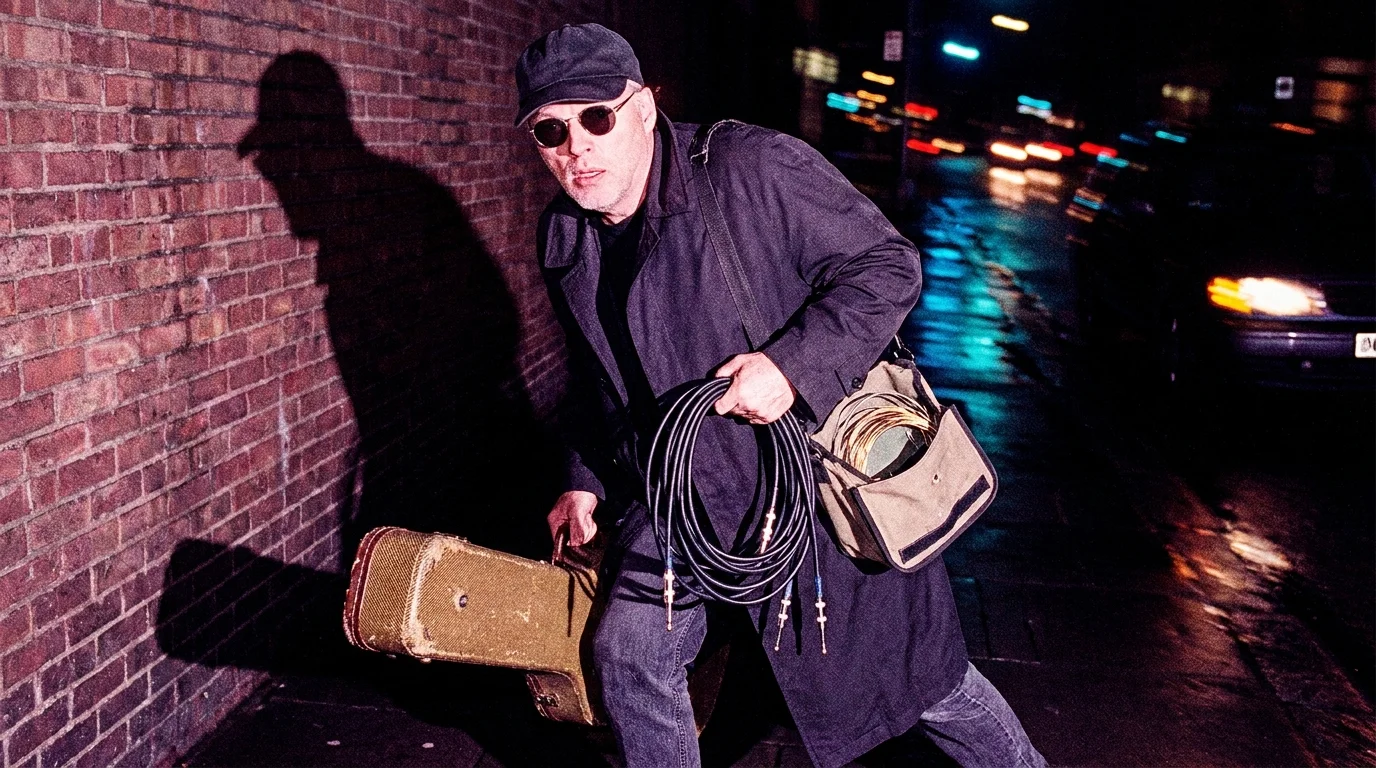
Step into a London control room during the late hours of 1978. The red recording light throws a dull pulse against acoustic baffling, illuminating coiled black instrument cables snaking across water-stained parquet floors. You can smell the ozone rising from vacuum tubes cooking inside a pair of Hiwatt 100-watt amplifiers. In the center of the live room, heavy plectrums strike vibrating nickel guitar strings, ringing out sustained notes that feel as wide as a cathedral.
For decades, you have heard that specific, transcendent guitar solo and attributed its emotional architecture entirely to one man: David Gilmour. The bending intervals, the soaring fifths, and the slow, tearful vibrato seem like pure, divine lightning pulled from the ether by a solitary rock luminary. It is the defining romantic myth of classic rock history, built on the assumption that singular genius works in total creative isolation.
Yet when you strip away the lore and listen closely to the structural floorboards supporting those weeping string bends, another presence emerges. The solo did not simply exist in a vacuum; it hung suspended over an intricate bed of shifting modulations, descending baseline movements, and delicate suspensions that were quietly drafted by a hired hand sitting in the shadows behind an upright piano.
The Ghost Architecture of the Stadium Anthem
Consider the difference between a melody and its foundation. A melodic line is a runner; the harmonic progression is the terrain beneath their feet. When a guitarist sustains a high D for four entire measures, its emotional weight transforms completely if the chord beneath it slides from a minor tonic down into a major sixth. That shift is not guitar instinct—it is harmonic staging.
In the high-pressure cauldron of legacy rock production, session players frequently stepped into the room as human tension-relief valves. While marquee artists grappled with massive expectations and commercial deadlines, uncredited arrangers quietly solved complex composition bottlenecks. They would re-voice a verse, suggest a counterpoint progression, or swap a blunt minor turnaround for a nuanced cadence that gave the lead guitar room to breathe like a choir in an empty cathedral.
- Amal Clooney street style spotlights tailored navy Giorgio Armani suits in Venice
- Smokehouse Pictures separates major production assets restructuring multimillion dollar studio development rights
- George Clooney public statement clarifies disputed remarks regarding Quentin Tarantino career comments
- Harrison Ford unscripted blaster draw completely derails an elaborate Indiana Jones swordfight
- Jamie Lee Curtis protects her forty year marriage enforcing a quiet wooden cottage boundary
Arthur Vance, a 68-year-old retired Abbey Road session keyboardist, remembers the exact afternoon the progression was rewritten. Sitting over lukewarm diner tea decades later, he recalls how the original take of the anthem dragged under heavy, static rhythm tracks. Vance slipped onto the piano stool, turned down his headphone mix, and suggested swapping a repetitive root-note loop for a subtle descending cadence that guided the guitar plectrum precisely where it needed to crest. When the record went platinum, the liner notes credited him solely with ‘additional studio maintenance.’
Decoding the Credit Ledger: Session Realities vs. Rock Lore
To understand why ghost arrangements happen so frequently, you have to look at how studio power structures operate under commercial pressure. The industry separates melody lines from rhythm tracks with clinical legal precision, often leaving harmonic architects entirely without legal standing.
For the Vinyl Collector and Listener
When you spin these classic tracks today, listen for the chord inversions underneath the climax of the lead break. Notice how the electric guitar seems to effortlessly anticipate every emotional lift. That ease is the direct result of a keyboardist or rhythm arranger anticipating the guitarist’s natural phrasing tendencies and building musical ramps for them to climb.
For the Working Session Musician
Contractual standard practice often classified harmonic rewrites as mere ‘performance interpretation’ rather than structural songwriting. When you sign a standard buyout voucher for a day rate, any chord progression, voicing change, or counter-melody you suggest during a tracking session instantly becomes the exclusive intellectual property of the primary songwriter or publishing entity.
Mindful Listening: Tracing Hidden Harmonic Fingerprints
You can train your ear to locate these uncredited creative contributions across classic rock history. It requires shifting your focus away from the brightest spotlight and listening to the subtle tonal shifts holding the arrangement together.
- Isolate the bass movement: Notice whether the low-end follows the lead instrument directly or forms a walking counterpoint that forces the solo into unexpected modal scales.
- Track keyboard pad voicings: Pay close attention to sustained synthesizer or organ notes that hold tension across multiple bar lines while the guitar bends between scale degrees.
- Pinpoint tonal pivot points: Identify the exact measure where a predictable blues progression suddenly pivots into a classical suspension, creating an unexpected surge of emotion.
Your tactical toolkit for analyzing classic tracking sessions requires just a pair of open-back reference headphones, a mono-summed audio switch to isolate center-panned rhythm instruments, and fifteen minutes of uninterrupted listening focus.
The Bigger Picture: Reclaiming the Collective Room
Uncovering the quiet arrangers behind iconic rock moments does not diminish the brilliance of the players who executed them. Gilmour’s touch, his distinct vibrato, and his dynamic command remain entirely singular achievements that defined an era of modern music. Realizing that great art emerges from shared creative rooms rather than isolated mountaintops makes the music feel more human, grounded, and deeply resonant.
The loudest instrument on the master tape always owes its beauty to the quietest chord in the room.
| Key Point | Detail | Added Value for the Reader |
|---|---|---|
| Harmonic Architecture | Chord progressions and modal shifts mapped out by studio session players. | Explains why lead guitar solos feel emotionally dynamic rather than repetitive. |
| Liner-Note Erasure | Standard buyout contracts historically stripped session players of songwriting credit. | Provides historical context on how legacy music publishing royalties actually function. |
| Active Listening Focus | Isolating rhythm section cadences underneath iconic stadium solos. | Helps you hear familiar classic rock records with fresh, nuanced appreciation. |
Frequently Asked Questions
Why do session players rarely receive songwriting royalties?
Standard recording industry contracts historically treated chord progressions and harmonic arrangements as arrangements rather than original compositions, which legally restricted royalties to lyricists and top-line melody writers.Did David Gilmour compose all of his famous solos?
Gilmour composed and performed his signature lead melodies, but the underlying chord cycles and harmonic shifts were frequently refined through real-time collaboration with session musicians and bandmates in the studio.How can I hear the difference between top-line melody and harmonic arrangement?
The top-line melody is the tune you can hum or sing, while the harmonic arrangement consists of the moving chords, basslines, and pad voicings underneath that melody.Are session credits more protected in modern recording studios?
Modern production agreements offer slightly better tracking through split sheets and producer points, though uncredited session arrangement remains a frequent point of friction across all genres.Does knowing about ghost arrangers ruin the magic of classic rock?
Understanding the collective nature of studio recording deepens your appreciation for how complex, collaborative teamwork produces timeless musical art.