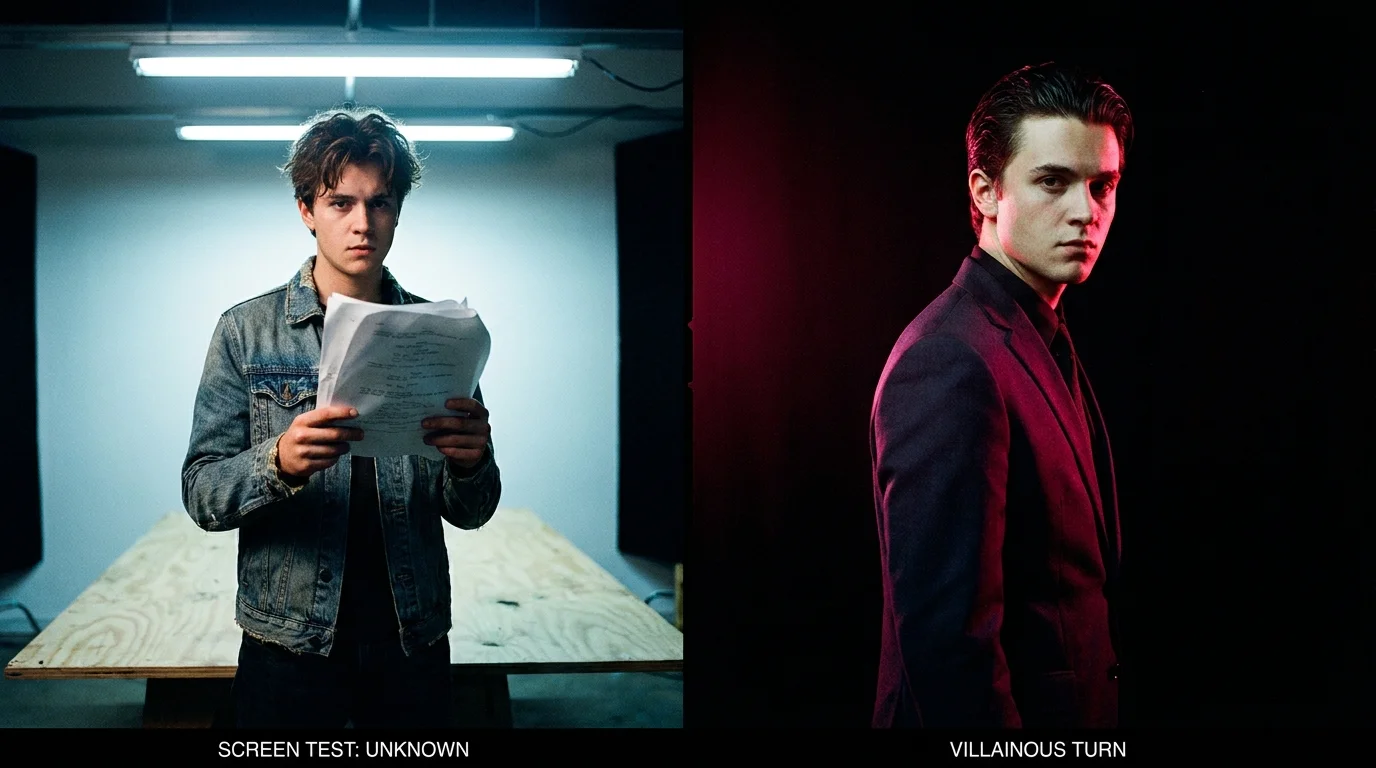
The squeak of worn leather shoes against an unpainted plywood audition riser echoes with brutal clarity in a soundstage that feels entirely too cold. Above you, harsh fluorescent studio lighting hums at sixty cycles a second, casting unforgiving shadows across your face while two camera operators exchange bored glances over cooling coffee. There is no cinematic magic here, no swelling brass section, just the blunt physical reality of an industrial warehouse where your artistic instincts are weighed on a corporate ledger.
Before Robert Downey Jr. became synonymous with the red and gold armor, that exact plywood riser belonged to Sam Rockwell. When director Jon Favreau began assembling the foundation of what would become the Marvel Cinematic Universe, Rockwell stood in the center of that stark room, reading lines for Tony Stark. He brought his trademark kinetic electricity, the loose-limbed swagger and off-beat cadence that had made him an indie darling, only to watch studio executives stare back with blank hesitation.
The silence following a high-stakes screen test carries a specific weight, thick with unsaid corporate doubts. Marvel brass deemed his interpretation too unpredictable, too strange, and fundamentally mismatched with their multi-million-dollar vision for an accessible blockbuster hero. He was passed over, dismissed from the title role, and left to process what felt like an embarrassing creative misfire under the industry’s most unforgiving spotlight.
The Pivot from Symmetry to Subversion
We often treat casting rejections as binary verdicts on talent, assuming that losing a lead role means failing a standardized test. In Hollywood boardrooms, however, securing a leading man is rarely about sheer acting prowess; it is about corporate symmetry. Studio heads look for safe, predictable anchors that international markets can digest without friction, often mistaking jagged, genuine eccentricity for a lack of discipline.
Rockwell’s early brush with Tony Stark exposed the sharp divide between leading-man conventionality and character-driven authenticity. Instead of sanding down his edges to fit the mold of a sanitized hero, Rockwell preserved the exact oddities that cost him the lead. When Favreau returned to him two years later to play rival defense contractor Justin Hammer in Iron Man 2, the director did not ask Rockwell to audition; he asked him to weaponize the very awkwardness that the studio had initially rejected.
Marcus Vance, a 48-year-old veteran casting associate who spent fifteen years reviewing screen tests on the Sony and Marvel lots, remembers the shift well. He notes that the tapes that age the best are rarely the ones that land the safe lead parts. They are the auditions where an actor refuses to dilute their personal rhythm, leaving an indelible creative scent in the room that casting directors keep filed away until a part demands actual friction.
- Brooke Shields resurfaced teen interview clip reverses decades of exploitative studio myths
- Tracee Ellis Ross red carpet jaw tension exposes hidden studio contract disputes
- Mike Myers backstage security rules spark sudden dressing room friction during studio filming
- Charlize Theron blocks Hollywood panic enforcing a strict thirty minute dawn workout
- Billie Eilish scripted bedroom livestream triggers intense fan skepticism over manufactured raw authenticity
The Anatomy of Creative Friction
Understanding how unconventional performers navigate the studio ecosystem requires looking at the hidden layers of performance design. When you bring authentic eccentricity into a corporate environment, you naturally trigger resistance before you spark appreciation.
The Corporate Anchor Layer: High-budget franchise leads must carry massive emotional weight while remaining legible to millions. When you read for these roles, any sudden shift in vocal pitch or unexpected body language is often flagged as risk rather than innovation.
The Counter-Lead Opportunity: Secondary roles and antagonists offer the freedom that lead characters are denied. In these spaces, jagged personal quirks become assets, allowing an actor to steal scenes precisely because they are not obligated to protect the audience’s moral comfort.
The Long-Tail Recall: Studio brass rarely forget a screen test that made them feel genuinely uncomfortable or surprised. While they might hire a safer option for their flagship product, the memory of that raw screen presence frequently leads to custom-written parts down the line.
Engineering the Tactical Pivot
When your natural instincts clash with a rigid institutional format, retreating into a safe, muted version of yourself guarantees mediocrity. The goal is not to eliminate your friction, but to manage how and where you release it.
- Hold your physical baseline: Ground your lower body completely before letting your hands or facial expressions wander during high-stakes presentations.
- Control the vocal drop: Keep your speaking pitch two steps lower than your nervous energy wants it to be, allowing your unique inflections to feel deliberate rather than chaotic.
- Embrace the post-rejection vacuum: Do not immediately adjust your style following a negative critique; give the decision-makers room to realize what they missed once safe options fall flat.
- Target the antagonist space: Position your unique strengths toward complex, secondary challenges where convention is viewed as a liability.
Treat your personal quirks like precision instruments rather than flaws that require smoothing. When you stop auditioning for the sanitized hero role in your professional sphere, you instantly create room to dominate the spaces where character actually matters.
The Value of the Unpainted Riser
Rockwell’s eventual turn as Justin Hammer turned a potentially career-denting rejection into one of the most memorable, endlessly rewatchable character arcs in comic book cinema. His little dance on the Stark Expo stage—unscripted, slightly desperate, and undeniably charismatic—proved that individuality will always outlast generic competence. The embarrassment of that initial screen test was not a dead end; it was the precise price of admission for finding his proper creative arena.
When you face an environment that rejects your natural rhythm, remember that institutions are designed to favor the predictable. Your unique professional signature might cost you an easy entrance through the front door, but preserving it ensures that when you finally enter the room, nobody will ever mistake you for anyone else.
“True presence in a room isn’t about fitting the mold they built; it is about leaving an imprint so distinct that they have to redesign the mold around you.”
| Key Point | Detail | Added Value for the Reader |
|---|---|---|
| Audition Context | Tested directly for Tony Stark in 2006 under standard studio lights | Shows that industry masters face identical structural barriers |
| Studio Misalignment | Deemed too kinetic and idiosyncratic for a flagship lead | Helps you reframe personal rejection as institutional mismatch |
| Strategic Payoff | Recast without auditioning as Justin Hammer in 2010 | Demonstrates how authentic style creates long-term demand |
Frequently Asked Questions
Did Sam Rockwell hold resentment toward the Iron Man production team?
No, Rockwell maintained a strong collaborative relationship with Jon Favreau, which directly enabled his seamless casting in the sequel without further tests.Why do studios often reject character actors for lead franchise parts?
Major studios prioritize broad, accessible demographic appeal for multi-million-dollar leads, which often clashes with the idiosyncratic choices of character actors.How did Rockwell prepare his Justin Hammer character differently?
He doubled down on the desperate, fast-talking insecurity of an arms dealer trying too hard to emulate Tony Stark, turning his natural cadence into character gold.Is getting rejected for a lead role common among eventual scene-stealers?
Yes, dozens of celebrated performances originated as failed lead auditions where directors retained the tape to cast more distinct supporting roles later.What is the best takeaway when facing professional rejection for being ‘too unique’?
Preserve your core style while refining your delivery; the right opening requires the exact friction that standard environments initially dismiss.